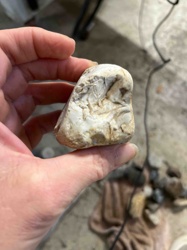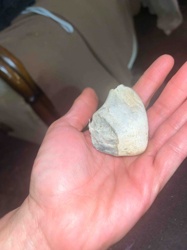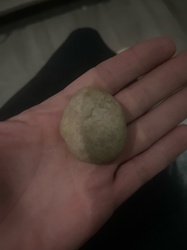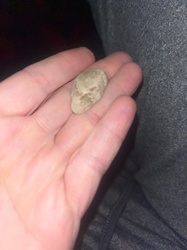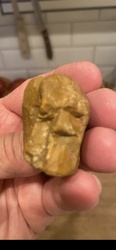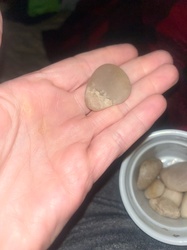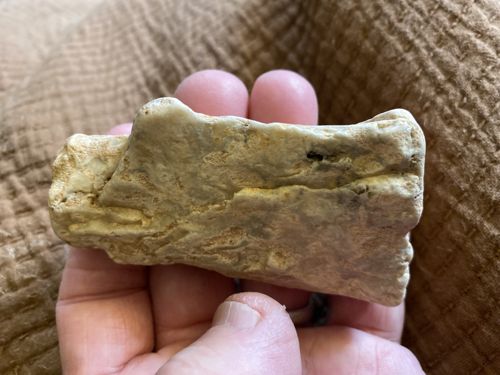
Chert or Petrified Wood Lithic Specimen
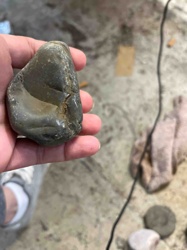
This item is a stone specimen measuring approximately 3 inches by 2 inches, presenting a rectangular and somewhat blocky form with irregular surfaces. The material appears to be a siliceous sedimentary rock such as chert or possibly agatized petrified wood, characterized by a predominantly tan and off-white coloration with subtle earthy ochre staining. The texture is rough and weathered, showing significant environmental patination and surface pitting. From an archaeological perspective, the item lacks the distinctive diagnostic features of a Paleo-Indian celt or bifacial tool; there is no clear evidence of intentional percussion flaking, pressure retouch, or ground-bit polishing typically associated with anthropogenic lithic technology. The fractures and indentations visible on the surface appear to be the result of natural geological processes or mechanical weathering rather than human manufacture. The edges are rounded and smoothed by burial or water action, and while the shape vaguely resembles a tool, it is likely a geofact. The material composition is dense and hard, consistent with minerals found in the Oklahoma region, but it shows none of the flake scars or bulbs of percussion required to classify it as a formal artifact.
AI-Generated Appraisal Disclaimer
Estimated Value
$5.00 - $15.00
Basic Information
Category
Geological Specimens / Natural Stones
Appraised On
March 27, 2026
Estimated Value
$5.00 - $15.00
Additional Details Provided By Owner
User Provided Information
Possible chert or petrified wood early Paleo Indian celt tool found in Guthrie, OK measuring 3"x 2"
Item Description
This item is a stone specimen measuring approximately 3 inches by 2 inches, presenting a rectangular and somewhat blocky form with irregular surfaces. The material appears to be a siliceous sedimentary rock such as chert or possibly agatized petrified wood, characterized by a predominantly tan and off-white coloration with subtle earthy ochre staining. The texture is rough and weathered, showing significant environmental patination and surface pitting. From an archaeological perspective, the item lacks the distinctive diagnostic features of a Paleo-Indian celt or bifacial tool; there is no clear evidence of intentional percussion flaking, pressure retouch, or ground-bit polishing typically associated with anthropogenic lithic technology. The fractures and indentations visible on the surface appear to be the result of natural geological processes or mechanical weathering rather than human manufacture. The edges are rounded and smoothed by burial or water action, and while the shape vaguely resembles a tool, it is likely a geofact. The material composition is dense and hard, consistent with minerals found in the Oklahoma region, but it shows none of the flake scars or bulbs of percussion required to classify it as a formal artifact.
Get Your Items Appraised
Instant estimates of your treasures with AI-powered instant appraisals