Vintage Friar Tuck Ceramic Salt and Pepper Shakers
Vintage Kitchenware / Collectible Salt and Pepper Shakers

Vintage Friar Tuck Ceramic Salt and Pepper Shakers

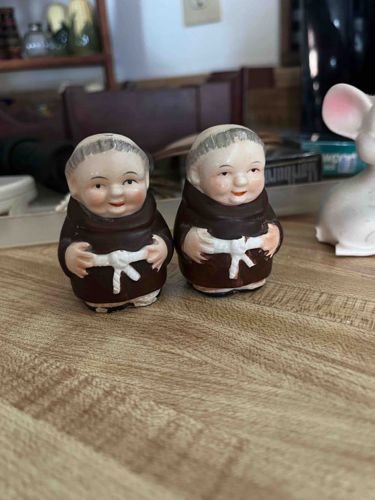
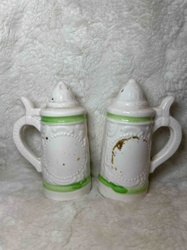
This is a pair of vintage ceramic salt and pepper shakers depicting 'Friar Tuck' monks, likely manufactured in Japan during the mid-20th century (circa 1950s-1960s). Each shaker stands approximately 3 to 4 inches tall and is constructed from molded bisque porcelain or cold-painted earthenware. The figures feature hand-painted details including tonsured grey hair, rosy cheeks, and black-accented eyes. They are dressed in traditional dark brown habits with a white rope cincture tied at the waist. Their hands are tucked into the voluminous sleeves of their robes. The shakers exhibit a matte finish common for 'cold paint' applications of this era. Regarding condition, there is notable paint loss and chipping along the base of the left figure, which reveals the underlying white ceramic body. The paint on both figures shows signs of age-related wear, light scuffing, and minor surface grime. This style of anthropomorphic kitchenware was highly popular mid-century, often produced by companies like Goebel or imported floral/souvenir wholesalers. The craftsmanship is standard for mass-produced novelty ceramics of the period, relying on simple molds and quick brushwork for characterization.
Estimated Value

$12.00 - $18.00

Basic Information

Category

Vintage Kitchenware / Collectible Salt and Pepper Shakers

Appraised On

March 22, 2026

Estimated Value

$12.00 - $18.00

Item Description

This is a pair of vintage ceramic salt and pepper shakers depicting 'Friar Tuck' monks, likely manufactured in Japan during the mid-20th century (circa 1950s-1960s). Each shaker stands approximately 3 to 4 inches tall and is constructed from molded bisque porcelain or cold-painted earthenware. The figures feature hand-painted details including tonsured grey hair, rosy cheeks, and black-accented eyes. They are dressed in traditional dark brown habits with a white rope cincture tied at the waist. Their hands are tucked into the voluminous sleeves of their robes. The shakers exhibit a matte finish common for 'cold paint' applications of this era. Regarding condition, there is notable paint loss and chipping along the base of the left figure, which reveals the underlying white ceramic body. The paint on both figures shows signs of age-related wear, light scuffing, and minor surface grime. This style of anthropomorphic kitchenware was highly popular mid-century, often produced by companies like Goebel or imported floral/souvenir wholesalers. The craftsmanship is standard for mass-produced novelty ceramics of the period, relying on simple molds and quick brushwork for characterization.
Get Your Items Appraised

Instant estimates of your treasures with AI-powered instant appraisals

Browse More Appraisals