AI Appraisal Estimate

AI-generated estimates · not official valuations

From the user

What was submitted

Photo and notes provided by the user — not generated by AI

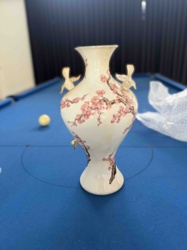
Submitted item photo
Submitted photo · June 6, 2026

User's notes

No additional notes provided.

AI analysis below

AI appraisal

AI analysis & estimate

AI-Generated · Verify before acting

Everything below is generated by AI for informational purposes only. AI can make mistakes — the AI may misidentify items or misattribute them (artist, maker, brand, designer, origin, era). This is not an official valuation and should not be used for insurance, sale, tax, estate, legal, or lending purposes — or any decision requiring a certified appraisal. It is not an authoritative claim about any person, brand, or rights holder — do not share or rely on it as a factual statement about a third party. Always consult qualified professionals before making financial decisions.

Read the full disclaimer

AI Identification

·Not independently authenticated·Verify before acting

Mid-Century Weeping Gold Pedestal Base Figurine

Antique/Vintage Decorative Ceramics

AI Estimated Value

·Not an official valuation·Verify before acting

$15.00 - $25.00

As of June 6, 2026

AI Item Analysis

·AI can make mistakes·Verify before acting
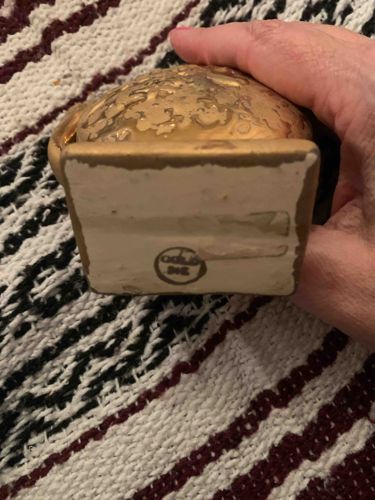
A decorative ceramic object, likely a small vase or figurine pedestal, featuring a distinctive 'weeping gold' or 'lava gold' glaze finish. The item is constructed from white ceramic/porcelain, visible at the unglazed rectangular base which measures approximately 2.5 to 3 inches in width. The upper portion is heavily coated in a textured, iridescent metallic gold finish that creates an organic, bubbled, and dripping aesthetic characteristic of mid-20th-century decorative arts. The glaze shows a high reflective quality with notable relief. On the unglazed bottom, there is a circular ink stamp or maker's mark consisting of stylized text within a ring, though it is partially obscured and difficult to read. The condition shows significant signs of age and handled wear; notably, there is visible gold loss and chipping along the edges of the base where it meets the unglazed bottom, exposing the white ceramic body. Some brownish discoloration or residue is present on the underside, possibly remnants of an old adhesive label or inventory tag. Based on the glaze style and construction, this piece likely dates to the 1950s or 1960s, a period when manufacturers like McCoy or Kingwood Ceramics popularized this heavy gold-dripping technique.
AI Appraisal Report

·AI can make mistakes·Verify before acting
I have examined the digital representation of this mid-century 'weeping gold' pedestal. The item exhibits the heavy, textured metallic glaze application popular in the 1950s and 60s. Based on the glaze density and the unglazed foot, this is likely a production piece by a mid-market American pottery firm such as McCoy or Kingwood Ceramics. The condition is fair to good; however, the significant gold loss and shelf-wear at the base adversely affect the value, as collectors of this style prioritize a mirror-like finish. The market for 'weeping gold' ceramics is currently saturated with smaller utilitarian objects (vases, bowls, and pedestals), leading to modest valuations. While decorative, this specific form is common. Demand is primarily driven by retro-decor enthusiasts rather than high-end ceramic investors. Comparables for damaged small-scale weeping gold wares typically realize between $10 and $30 at auction or in secondary vintage markets. Authentication via image has limitations. While the 'ring' mark on the base is consistent with period stamping, it is too obscured to identify the specific manufacturer without a high-resolution macro-photo or a physical rubbing. A physical inspection would be required to verify if the gold is genuine high-karat wash (common for the era) or a later synthetic substitute. Furthermore, I cannot definitively determine if the discoloration on the base masks structural cracks or repairs. Full authentication would require solvents to remove adhesive residue and a black-light examination to check for overpainting on the metallic surfaces.

Get your items appraised

Instant estimates of your treasures with AI-powered appraisals

Browse More Appraisals