Set of Three Japanese Blue and White Ceramic Sauce Bowls
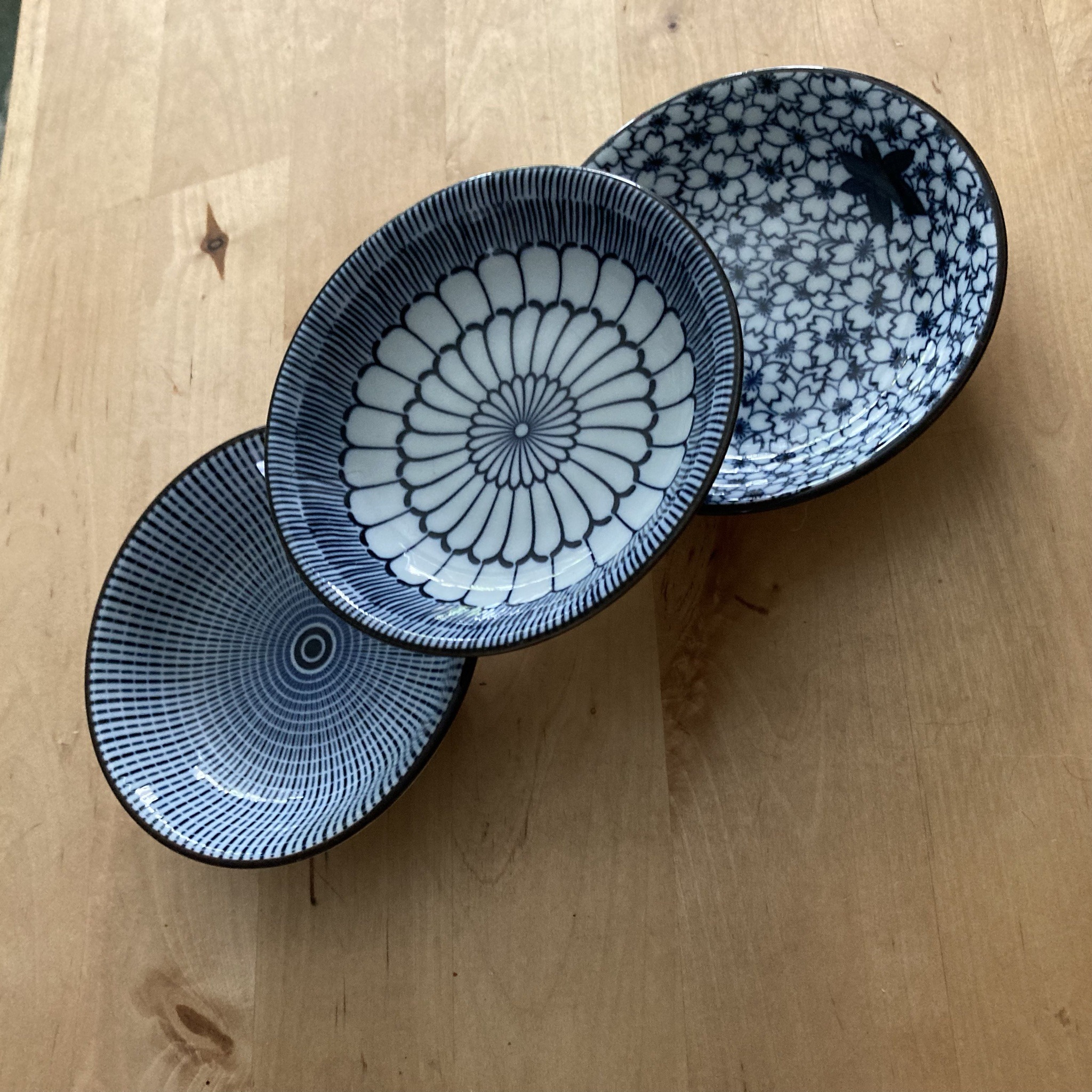
This is a set of three small, circular ceramic sauce or dipping bowls, likely of Japanese origin. Each bowl features a distinct blue cobalt underglaze pattern on a white porcelain or high-quality stoneware body. The first bowl displays a 'Tokusa' or radial pinstripe pattern radiating from a central target motif. The middle bowl features a stylized 'Kiku' (chrysanthemum) design with layered petals and a border of vertical hatch marks. The third bowl is decorated with a dense 'Sakura' (cherry blossom) floral pattern, accented by a single dark butterfly or leaf motif. The bowls transition to a dark brown or black ferruginous glaze along the rim, a common aesthetic choice in Minoyaki or Seto-style pottery to provide contrast and durability. The construction appears precise with uniform wall thickness and a smooth, glossy finish. They appear to be in excellent contemporary condition with no visible chips, cracks, or crazing. The craftsmanship suggests high-quality mass-produced artisanal tableware from the late 20th to early 21st century, designed for both aesthetic appeal and utilitarian use in serving condiments like soy sauce or ginger.
AI-Generated Appraisal Disclaimer
Estimated Value
$45.00 - $65.00
Basic Information
Category
Kitchenware & Tableware
Appraised On
April 30, 2026
Estimated Value
$45.00 - $65.00
Item Description
This is a set of three small, circular ceramic sauce or dipping bowls, likely of Japanese origin. Each bowl features a distinct blue cobalt underglaze pattern on a white porcelain or high-quality stoneware body. The first bowl displays a 'Tokusa' or radial pinstripe pattern radiating from a central target motif. The middle bowl features a stylized 'Kiku' (chrysanthemum) design with layered petals and a border of vertical hatch marks. The third bowl is decorated with a dense 'Sakura' (cherry blossom) floral pattern, accented by a single dark butterfly or leaf motif. The bowls transition to a dark brown or black ferruginous glaze along the rim, a common aesthetic choice in Minoyaki or Seto-style pottery to provide contrast and durability. The construction appears precise with uniform wall thickness and a smooth, glossy finish. They appear to be in excellent contemporary condition with no visible chips, cracks, or crazing. The craftsmanship suggests high-quality mass-produced artisanal tableware from the late 20th to early 21st century, designed for both aesthetic appeal and utilitarian use in serving condiments like soy sauce or ginger.
Get Your Items Appraised
Instant estimates of your treasures with AI-powered instant appraisals