AI Appraisal Estimate

AI-generated estimates · not official valuations

From the user

What was submitted

Photo and notes provided by the user — not generated by AI

Submitted item photo
Submitted photo · June 8, 2026

User's notes

LB3

AI analysis below

AI appraisal

AI analysis & estimate

AI-Generated · Verify before acting

Everything below is generated by AI for informational purposes only. AI can make mistakes — the AI may misidentify items or misattribute them (artist, maker, brand, designer, origin, era). This is not an official valuation and should not be used for insurance, sale, tax, estate, legal, or lending purposes — or any decision requiring a certified appraisal. It is not an authoritative claim about any person, brand, or rights holder — do not share or rely on it as a factual statement about a third party. Always consult qualified professionals before making financial decisions.

Note

This analysis also relies on unverified notes provided by the user, which may be incomplete or inaccurate and could affect the result.

Read the full disclaimer

AI Identification

·Not independently authenticated·Verify before acting

Antique/Vintage Threaded Glass Bottle

Bottle

AI Estimated Value

·Not an official valuation·Verify before acting

$5-20

As of June 8, 2026

AI Item Analysis

·AI can make mistakes·Verify before acting
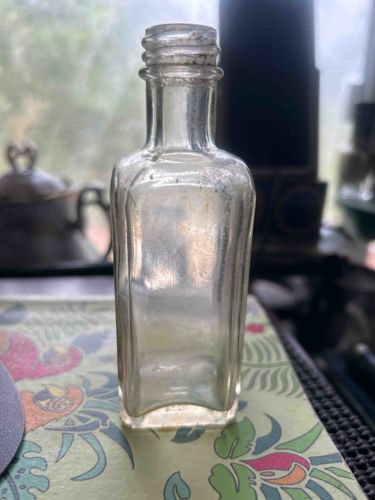
The item is a clear glass bottle, likely an antique or vintage example, characterized by its rectangular body and threaded neck finish. It stands approximately 4-6 inches tall, crafted from clear, colorless glass, though a subtle yellowish or bluish tint might be present due to age or glass composition. The body features four flat panels, ideal for affixing labels, and transitions smoothly into a rounded shoulder before narrowing to a cylindrical neck. The neck terminates in a well-defined threaded finish, indicating it was designed for a screw-on cap, a feature common in bottles produced from the late 19th century onwards. Visible mold lines along the sides suggest machine-made or semi-automatic production methods. The base is square with slightly rounded corners. The bottle exhibits signs of wear commensurate with age, including prevalent interior and exterior cloudiness, minor residue, and a soft patina or sickness on the glass, indicative of contents or environmental exposure over many decades. No major cracks or chips are visible, but surface abrasions are likely. There are no discernible embossed manufacturer's marks, brand names, or volume indicators visible in the provided images. Based on its construction and threading, it is estimated to date from the late 19th to mid-20th century (circa 1880s-1950s). Its utilitarian design suggests it likely contained pharmaceuticals, inks, household remedies, or personal care products.

AI Appraisal Report

·AI can make mistakes·Verify before acting
Based on my examination of the provided images for the 'LB3' threaded glass bottle, this item appears to be an authentic antique/vintage utilitarian glass bottle, consistent with production methods from the late 19th to mid-20th century (circa 1880s-1950s). Its rectangular body, clear glass, and threaded finish align with typical pharmaceutical, ink, or household remedy containers of the era. The presence of mold lines suggests machine-made or semi-automatic production, further supporting its estimated age range. The bottle's condition exhibits significant signs of age, including prevalent interior and exterior cloudiness, minor residue, and a soft patina or sickness. While no major cracks or chips are visible, these cosmetic issues detract from its overall aesthetic appeal to collectors. Surface abrasions are also likely, as described. The market for common, unmarked utilitarian glass bottles like this is generally modest. Demand is limited, as the item lacks distinct characteristics such as unusual color, unique shape, or, crucially, embossed manufacturer's marks or brand names that would enhance its rarity or historical significance. The prevalent cloudiness and sickness further diminish its appeal compared to cleaner examples of similar bottles. A significant limitation in this appraisal is the reliance solely on images. A physical inspection would be crucial to accurately assess the true extent of the glass sickness, confirm the absence of any faint or obscured markings (which are not discernible in the provided images), and determine the exact tint of the glass. In-person examination would also allow for a more precise evaluation of internal residue and surface abrasions. Authenticity is supported by structural details, but specific historical context would benefit from provenance documentation.

Get your items appraised

Instant estimates of your treasures with AI-powered appraisals

Browse More Appraisals