AI estimate as of October 25, 2025 · verify with a professional before acting
AI-Generated · Verify before acting
Everything on this page is generated by AI for informational purposes only. AI can make mistakes — the AI may misidentify items or misattribute them (artist, maker, brand, designer, origin, era). This is not an official valuation and should not be used for insurance, sale, tax, estate, legal, or lending purposes — or any decision requiring a certified appraisal. It is not an authoritative claim about any person, brand, or rights holder — do not share or rely on it as a factual statement about a third party. Always consult qualified professionals before making financial decisions.
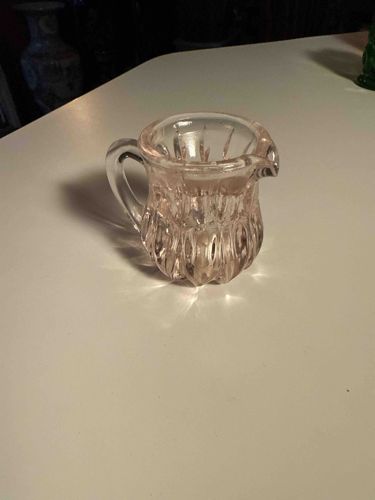
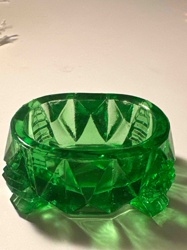
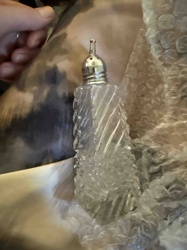
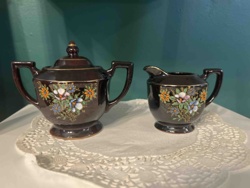
This is a small, clear or very lightly tinted pinkish-hued pressed glass creamer, likely designed for serving cream or milk with coffee or tea. The creamer features a classic squat, bulbous body tapering slightly towards the top, with a defined pouring spout and an applied or molded C-shaped handle. The main body of the creamer is adorned with a series of vertical, elongated facets or ribs, creating a 'fluted' or 'cut glass' appearance, though the clarity and uniformity suggest it's pressed glass rather than hand-cut. The top rim of the creamer is smooth and rounded, blending into the spout. The interior appears relatively smooth. The handle is simple and unadorned, providing a functional grip. The base is not fully visible but appears to have a flat bottom, and the light reflection suggests a slight concavity or design on the underside. There are no visible chips, cracks, or significant wear marks from the provided images, suggesting good condition. The manufacturing method of pressed glass often indicates a late 19th to mid-20th century production period. The subtle reddish or pinkish tint could be inherent to the glass composition, sometimes referred to as 'blush pink' or 'rose tint' glass, or it might be an effect of lighting. Without maker's marks, precise dating is challenging, but the style points towards a Victorian-era influence or a mid-century revival of such designs. It represents a common table accessory from that period, valued for its utility and decorative appeal.
AI Appraisal Report
I've examined the provided image of this pressed glass creamer. From a visual standpoint, the item appears to be in very good condition, showing no visible chips, cracks, or significant fleabites often associated with pressed glass of this age. Its clarity and uniform fluting strongly suggest it is pressed glass, not cut glass, aligning with typical late 19th to mid-20th century production. The subtle pinkish hue, if indeed inherent, could add a slight aesthetic appeal, but it's difficult to confirm definitively from an image alone as lighting can influence color perception. Authenticity as pressed glass from the stated period seems reasonable given the style and manufacturing characteristics; however, without maker's marks or patterns unique to a specific manufacturer, pinpointing an exact origin or date is challenging.
In terms of market conditions, similar pressed glass creamers, even those with attractive patterns and good condition, are quite common. The market for general antique pressed glass tableware is steady but not particularly high-value unless an item is rare, from a highly sought-after pattern, or a prominent manufacturer. This creamer, while charming, does not exhibit features that suggest significant rarity. Demand is moderate, primarily from collectors of vintage glassware or individuals seeking period-appropriate decorative items.
Factors impacting value include its good condition, but the lack of specific identification and its common type limit its potential. For full authentication and to ascertain the exact glass composition or origin, an in-person examination would be crucial. This would allow for inspection of the base for mold lines, potential maker's marks, and a truer assessment of the glass's color and quality under various light conditions. Provenance documentation, if available, would also significantly aid in dating and attribution.