AI Appraisal Estimate

AI-generated estimates · not official valuations

From the user

What was submitted

Photo and notes provided by the user — not generated by AI

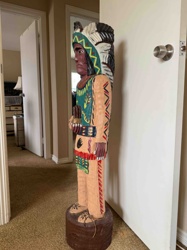
Submitted item photo
Submitted photo · May 27, 2026

User's notes

No additional notes provided.

AI analysis below

AI appraisal

AI analysis & estimate

AI-Generated · Verify before acting

Everything below is generated by AI for informational purposes only. AI can make mistakes — the AI may misidentify items or misattribute them (artist, maker, brand, designer, origin, era). This is not an official valuation and should not be used for insurance, sale, tax, estate, legal, or lending purposes — or any decision requiring a certified appraisal. It is not an authoritative claim about any person, brand, or rights holder — do not share or rely on it as a factual statement about a third party. Always consult qualified professionals before making financial decisions.

Read the full disclaimer

AI Identification

·Not independently authenticated·Verify before acting

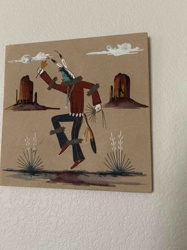
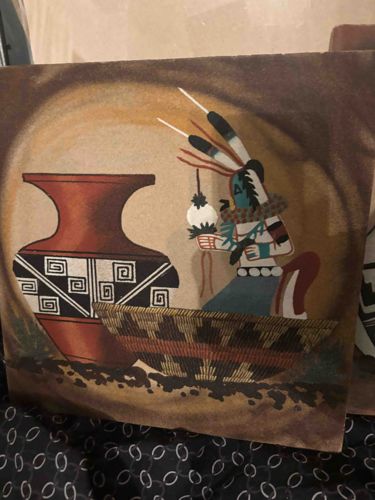
Navajo Sandpainting of a Kachina with Pottery and Basket

Native American Art / Indigenous Folk Art

AI Estimated Value

·Not an official valuation·Verify before acting

$450 - $650

As of May 27, 2026

AI Item Analysis

·AI can make mistakes·Verify before acting
This is a traditional Navajo sandpainting executed on a square board, measuring approximately 12 by 12 inches. The piece utilizes finely ground, naturally colored sands and pigments to create a textural, matte surface. The central composition features a highly detailed Kachina figure in traditional regalia including feathered headdress and ornate necklaces, set behind a ceremonial basket and adjacent to a large olla-style ceramic vessel with geometric Greek key patterns. The color palette is earth-toned, emphasizing terracottas, ochre, white, black, and turquoise. The background maintains a circular halo effect that draws focus to the central figures. In terms of condition, the item shows some edge wear and minor surface abrasions consistent with age, likely dating it to the mid-to-late 20th century. The craftsmanship is highly detailed, visible in the precision of the line work and the consistent density of the sand application. While no signature is immediately visible on the front, these works are often signed on the reverse with the artist's name and tribal affiliation. This piece represents a secularized version of traditional Navajo healing sandpaintings made for the commercial art market.
AI Appraisal Report

·AI can make mistakes·Verify before acting
I have carefully examined the 12x12 inch Navajo sandpainting depicting a Kachina with pottery and a basket. Stylistically, the piece exhibits the hallmark characteristics of Mid-to-Late 20th-century secular sand art. The precision of the 'pouring' technique is evident in the sharpness of the Greek key patterns on the olla and the fine anatomical details of the Kachina. The use of natural earth pigments appears consistent with traditional palettes used by Navajo artisans transitionally creating work for the decorative market. Condition-wise, the visible edge wear and surface abrasions are minor and expected for an unglazed piece of this age; however, the lack of significant 'sand loss' or lifting suggests the adhesive binder remains stable. The market for mid-century Navajo sandpaintings is currently active but saturated. While large-scale works by known masters (like Joe Ben Jr.) command thousands, 12-inch commercial pieces typically sit in the mid-hundreds. This specific piece ranks higher due to the complexity of including three distinct motifs (Kachina, basket, and pottery) rather than a single figure. Limitations of this report include the inability to inspect the verso for a signature or tribal enrollment number, which would significantly enhance valuation. My assessment is based solely on visual aesthetics. To verify authenticity and maximize value, an in-person inspection is required to confirm the sand is naturally occurring mineral rather than synthetically dyed. Provenance documentation or a 'Certificate of Authenticity' from a reputable trading post would be necessary to certify this as a genuine Navajo-made item under the Indian Arts and Crafts Act of 1990.

Get your items appraised

Instant estimates of your treasures with AI-powered appraisals

Browse More Appraisals