AI estimate as of August 6, 2025 · verify with a professional before acting
AI-Generated · Verify before acting
Everything on this page is generated by AI for informational purposes only. AI can make mistakes — the AI may misidentify items or misattribute them (artist, maker, brand, designer, origin, era). This is not an official valuation and should not be used for insurance, sale, tax, estate, legal, or lending purposes — or any decision requiring a certified appraisal. It is not an authoritative claim about any person, brand, or rights holder — do not share or rely on it as a factual statement about a third party. Always consult qualified professionals before making financial decisions.
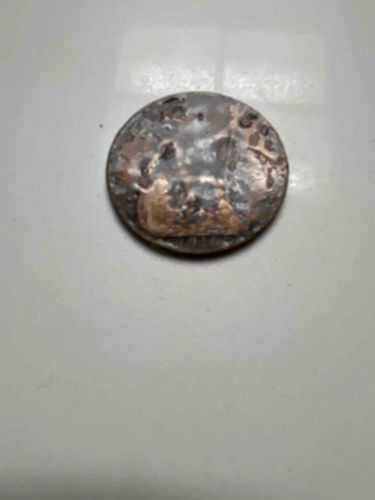
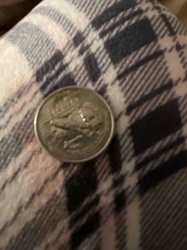
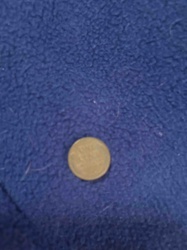
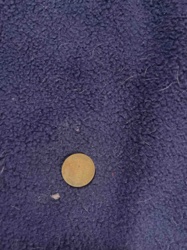
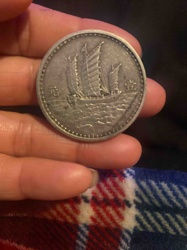
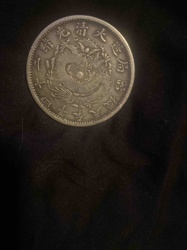
The item appears to be a heavily corroded and possibly heat-damaged coin or medal. Its circular shape suggests it was originally manufactured as a coin or similar minted object. The visible surface is a mottled mix of dark brown, black, and coppery orange tones, indicative of significant oxidation and possibly exposure to extreme heat, which can alter the metal's color and texture. There are raised, irregular areas, particularly on what seems to be the obverse, which could be remnants of an original design, deeply corroded features, or even melted portions of the metal. A distinct, brighter coppery-orange area is visible on the lower half, suggesting a copper or bronze alloy as the base material. The overall surface is rough and uneven, with pits and possible flaking, demonstrating severe environmental damage and material degradation. No clear text, dates, or discernible images (such as a profile or emblem) are visible due to the extensive damage, making specific identification challenging. The edge appears mostly intact, though it's difficult to assess wear or reeding. Due to the extreme degradation, any original craftsmanship, maker's marks, or specific manufacturing details are entirely obscured. Given its current state, it’s impossible to determine an exact style period or estimated age, though the presence of distinct raised features suggests it was once a relief-printed item. The quality indicators are significantly compromised, as the damage has obliterated most original characteristics. This piece would likely be considered in 'Poor' or 'Junk' condition from a numismatic perspective, valuing it more as an archaeological curiosity or a specimen of material degradation rather than a collectible coin.
AI Appraisal Report
Upon examining the provided image of what appears to be a heavily corroded and heat-damaged coin fragment, I must assess its condition as 'Poor' to 'Junk' from a numismatic standpoint. The extreme degradation, including significant oxidation, color alteration (dark brown, black, coppery orange), and surface pitting, has effectively obliterated all original minting details. No discernible text, dates, or imagery (such as a profile or emblem) remain, making specific identification impossible. The original craftsmanship and any potential maker's marks are entirely obscured. Authenticity, in terms of its origin as a legitimate coin, is challenging to confirm solely from this image. While its circular shape and raised features suggest a minted object, the absence of identifiable characteristics means I cannot confirm its period, country of origin, or even its original denomination.
Market conditions for such an item are extremely limited. There is virtually no collector demand for an unidentifiable, severely damaged coin fragment. Comparables would typically include archaeological finds sold for their base metal scrap value, or as curiosities rather than collectible numismatic pieces. Its rarity is not a factor that enhances value, as 'rare' implies a known, valuable piece of which few exist; this item is simply too damaged to be classified as such. The primary factor significantly impacting its value is the catastrophic loss of all identifying features and aesthetic appeal, rendering it valueless to coin collectors.
Limitations in authenticity verification are paramount here. Without in-person examination, it's impossible to ascertain the exact metallic composition, specific gravity, or confirm if the 'raised areas' are indeed remnants of design or just extreme corrosion. Full authentication would require professional conservation and cleaning (though this risks further damage), metallurgical analysis, and potentially X-ray fluorescence (XRF) to determine the alloy. Provenance documentation would be critical if there were any historical significance to its discovery. In its current state, it holds curiosity value at best, perhaps as a teaching aid for material degradation.