Royal Vienna Porcelain Backstamp
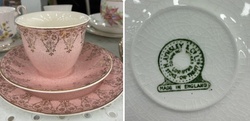
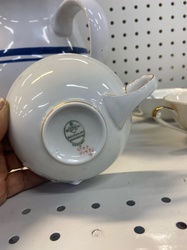
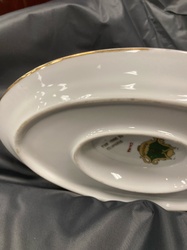
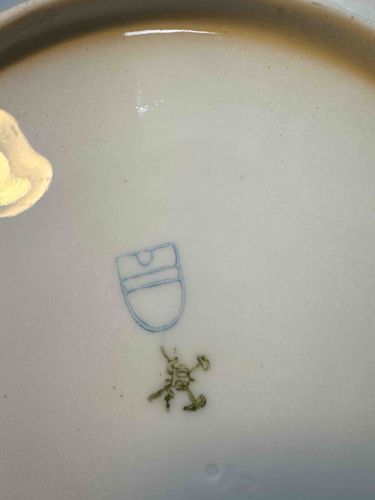
This is a close-up image of the underside of a fine porcelain ceramic piece, most likely a plate or saucer, featuring a prominent 'Beehive' or shield mark associated with the Imperial and Royal State Manufactory Vienna (Royal Vienna). The surface is a crisp, off-white or cream-colored glaze with a smooth, glossy finish. The primary mark consists of an underglaze blue shield, characterized by two horizontal bars and a rounded bottom, commonly referred to as the 'Beehive' mark. Below this primary mark is an additional overglaze green stamp resembling a crown or crest, which suggests a later decorator's mark or perhaps a specific era of production circa the late 19th or early 20th century. The porcelain body appears to be hard-paste, showing high refinement with no visible crazing or major cracks in this section. There are minor localized surface imperfections and a small indentation near the bottom edge that may represent an impressed numeral or kiln mark. The craftsmanship of the marks indicates an authentic transfer or hand-stamped process common to high-quality European ceramics. The presence of both underglaze and overglaze marks makes it a complex piece from a period-style perspective, likely reflecting the 'Neo-Vienna' style popular in the historicist period.

AI-Generated Appraisal Disclaimer
Estimated Value
$600 - $900
Basic Information
Category
Antique Fine Ceramics and Porcelain
Appraised On
January 10, 2026
Estimated Value
$600 - $900
Item Description
This is a close-up image of the underside of a fine porcelain ceramic piece, most likely a plate or saucer, featuring a prominent 'Beehive' or shield mark associated with the Imperial and Royal State Manufactory Vienna (Royal Vienna). The surface is a crisp, off-white or cream-colored glaze with a smooth, glossy finish. The primary mark consists of an underglaze blue shield, characterized by two horizontal bars and a rounded bottom, commonly referred to as the 'Beehive' mark. Below this primary mark is an additional overglaze green stamp resembling a crown or crest, which suggests a later decorator's mark or perhaps a specific era of production circa the late 19th or early 20th century. The porcelain body appears to be hard-paste, showing high refinement with no visible crazing or major cracks in this section. There are minor localized surface imperfections and a small indentation near the bottom edge that may represent an impressed numeral or kiln mark. The craftsmanship of the marks indicates an authentic transfer or hand-stamped process common to high-quality European ceramics. The presence of both underglaze and overglaze marks makes it a complex piece from a period-style perspective, likely reflecting the 'Neo-Vienna' style popular in the historicist period.
Get Your Items Appraised
Instant estimates of your treasures with AI-powered instant appraisals