Vintage Silver-Tone Collegiate Class Ring
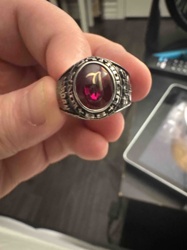
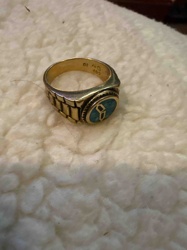
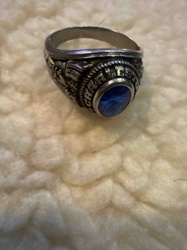
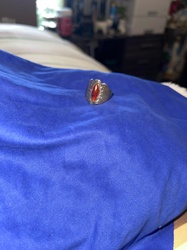
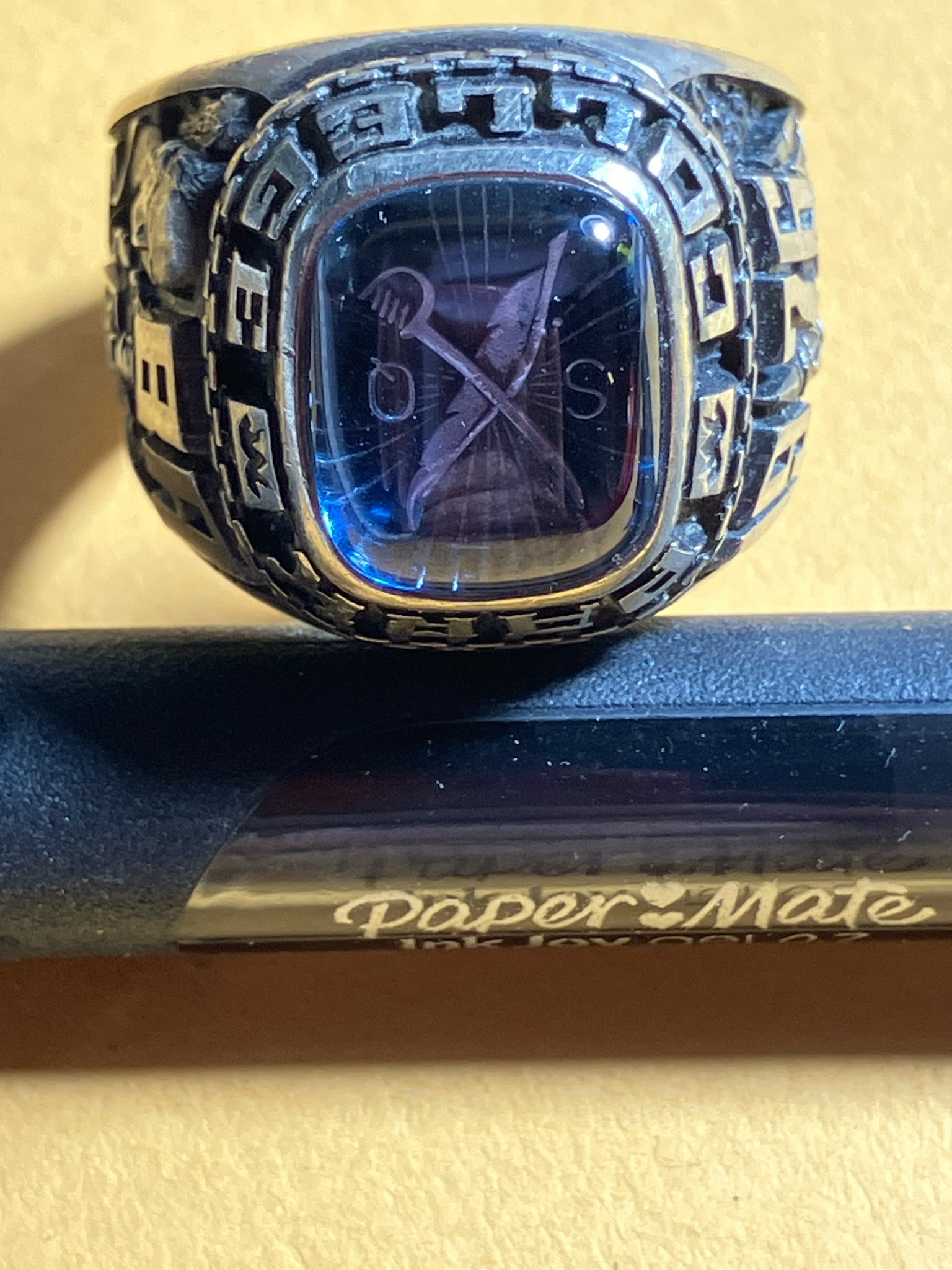
A vintage silver-tone commemorative class ring, likely composed of sterling silver or a base metal alloy like Lustrium or Celestrium commonly used by manufacturers like Jostens or Balfour. The ring features a large, cushion-cut synthetic blue spinel or glass center stone, which is encrusted with a back-etched gold-toned emblem depicting a crossed quill and torch, flanked by the initials 'O' and 'S'. The bezel surrounding the stone is deeply embossed with the word 'COLLEGE' along the top edge, indicating its academic origin. The band and shoulders of the ring display intricate relief work including architectural or symbolic motifs typical of mid-to-late 20th-century graduation jewelry. The metal exhibits a dark, heavy patina in the recessed areas (oxidation), which provides high contrast to the raised polished surfaces, though significant surface wear and micro-scratching are visible throughout the band. The construction appears to be a single-cast piece with a closed-back setting for the stone. The style suggests it most likely dates from the 1960s to 1980s. Overall condition shows signs of regular wear consistent with age, including softening of the high-relief details and some minor scuffing on the facets of the synthetic stone.

AI-Generated Appraisal Disclaimer
Estimated Value
$50 - $150
Basic Information
Category
Jewelry - Commemorative Rings
Appraised On
May 6, 2026
Estimated Value
$50 - $150
Item Description
A vintage silver-tone commemorative class ring, likely composed of sterling silver or a base metal alloy like Lustrium or Celestrium commonly used by manufacturers like Jostens or Balfour. The ring features a large, cushion-cut synthetic blue spinel or glass center stone, which is encrusted with a back-etched gold-toned emblem depicting a crossed quill and torch, flanked by the initials 'O' and 'S'. The bezel surrounding the stone is deeply embossed with the word 'COLLEGE' along the top edge, indicating its academic origin. The band and shoulders of the ring display intricate relief work including architectural or symbolic motifs typical of mid-to-late 20th-century graduation jewelry. The metal exhibits a dark, heavy patina in the recessed areas (oxidation), which provides high contrast to the raised polished surfaces, though significant surface wear and micro-scratching are visible throughout the band. The construction appears to be a single-cast piece with a closed-back setting for the stone. The style suggests it most likely dates from the 1960s to 1980s. Overall condition shows signs of regular wear consistent with age, including softening of the high-relief details and some minor scuffing on the facets of the synthetic stone.
Get Your Items Appraised
Instant estimates of your treasures with AI-powered instant appraisals