Lower Paleolithic Chert Hand Axe/Scraper Tool
Archaeological Artifacts / Prehistoric Stone Tools

Lower Paleolithic Chert Hand Axe/Scraper Tool

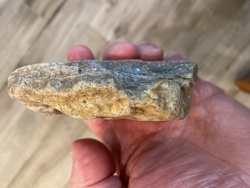
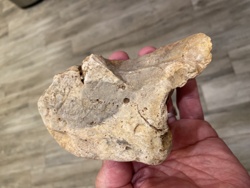
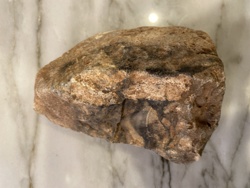
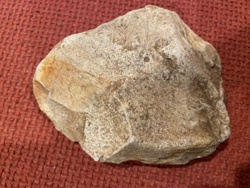
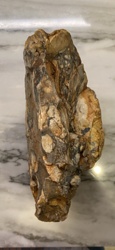
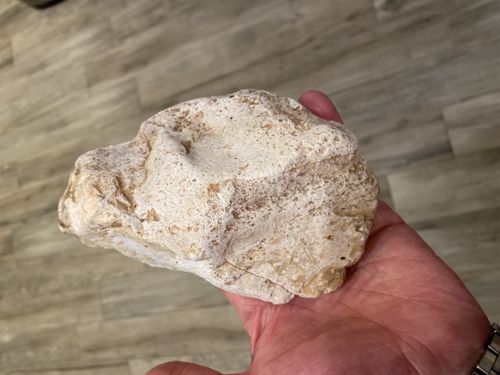
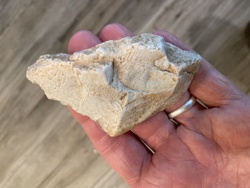
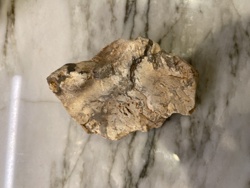
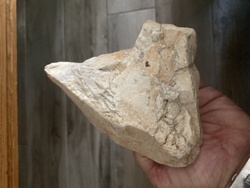
This specimen is a large lithic implement, identified as a hand axe or scraping tool, measuring approximately 6 inches by 4 inches. It is crafted from a light-colored, cream-to-tan chert, a microcrystalline sedimentary rock favored for its conchoidal fracturing properties. The object exhibits heavy bifacial flaking and retouching along the edges to create a functional striking or scraping surface. Its physical form is robust and asymmetrical, with a thick central cross-section that tapers toward the worked edges. The surface shows significant evidence of patination and mineral accretion, consistent with long-term exposure to soil and environmental elements in the Guthrie, Oklahoma region. Notable features include a possible circular indentation or concavity on the dorsal face, which may have served as a thumb rest for ergonomic grip during intensive labor. The tool displays edge wear and occasional micro-fracturing along the perimeter, indicating historical use for tasks such as butchering, hide preparation, or wood processing. The craftsmanship represents a crude but effective flintknapping technique characteristic of Lower Paleolithic or early North American lithic industries. Condition is considered stable as an archaeological find, with no modern repairs visible, maintaining an authentic weathered texture and earthy patina that confirms its ancient origin.
Estimated Value

$150 - $300

Basic Information

Category

Archaeological Artifacts / Prehistoric Stone Tools

Appraised On

February 19, 2026

Estimated Value

$150 - $300

Additional Details Provided By Owner

User Provided Information

Lower Paleolithic chert Hand axe scraper tool scraper tool found in Guthrie OK measuring 6" x 4"

Item Description

This specimen is a large lithic implement, identified as a hand axe or scraping tool, measuring approximately 6 inches by 4 inches. It is crafted from a light-colored, cream-to-tan chert, a microcrystalline sedimentary rock favored for its conchoidal fracturing properties. The object exhibits heavy bifacial flaking and retouching along the edges to create a functional striking or scraping surface. Its physical form is robust and asymmetrical, with a thick central cross-section that tapers toward the worked edges. The surface shows significant evidence of patination and mineral accretion, consistent with long-term exposure to soil and environmental elements in the Guthrie, Oklahoma region. Notable features include a possible circular indentation or concavity on the dorsal face, which may have served as a thumb rest for ergonomic grip during intensive labor. The tool displays edge wear and occasional micro-fracturing along the perimeter, indicating historical use for tasks such as butchering, hide preparation, or wood processing. The craftsmanship represents a crude but effective flintknapping technique characteristic of Lower Paleolithic or early North American lithic industries. Condition is considered stable as an archaeological find, with no modern repairs visible, maintaining an authentic weathered texture and earthy patina that confirms its ancient origin.
Get Your Items Appraised

Instant estimates of your treasures with AI-powered instant appraisals

Browse More Appraisals