Percussion Box-Lock Pocket Pistol
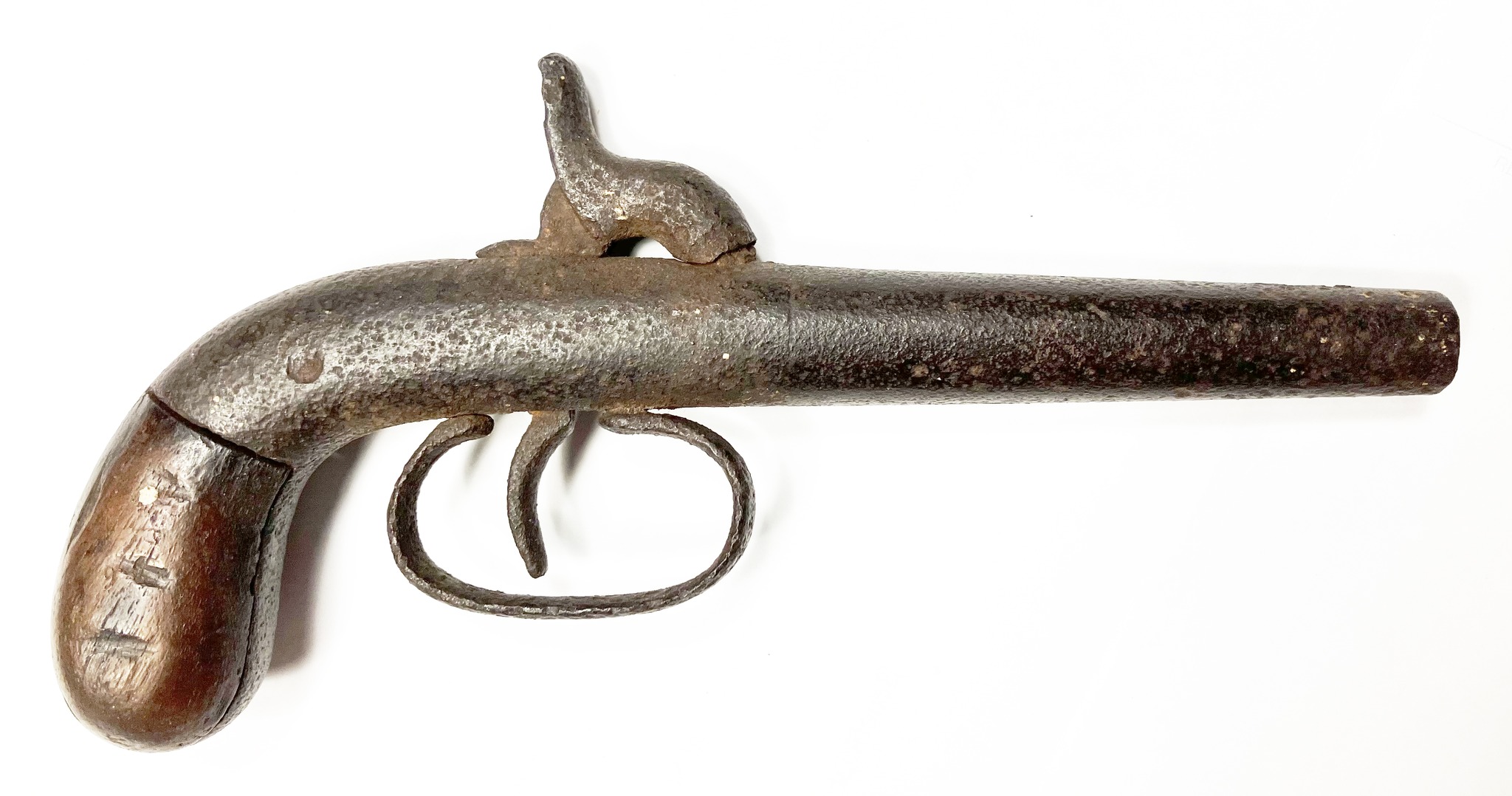
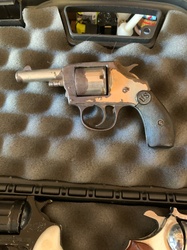
This is an early to mid-19th-century percussion cap box-lock pocket pistol, typical of personal defense firearms from the 1840s to 1860s. The firearm features a smoothbore round barrel integrated into a central box-lock ignition system. The frame and barrel are constructed of iron or steel, now exhibiting significant and heavy surface oxidation, pitting, and a thick dark brown patina characteristic of long-term exposure to moisture or poor storage conditions. The percussion hammer is mounted centrally, and while its cocking spur remains intact, the metal appears degraded. The trigger is protected by an oval-shaped iron guard that shows similar corrosive wear. The grip is a simple bag-shaped design made of wood, likely walnut, which shows numerous heavy abrasions, deep gouges, and what appear to be intentional markings or notches on the left side. There is a visible gap and possible loose fit at the junction where the wooden grip meets the metal frame. No manufacturer's stamps or proof marks are visible due to the extensive surface corrosion, but the overall utilitarian design suggests a European or American mass-market origin. The condition is poor and non-functional, as the action is likely seized by rust, and the metal integrity is compromised by deep pitting throughout the barrel and frame.
AI-Generated Appraisal Disclaimer
Estimated Value
$150-$250
Basic Information
Category
Antique Firearms / Militaria
Appraised On
April 30, 2026
Estimated Value
$150-$250
Item Description
This is an early to mid-19th-century percussion cap box-lock pocket pistol, typical of personal defense firearms from the 1840s to 1860s. The firearm features a smoothbore round barrel integrated into a central box-lock ignition system. The frame and barrel are constructed of iron or steel, now exhibiting significant and heavy surface oxidation, pitting, and a thick dark brown patina characteristic of long-term exposure to moisture or poor storage conditions. The percussion hammer is mounted centrally, and while its cocking spur remains intact, the metal appears degraded. The trigger is protected by an oval-shaped iron guard that shows similar corrosive wear. The grip is a simple bag-shaped design made of wood, likely walnut, which shows numerous heavy abrasions, deep gouges, and what appear to be intentional markings or notches on the left side. There is a visible gap and possible loose fit at the junction where the wooden grip meets the metal frame. No manufacturer's stamps or proof marks are visible due to the extensive surface corrosion, but the overall utilitarian design suggests a European or American mass-market origin. The condition is poor and non-functional, as the action is likely seized by rust, and the metal integrity is compromised by deep pitting throughout the barrel and frame.
Related Tags
Get Your Items Appraised
Instant estimates of your treasures with AI-powered instant appraisals