Lower Paleolithic Chert Hand Axe Scraper Multi-Tool
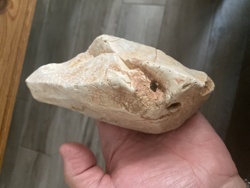
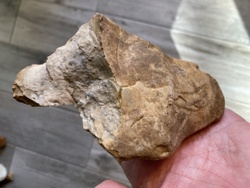
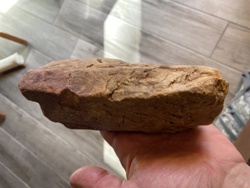
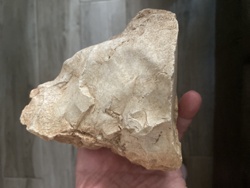
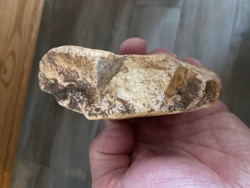
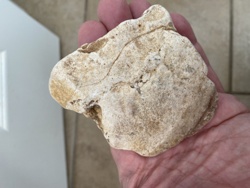
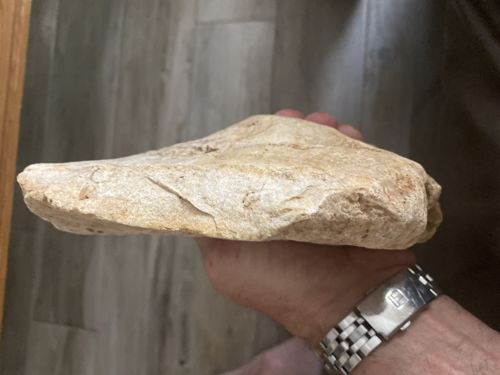
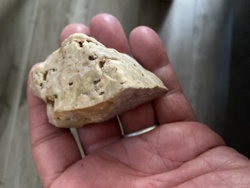
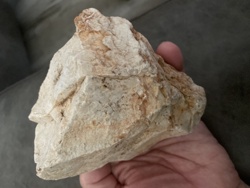
This is a substantial prehistoric lithic artifact, measuring approximately 8 inches by 5.5 inches. The item is crafted from high-quality chert, displaying a characteristic tan and cream-colored appearance with a matte, weathered surface texture. This multi-tool demonstrates the bifacial knapping techniques indicative of Lower Paleolithic tool-making, featuring a profile that narrows to an edge suitable for scraping or chopping. The construction shows evidence of intentional flaking to create a functional grip and working edge, though the specimen also shows significant natural weathering and rounded edges indicative of water action or long-term environmental exposure (patina). There are no discernible maker's marks, as the item predates written language or formal branding, but the percussion scars and intentional shaping suggest human manufacture. The thickness of the central ridge provides structural integrity for heavy-duty tasks. Condition-wise, the piece appears stable but possesses numerous micro-fractures, surface pitting, and smoothing consistent with an artifact of extreme age. Found in Guthrie, Oklahoma, this specimen serves as a significant example of early human percussion technology in North America, representing a versatile tool used for various subsistence tasks.
AI-Generated Appraisal Disclaimer
Estimated Value
$150 - $350
Basic Information
Category
Prehistoric Lithic Artifacts
Appraised On
February 19, 2026
Estimated Value
$150 - $350
Additional Details Provided By Owner
User Provided Information
Lower Paleolithic chert hand axe scraper multi tool found in Guthrie OK measuring 8" x 5.5"
Item Description
This is a substantial prehistoric lithic artifact, measuring approximately 8 inches by 5.5 inches. The item is crafted from high-quality chert, displaying a characteristic tan and cream-colored appearance with a matte, weathered surface texture. This multi-tool demonstrates the bifacial knapping techniques indicative of Lower Paleolithic tool-making, featuring a profile that narrows to an edge suitable for scraping or chopping. The construction shows evidence of intentional flaking to create a functional grip and working edge, though the specimen also shows significant natural weathering and rounded edges indicative of water action or long-term environmental exposure (patina). There are no discernible maker's marks, as the item predates written language or formal branding, but the percussion scars and intentional shaping suggest human manufacture. The thickness of the central ridge provides structural integrity for heavy-duty tasks. Condition-wise, the piece appears stable but possesses numerous micro-fractures, surface pitting, and smoothing consistent with an artifact of extreme age. Found in Guthrie, Oklahoma, this specimen serves as a significant example of early human percussion technology in North America, representing a versatile tool used for various subsistence tasks.
Related Tags
Explore similar items and categories:
Get Your Items Appraised
Instant estimates of your treasures with AI-powered instant appraisals