AI Appraisal Estimate

AI-generated estimates · not official valuations

From the user

What was submitted

Photo and notes provided by the user — not generated by AI

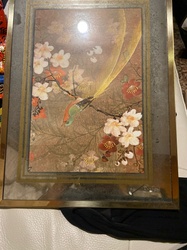
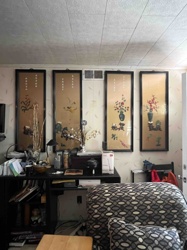
Submitted item photo
Submitted photo · May 26, 2026

User's notes

No additional notes provided.

AI analysis below

AI appraisal

AI analysis & estimate

AI-Generated · Verify before acting

Everything below is generated by AI for informational purposes only. AI can make mistakes — the AI may misidentify items or misattribute them (artist, maker, brand, designer, origin, era). This is not an official valuation and should not be used for insurance, sale, tax, estate, legal, or lending purposes — or any decision requiring a certified appraisal. It is not an authoritative claim about any person, brand, or rights holder — do not share or rely on it as a factual statement about a third party. Always consult qualified professionals before making financial decisions.

Read the full disclaimer

AI Identification

·Not independently authenticated·Verify before acting

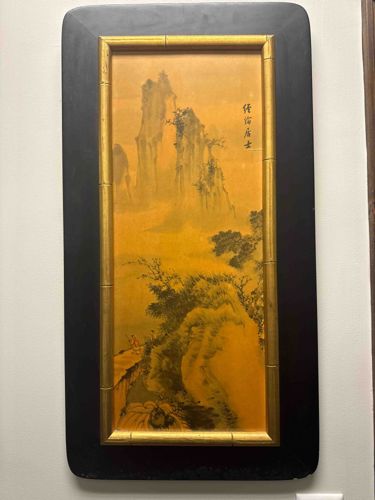
Chinese Shan Shui Silk Painting in Faux-Bamboo Gilt Frame

Asian Fine Art & Decor

AI Estimated Value

·Not an official valuation·Verify before acting

$450 - $700

As of May 26, 2026

AI Item Analysis

·AI can make mistakes·Verify before acting
This is a vertical landscape painting executed in the traditional Chinese 'Shan Shui' (mountain-water) style, likely produced on a silk or fine paper ground that has aged to a deep golden-ochre hue. The composition features characteristic towering karst mountain peaks veiled in mist, with detailed foliage and pine trees in the foreground rendered in black ink wash. A small human figure is visible on the lower left, seated by a rustic structure, providing a sense of scale to the vast landscape. To the upper right, there is a vertical column of Chinese calligraphic characters, which likely serve as a poetic inscription or the artist's signature. The artwork is housed in a sophisticated double-frame assembly: an inner carved wood frame with a 'faux-bamboo' texture finished in gold leaf or gilt paint, set against a wide, flat 'ebonized' or dark-stained wooden outer mount with rounded corners. The piece displays signs of age, including moderate foxing and tonal shifts in the substrate, and a notable chip/loss to the bottom right corner of the ebonized outer frame. The style suggests a 20th-century interpretation of classical Song or Ming dynasty aesthetics, likely dating to the mid-century period (c. 1950s-1970s). The craftsmanship of the frame is notable for its 'Chinoiserie' influence, popular in high-end mid-century interior design.
AI Appraisal Report

·AI can make mistakes·Verify before acting
I have virtually examined this vertical Shan Shui silk painting. The work demonstrates traditional ink-wash techniques consistent with mid-20th-century 'export-quality' fine art. The composition successfully employs the 'three distances' perspective typical of the genre. While the calligraphy and seals appear consistent with an established hand, the execution suggests a professional studio artist rather than a listed master. The faux-bamboo gilt frame adds significant decorative appeal, typical of the mid-century Chinoiserie revival, though the chip to the ebonized outer mount slightly impacts the value. Market demand for mid-century Asian decor remains steady, particularly for vertically oriented landscapes that fit modern interior design trends. Comparables at auction for similar silk-backed landscapes with stylized framing typically range from $400 to $800. The primary value-limiting factors are the visible foxing and the lack of a prominent provenance. While this is a high-quality decorative piece, its authenticity as an 'investment-grade' historical artifact is limited by its likely 1950s-1970s production date. Without a physical inspection, I cannot definitively determine the age of the silk or the mineral composition of the pigments. To provide a full authentication and higher valuation, I would require an in-person microscopic analysis of the ink absorption into the silk fibers to rule out later high-quality lithographic printing, as well as a translation of the colophon to identify the specific studio or artist. Provenance documents such as original purchase receipts from Asian art galleries would further solidify its market standing.

Get your items appraised

Instant estimates of your treasures with AI-powered appraisals

Browse More Appraisals