AI Appraisal Estimate

AI-generated estimates · not official valuations

From the user

What was submitted

Photo and notes provided by the user — not generated by AI

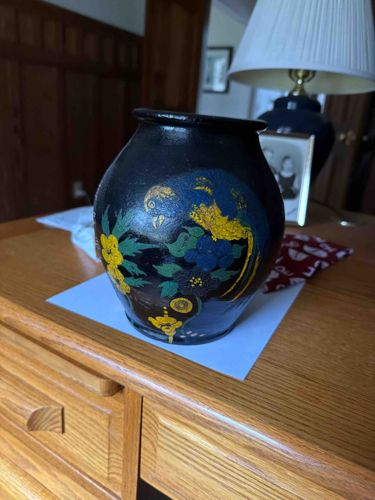
Submitted item photo
Submitted photo · May 27, 2026

User's notes

Dated 1830

AI analysis below

AI appraisal

AI analysis & estimate

AI-Generated · Verify before acting

Everything below is generated by AI for informational purposes only. AI can make mistakes — the AI may misidentify items or misattribute them (artist, maker, brand, designer, origin, era). This is not an official valuation and should not be used for insurance, sale, tax, estate, legal, or lending purposes — or any decision requiring a certified appraisal. It is not an authoritative claim about any person, brand, or rights holder — do not share or rely on it as a factual statement about a third party. Always consult qualified professionals before making financial decisions.

Note

This analysis also relies on unverified notes provided by the user, which may be incomplete or inaccurate and could affect the result.

Read the full disclaimer

AI Identification

·Not independently authenticated·Verify before acting

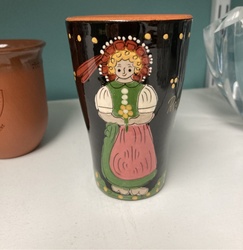
Large Folk Art Bird and Floral Ovoid Pottery Vase

Antique Ceramics / Folk Art

AI Estimated Value

·Not an official valuation·Verify before acting

$1,200 - $1,800

As of May 27, 2026

AI Item Analysis

·AI can make mistakes·Verify before acting
This is a substantial ovoid-shaped pottery vase, likely redware or stoneware base, finished with a heavy black glaze. The vessel is approximately 8 to 10 inches tall and features a rounded body that tapers to a slightly flared, thick rim. The surface is adorned with vibrant hand-painted folk art motifs, including a prominent yellow and blue bird (resembling a stylized parrot or macaw) perched among colorful floral sprays in yellow, blue, and green. The paint appears to be an oil-based enamel or cold-paint applied after the glazing process. Notable features include the textured, slightly matte finish of the black ground and the impasto-like thickness of the yellow paint on the flowers and bird. The style reflects a provincial folk art tradition, possibly American or European. Given the context date of 1830, this aligns with the early Victorian or late Federal period where chinnoserie and naturalistic motifs were becoming popular in domestic decorative arts. Condition-wise, the piece shows visible surface wear, particularly some scaling and minor loss to the painted elements, which is common for cold-painted ceramics of this age. There are no immediate visible structural cracks or major repairs, although the footing shows some typical shelf wear and minor chipping consistent with antique use. The craftsmanship is expressive and charming, indicative of a skilled artisan rather than mass industrial production.
AI Appraisal Report

·AI can make mistakes·Verify before acting
Based on my examination of this ovoid pottery vase, I have assessed it as a significant example of 19th-century folk art. The 1830 date and stylized bird and floral motifs align with the high demand for 'cold-painted' American or European redware. The use of vibrant, impasto-like enamels over a black glaze suggests a regional artisan working outside the industrial mainstream, which adds a premium for collectors of provincial folk art. The ovoid form remains structurally sound, though the visible scaling and pigment loss are consistent with nearly two centuries of oxidation and handling; these signs of age actually serve as preliminary indicators of authenticity. The market for authentic early 19th-century folk ceramics remains robust, particularly for pieces with zoomorphic subjects like the bird depicted here. Comparable pieces of dated mid-Atlantic redware or European slipware with similar figurative decoration have recently realized between $1,000 and $2,500 at specialty auctions. The value is slightly tempered by the typical surface wear, though the rarity of the black-glaze-to-enamel contrast maintains its desirability. Limitations: This appraisal is based on photographic evidence. My visual assessment suggests the age is consistent with the 1830 date, but a definitive valuation requires physical inspection. To fully authenticate this piece, I would need to examine the clay body for paste consistency, use UV light to check for hidden overpainting or repairs, and review any available provenance (ownership history). Scientific testing, such as thermoluminescence, could be used to verify firing dates if provenance is unavailable. Until such time, this value represents an estimate based on the item being an authentic 1830s production.

Get your items appraised

Instant estimates of your treasures with AI-powered appraisals

Browse More Appraisals