Japanese Ukiyo-e Woodblock Print from the series 'Twenty-four Paragons of Filial Piety'
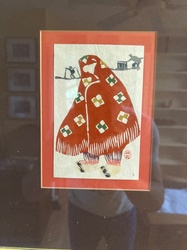
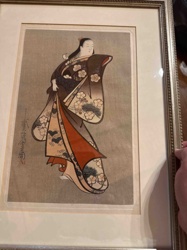
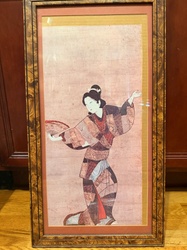
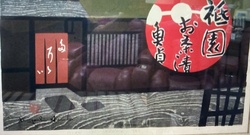
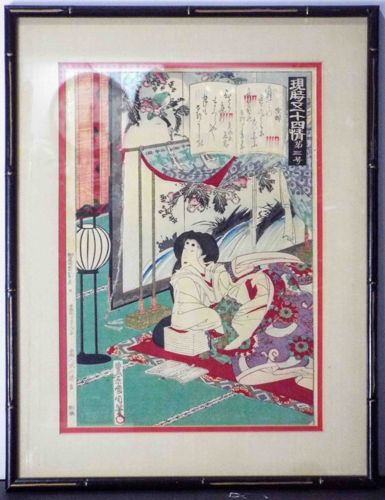
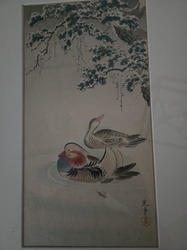
This is a framed Japanese ukiyo-e woodblock print, likely dating to the late Edo or Meiji period (mid-to-late 19th century). The artwork depicts a woman in traditional kimono reclining indoors near a decorative screen (byōbu) and a standing lantern (andön). The composition is rich with narrative elements, including a calligraphy-filled cartouche at the top right, which identifies it as part of a series related to the 'Twenty-four Paragons of Filial Piety' (Nijūshi-kō). The print exhibits the vibrant color palette characteristic of the era, featuring aniline reds (typical of Meiji-era prints), deep teals, and purples. The craftsmanship is evidenced by the fine line work in the figure’s hair and the intricate patterns on the textiles. The piece is housed in a modern black faux-bamboo (chinoiserie style) frame with a cream-colored mat and a thin red inner border that complements the print's primary colors. Condition-wise, the print shows some visible signs of age including light toning of the paper and possible minor fading from UV exposure. There is a noticeable reflection on the glass, but the print surface appears generally intact without major foxing or tears visible to the naked eye. The print includes several seals and publisher marks on the left-hand margin and bottom right, which are essential for identifying the specific artist and publisher of the edition.
AI-Generated Appraisal Disclaimer
Estimated Value
$150 - $350
Basic Information
Category
Fine Art - Asian Works of Art / Japanese Prints
Appraised On
March 22, 2026
Estimated Value
$150 - $350
Additional Details Provided By Owner
User Provided Information
Unknown Artist, Untitled original artwork
Item Description
This is a framed Japanese ukiyo-e woodblock print, likely dating to the late Edo or Meiji period (mid-to-late 19th century). The artwork depicts a woman in traditional kimono reclining indoors near a decorative screen (byōbu) and a standing lantern (andön). The composition is rich with narrative elements, including a calligraphy-filled cartouche at the top right, which identifies it as part of a series related to the 'Twenty-four Paragons of Filial Piety' (Nijūshi-kō). The print exhibits the vibrant color palette characteristic of the era, featuring aniline reds (typical of Meiji-era prints), deep teals, and purples. The craftsmanship is evidenced by the fine line work in the figure’s hair and the intricate patterns on the textiles. The piece is housed in a modern black faux-bamboo (chinoiserie style) frame with a cream-colored mat and a thin red inner border that complements the print's primary colors. Condition-wise, the print shows some visible signs of age including light toning of the paper and possible minor fading from UV exposure. There is a noticeable reflection on the glass, but the print surface appears generally intact without major foxing or tears visible to the naked eye. The print includes several seals and publisher marks on the left-hand margin and bottom right, which are essential for identifying the specific artist and publisher of the edition.
Get Your Items Appraised
Instant estimates of your treasures with AI-powered instant appraisals