AI identification & appraisal estimate

Mediterranean Revival Carved Wood End Table or Commode

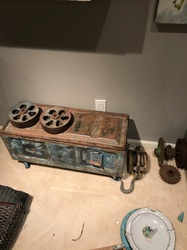
Submitted photo of Mediterranean Revival Carved Wood End Table or Commode
Photo submitted by the user — not generated by AI

User's notes

Old wood side table

These notes were written by the person who submitted this item. Appraiser.AI has not verified them, and the AI's identification and estimate may rely on them.

AI Estimated Value

Not an official valuation

$75-125

AI estimate as of May 14, 2026 · verify with a professional before acting

AI-Generated · Verify before acting

Everything on this page is generated by AI for informational purposes only. AI can make mistakes — the AI may misidentify items or misattribute them (artist, maker, brand, designer, origin, era). This is not an official valuation and should not be used for insurance, sale, tax, estate, legal, or lending purposes — or any decision requiring a certified appraisal. It is not an authoritative claim about any person, brand, or rights holder — do not share or rely on it as a factual statement about a third party. Always consult qualified professionals before making financial decisions.

This analysis also relies on unverified notes provided by the user, which may be incomplete or inaccurate and could affect the result.

Read the full disclaimer

AI Item Analysis

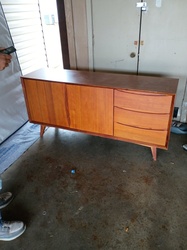
This is a low-profile, rectangular side table or commode cabinet, likely dating from the 1960s to early 1970s. It is constructed from wood and wood veneers with a medium-to-dark oak or walnut finish. The most prominent design feature is the pair of cabinet doors on the front facade, which exhibit deep decorative carvings in a Mediterranean or Spanish Revival style, featuring scrollwork and recessed rectangular panels. The table sits on a continuous plinth base rather than legs, enhancing its sturdy, heavy appearance. The top surface is flat with a beveled edge, though it shows significant condition issues including noticeable finish wear, surface abrasions, and circular water staining near the right edge where the finish has been stripped away. The door hardware appears to be missing, leaving visible attachment points in the center of the carved panels. The overall craftsmanship is characteristic of mid-century mass-produced revivalist furniture, prioritizing bold architectural motifs and ornate textures. The piece lacks visible maker's marks in current views but identifies with brands such as Lane, Broyhill, or American of Martinsville from that era.


AI Appraisal Report

I have examined the provided images and descriptions of this Mediterranean Revival commode. Based on the ornate, deep-relief scrollwork and the heavy plinth base, this piece is a classic example of mass-produced furniture from the late 1960s or early 1970s. While evocative of the high-end designs by firms such as Lane or American of Martinsville, the lack of visible branding and the condition of the top surface suggest a mid-tier provenance. The condition is a primary driver of the current valuation; the visible water rings, finish loss on the top beveled edge, and missing door hardware represent significant 'fair market value' deductions. In the current secondary market, Mediterranean Revival furniture has a smaller collector base compared to sleek Danish Modern styles, though it remains popular for DIY 'upcycling' projects. My valuation reflects the cost of necessary restoration and hardware replacement. Without a physical inspection, I cannot verify the integrity of the wood veneers or check for structural damage such as drawer binding or woodworm. For a definitive authentication and potential increase in value, I would need to find a manufacturer's heat stamp inside the doors or on the back panel. A professional refinishing of the top and sourcing period-accurate hardware would be required to reach the higher end of the market range for this style.

Keep exploring

More furniture appraisals

Get your items appraised

Instant AI-powered appraisal estimates from a photo

Browse More Appraisals