Tortoiseshell Marvered Art Glass Seed Vase
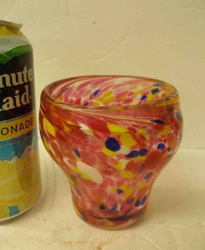
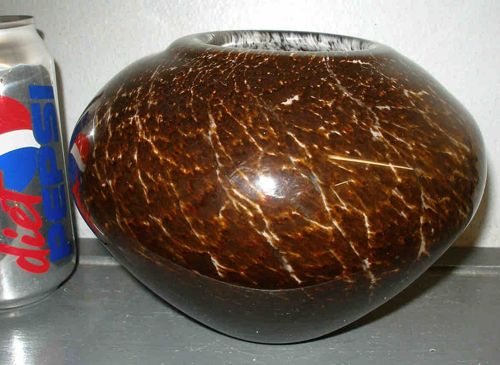
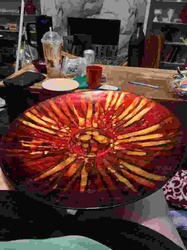
This item is an organic, squat-globe shaped art glass seed vase, characterized by a rounded, bulbous body and a narrow, polished interior rim. Standing approximately the same height as the adjacent soda can (roughly 4-5 inches tall), the piece is hand-blown with a dense mottled pattern. The coloration is a rich, translucent amber-brown palette resembling tortoiseshell, achieved through marvering crushed glass powders or 'frit' onto the surface. Notable features include fine, cream-colored veining or 'crackling' that sweeps across the surface in a diagonal, fluid motion, indicating the vessel was rotated during the blowing process. The glass appears to have a thick, high-quality casing, resulting in a glossy, light-reflective finish. Inside the mouth, a contrasting white and black speckled pattern is visible, suggesting a multi-layered or 'end-of-day' glass technique. No visible maker's marks or signatures are apparent in the image, but the craftsmanship suggests a late 20th-century studio glass movement origin, possibly from a North American or Murano-influenced workshop. The condition appears excellent with no visible chips, cracks, or significant abrasions on the primary surface, and the base likely features a ground or polished pontil scar characteristic of fine hand-blown glass.
AI-Generated Appraisal Disclaimer
Estimated Value
$150 - $250
Basic Information
Category
Art Glass / Decorative Collectibles
Appraised On
December 27, 2025
Estimated Value
$150 - $250
Item Description
This item is an organic, squat-globe shaped art glass seed vase, characterized by a rounded, bulbous body and a narrow, polished interior rim. Standing approximately the same height as the adjacent soda can (roughly 4-5 inches tall), the piece is hand-blown with a dense mottled pattern. The coloration is a rich, translucent amber-brown palette resembling tortoiseshell, achieved through marvering crushed glass powders or 'frit' onto the surface. Notable features include fine, cream-colored veining or 'crackling' that sweeps across the surface in a diagonal, fluid motion, indicating the vessel was rotated during the blowing process. The glass appears to have a thick, high-quality casing, resulting in a glossy, light-reflective finish. Inside the mouth, a contrasting white and black speckled pattern is visible, suggesting a multi-layered or 'end-of-day' glass technique. No visible maker's marks or signatures are apparent in the image, but the craftsmanship suggests a late 20th-century studio glass movement origin, possibly from a North American or Murano-influenced workshop. The condition appears excellent with no visible chips, cracks, or significant abrasions on the primary surface, and the base likely features a ground or polished pontil scar characteristic of fine hand-blown glass.
Related Tags
Get Your Items Appraised
Instant estimates of your treasures with AI-powered instant appraisals