Large Japanese Imari Ware Charger
Antique Asian Ceramics

Large Japanese Imari Ware Charger

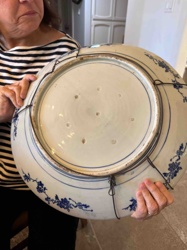
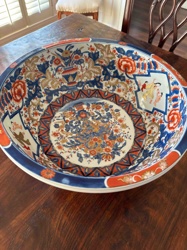
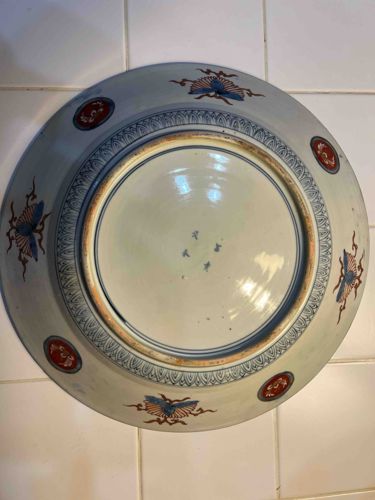
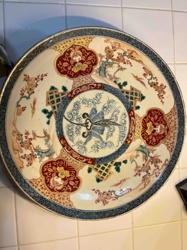
This item is a significant large-scale porcelain charger, likely originating from Japan and executed in the Imari or Sometsuke-style tradition featuring overglaze enamels. The reverse of the platter displays a light celadon-blue tinted glaze characteristic of historical porcelain production. It is decorated with a band of hand-painted floral or butterfly-like motifs in cobalt blue and iron-red enamels, interspersed with circular medallions containing stylized red clouds or phoenixes. Around the foot rim is a continuous decorative border of overlapping petals or ruyi-heads in underglaze blue. The central underside features four distinct blue marks that may represent spurs or kiln marks. The foot rim shows an unglazed, slightly oxidized orange-brown paste, indicating its ceramic body. The craftsmanship suggests a 19th-century or early 20th-century production, typical of the Meiji or early Taisho periods. Condition-wise, the piece appears structurally sound but exhibits minor surface soot, faint crazing, and general shelf wear on the foot rim, consistent with age. The scale and complexity of the enamel work indicate a high level of decorative quality intended for display or ceremonial use.
Estimated Value

$1,200 - $1,800

Basic Information

Category

Antique Asian Ceramics

Appraised On

January 16, 2026

Estimated Value

$1,200 - $1,800

Item Description

This item is a significant large-scale porcelain charger, likely originating from Japan and executed in the Imari or Sometsuke-style tradition featuring overglaze enamels. The reverse of the platter displays a light celadon-blue tinted glaze characteristic of historical porcelain production. It is decorated with a band of hand-painted floral or butterfly-like motifs in cobalt blue and iron-red enamels, interspersed with circular medallions containing stylized red clouds or phoenixes. Around the foot rim is a continuous decorative border of overlapping petals or ruyi-heads in underglaze blue. The central underside features four distinct blue marks that may represent spurs or kiln marks. The foot rim shows an unglazed, slightly oxidized orange-brown paste, indicating its ceramic body. The craftsmanship suggests a 19th-century or early 20th-century production, typical of the Meiji or early Taisho periods. Condition-wise, the piece appears structurally sound but exhibits minor surface soot, faint crazing, and general shelf wear on the foot rim, consistent with age. The scale and complexity of the enamel work indicate a high level of decorative quality intended for display or ceremonial use.
Get Your Items Appraised

Instant estimates of your treasures with AI-powered instant appraisals

Browse More Appraisals