AI Appraisal Estimate

AI-generated estimates · not official valuations

From the user

What was submitted

Photo and notes provided by the user — not generated by AI

Submitted item photo
Submitted photo · June 17, 2026

User's notes

No additional notes provided.

AI analysis below

AI appraisal

AI analysis & estimate

AI-Generated · Verify before acting

Everything below is generated by AI for informational purposes only. AI can make mistakes — the AI may misidentify items or misattribute them (artist, maker, brand, designer, origin, era). This is not an official valuation and should not be used for insurance, sale, tax, estate, legal, or lending purposes — or any decision requiring a certified appraisal. It is not an authoritative claim about any person, brand, or rights holder — do not share or rely on it as a factual statement about a third party. Always consult qualified professionals before making financial decisions.

Read the full disclaimer

AI Identification

·Not independently authenticated·Verify before acting

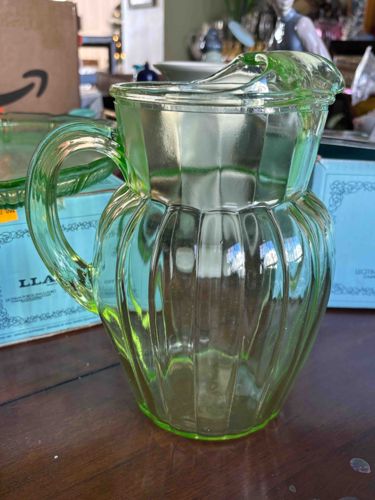
Anchor Hocking Green Uranium Glass Ribbed Water Pitcher

Antique Glassware / Depression Glass

AI Estimated Value

·Not an official valuation·Verify before acting

$45 - $65

As of June 17, 2026

AI Item Analysis

·AI can make mistakes·Verify before acting
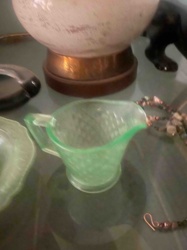
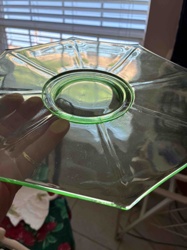
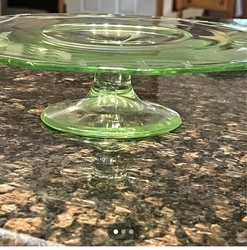
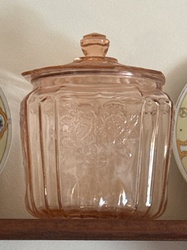
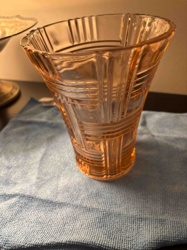
This is a vintage Depression-era glass water pitcher, specifically identified as the 'Ribbed' or 'Vertical Rib' pattern manufactured by Anchor Hocking in the 1930s. The vessel is crafted from translucent 'Vaseline' or Uranium green glass, which contains a small amount of uranium oxide, causing it to glow bright neon green under ultraviolet light. Physically, the pitcher features a bulbous lower body with vertical molded flutes or ribs that taper towards the base and extend up to a defined shoulder. The upper neck has wide, flattened facets that transition into a smooth rim with a functional ice-lip spout. A large, thick C-shaped applied handle is positioned opposite the spout. The glass shows characteristic manufacturing traits of the period, including visible mold seams and occasional tiny seeds or air bubbles trapped within the material. In terms of condition, the pitcher appears to be in very good vintage state with no visible cracks or large chips on the rim or base. There is light surface wear consistent with age, particularly fine 'shelf wear' scratches on the underside of the base. The color is consistent throughout, indicative of high-quality mass production from the early American pattern glass era. No specific maker's mark is visible, which is standard for many Depression-era utility glass pieces.
AI Appraisal Report

·AI can make mistakes·Verify before acting
Based on my visual examination of the Anchor Hocking 'Ribbed' water pitcher, I find it to be a classic example of early 1930s Depression-era production. The specimen exhibits the characteristic 'Uranium Green' hue and consistent vertical molding synonymous with the period. The presence of incidental air bubbles and faint mold seams is consistent with mass-production techniques of the era and helps substantiate its authenticity as a period-correct piece rather than a modern reproduction. Condition-wise, the pitcher appears to be in very good vintage state. The integrity of the 'ice lip' spout and the stability of the thick applied handle are critical factors; these areas often suffer from 'flea bites' or stress fractures, which seem absent here. The noted 'shelf wear' on the base is typical and actually serves as a positive indicator of age. Market demand for Uranium glass remains steady due to the 'glow' factor popular with collectors. However, because Anchor Hocking produced these in significant quantities, this specific pattern is not considered exceptionally rare. Comparable sales for this 80oz pitcher typically fall between $45 and $65, depending on the vibrancy of the UV reaction. Value is primarily driven by the lack of 'sick glass' (permanent cloudiness) and the absence of chips. Note: This appraisal is based on photographic evidence. A full authentication would require in-person inspection under a 365nm longitudinal UV light to confirm fluorescence and a tactile inspection to check for ground-down chips or hairline cracks not visible in photos. Provenance records regarding the original purchase or 'estate-fresh' status would further solidify its market position.

Get your items appraised

Instant estimates of your treasures with AI-powered appraisals

Browse More Appraisals