Paleo-Indian Hand Axe, Chopper, and Scraper Tool
Prehistoric Native American Artifacts

Paleo-Indian Hand Axe, Chopper, and Scraper Tool

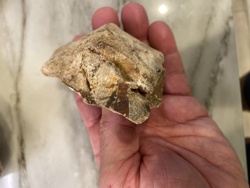
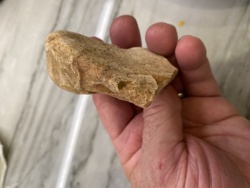
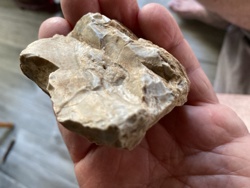
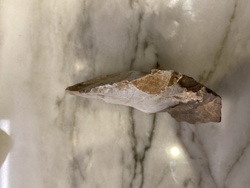
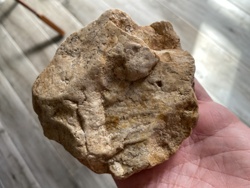
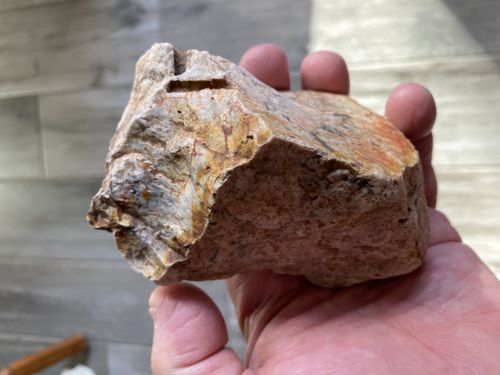
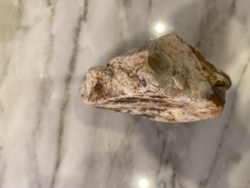
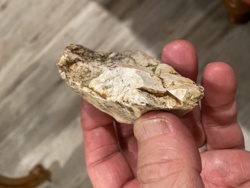
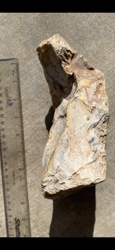
This is a lithic artifact consistent with Paleo-Indian stone tool technology, specifically identified as a multifunctional hand axe, chopper, and scraper. Measuring approximately 4.5 inches by 2.75 inches, the tool is crafted from a dense, cryptocrystalline silicate material, likely a local variety of chert or flint, exhibiting a varied color palette of earthy tans, reddish-browns, and creamy ochre. The physical construction shows evidence of intentional percussion flaking to create a functional working edge. The piece features a distinct 'cortex' or weathered outer skin on certain surfaces, while the worked edges reveal the internal crystalline structure of the stone. A notable geometric notch or rectangular indentation is visible on the upper surface, which could be a natural geological feature or a result of specific tool utility. The condition presents a heavy desert varnish and significant mineral patina, indicative of long-term exposure to the elements and high antiquity. There are no modern maker's marks, as the item dates to the prehistoric period. The craftsmanship is utilitarian, designed for heavy-duty tasks like butchering, bone breaking, or wood working. The overall shape is ergonomic, fitting comfortably in the palm, which is a hallmark of authentic hand-held lithic implements from this era.
Estimated Value

$150-$300

Basic Information

Category

Prehistoric Native American Artifacts

Appraised On

February 20, 2026

Estimated Value

$150-$300

Additional Details Provided By Owner

User Provided Information

Paleo Indian hand axe chopper scraper tool found in Guthrie Ok 4.5" x 2.75

Item Description

This is a lithic artifact consistent with Paleo-Indian stone tool technology, specifically identified as a multifunctional hand axe, chopper, and scraper. Measuring approximately 4.5 inches by 2.75 inches, the tool is crafted from a dense, cryptocrystalline silicate material, likely a local variety of chert or flint, exhibiting a varied color palette of earthy tans, reddish-browns, and creamy ochre. The physical construction shows evidence of intentional percussion flaking to create a functional working edge. The piece features a distinct 'cortex' or weathered outer skin on certain surfaces, while the worked edges reveal the internal crystalline structure of the stone. A notable geometric notch or rectangular indentation is visible on the upper surface, which could be a natural geological feature or a result of specific tool utility. The condition presents a heavy desert varnish and significant mineral patina, indicative of long-term exposure to the elements and high antiquity. There are no modern maker's marks, as the item dates to the prehistoric period. The craftsmanship is utilitarian, designed for heavy-duty tasks like butchering, bone breaking, or wood working. The overall shape is ergonomic, fitting comfortably in the palm, which is a hallmark of authentic hand-held lithic implements from this era.
Get Your Items Appraised

Instant estimates of your treasures with AI-powered instant appraisals

Browse More Appraisals