AI Appraisal Estimate

AI-generated estimates · not official valuations

From the user

What was submitted

Photo and notes provided by the user — not generated by AI

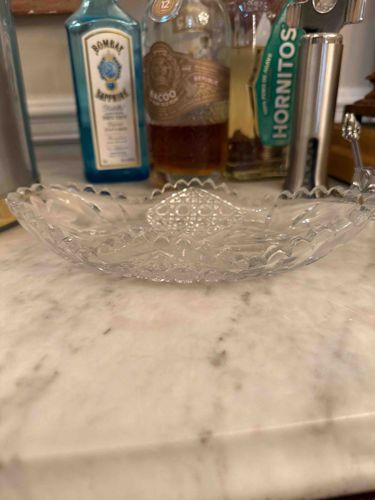
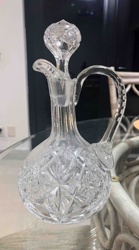
Submitted item photo
Submitted photo · June 25, 2026

User's notes

No additional notes provided.

AI analysis below

AI appraisal

AI analysis & estimate

AI-Generated · Verify before acting

Everything below is generated by AI for informational purposes only. AI can make mistakes — the AI may misidentify items or misattribute them (artist, maker, brand, designer, origin, era). This is not an official valuation and should not be used for insurance, sale, tax, estate, legal, or lending purposes — or any decision requiring a certified appraisal. It is not an authoritative claim about any person, brand, or rights holder — do not share or rely on it as a factual statement about a third party. Always consult qualified professionals before making financial decisions.

Read the full disclaimer

AI Identification

·Not independently authenticated·Verify before acting

Early American Pattern Glass (EAPG) Scalloped Oval Nappy

Antique Glassware / Collectibles

AI Estimated Value

·Not an official valuation·Verify before acting

$25.00 - $45.00

As of June 25, 2026

AI Item Analysis

·AI can make mistakes·Verify before acting
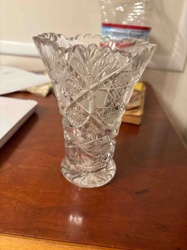
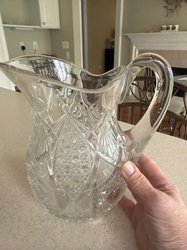
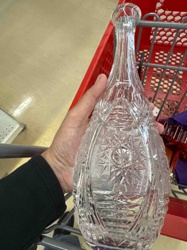
This is a vintage Early American Pattern Glass (EAPG) dish, likely a nappy or shallow relish bowl, featuring a highly decorative pressed design. The item is constructed from thick, transparent soda-lime glass, exhibiting the characteristic high-relief molding associated with late 19th to early 20th-century American glass production. The dish features a distinct oval shape with an upwardly curved rim finished in a continuous scalloped or 'sawtooth-like' edge. The interior surface displays a complex array of geometric motifs, specifically a central 'hobnail' or 'diamond point' medallion surrounded by elongated lens-shaped leaves and rayed fans. These deep-cut patterns are designed to catch and refract light, mimicking the appearance of expensive leaded cut crystal. The glass appears to be in overall good condition with high clarity, though typical for its age, there may be minor shelf wear on the base or tiny 'flea bites' along the sharp edges of the scalloping. No prominent maker's marks are visible in the photograph, which is common for EAPG pieces as they were often identified by catalog number or pattern name rather than a monogram. The style suggests it originated from a prominent American manufacturer like Adams & Co. or Fostoria during the Victorian Era, circa 1880-1910.
AI Appraisal Report

·AI can make mistakes·Verify before acting
Based on my visual examination of this Early American Pattern Glass (EAPG) scalloped oval nappy, I have identified it as a classic example of late Victorian pressed soda-lime glass, likely dating between 1885 and 1905. The deep-pressed geometric motifs, including the diamond-point center and radial fans, are characteristic of the 'Brilliant Period' imitation styles. The glass displays good clarity and the expected 'straw marks' or cooling lines typical of the period. However, EAPG was mass-produced, and the market for colorless pressed glass is currently saturated. While the scalloped rim is aesthetically pleasing, it is highly susceptible to 'flea bites' and chips, which significantly lower value. Comparables for non-flint, colorless nappies of this size and era consistently auction in the $20 to $50 range depending on the specific pattern rarity. This piece is a common utility form rather than a rare collector's specialty like 'U.S. Coin' or 'Three Face' patterns. Authenticity appears consistent with the manufacturing techniques of the late 19th century, but a definitive valuation is limited by the digital format. To fully authenticate, I would need to perform a UV light test to check for the characteristic yellow-green fluorescence of manganese-cleared glass versus the blue of modern reproductions. A physical inspection would also assess the specific weight and 'ring' of the glass, as well as confirm the presence of authentic base wear that cannot be faked by mechanical grinding. Provenance documentation or a confirmed manufacturer's catalog match would further solidify the appraisal.

Get your items appraised

Instant estimates of your treasures with AI-powered appraisals

Browse More Appraisals