Paul Jouve Canceled Copper Printing Plate - Stretching Tiger
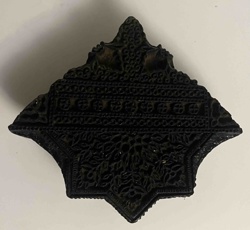
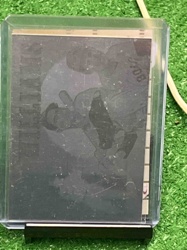
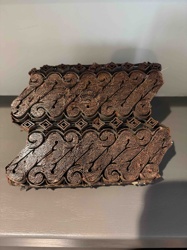
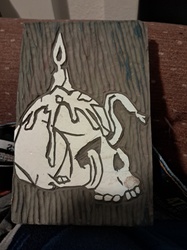
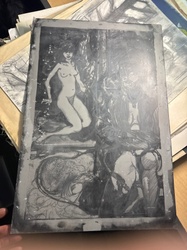
This item is a canceled (barré) copper intaglio printing plate featuring a dynamic depiction of a stretching tiger, characteristic of the renowned Art Deco animalier artist Paul Jouve (1878-1973). The plate shows the negative etched image of a tiger in a crouching, arched-back pose, emphasizing the feline's muscular structure and rhythmic striped patterning. Physically, the plate is composed of heavy-gauge copper, displaying the warm, reddish-brown metallic hue typical of the material, though the surface shows signs of oxidation and residual ink from historical use. A prominent diagonal line or 'barre' is visible across the matrix—a common practice in the printing industry to 'cancel' a plate, preventing further authorized editions and thereby preserving the scarcity of existing prints. The craftsmanship is exceptional, showing the intricate line work and deep etching required for fine art printmaking. Dating likely from the mid-20th century, the plate serves as both a historical relic of the artistic process and a piece of Art Deco collectible in its own right. Condition appears stable, though there are minor surface scratches and a developed patina consistent with an industrial tool used in an atelier environment.
AI-Generated Appraisal Disclaimer
Estimated Value
$4,000–$6,000
Basic Information
Category
Fine Art Printing Artifacts / Collectibles
Appraised On
March 10, 2026
Estimated Value
$4,000–$6,000
Additional Details Provided By Owner
User Provided Information
cuivre de Jouve. barré
Item Description
This item is a canceled (barré) copper intaglio printing plate featuring a dynamic depiction of a stretching tiger, characteristic of the renowned Art Deco animalier artist Paul Jouve (1878-1973). The plate shows the negative etched image of a tiger in a crouching, arched-back pose, emphasizing the feline's muscular structure and rhythmic striped patterning. Physically, the plate is composed of heavy-gauge copper, displaying the warm, reddish-brown metallic hue typical of the material, though the surface shows signs of oxidation and residual ink from historical use. A prominent diagonal line or 'barre' is visible across the matrix—a common practice in the printing industry to 'cancel' a plate, preventing further authorized editions and thereby preserving the scarcity of existing prints. The craftsmanship is exceptional, showing the intricate line work and deep etching required for fine art printmaking. Dating likely from the mid-20th century, the plate serves as both a historical relic of the artistic process and a piece of Art Deco collectible in its own right. Condition appears stable, though there are minor surface scratches and a developed patina consistent with an industrial tool used in an atelier environment.
Get Your Items Appraised
Instant estimates of your treasures with AI-powered instant appraisals