AI Appraisal Estimate

AI-generated estimates · not official valuations

From the user

What was submitted

Photo and notes provided by the user — not generated by AI

Submitted item photo
Submitted photo · June 20, 2026

User's notes

No additional notes provided.

AI analysis below

AI appraisal

AI analysis & estimate

AI-Generated · Verify before acting

Everything below is generated by AI for informational purposes only. AI can make mistakes — the AI may misidentify items or misattribute them (artist, maker, brand, designer, origin, era). This is not an official valuation and should not be used for insurance, sale, tax, estate, legal, or lending purposes — or any decision requiring a certified appraisal. It is not an authoritative claim about any person, brand, or rights holder — do not share or rely on it as a factual statement about a third party. Always consult qualified professionals before making financial decisions.

Read the full disclaimer

AI Identification

·Not independently authenticated·Verify before acting

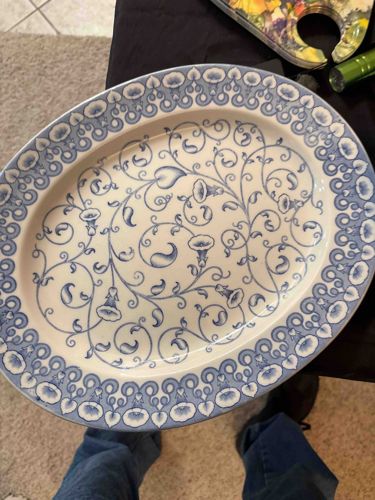
Oval Ceramic Transferware Platter with Floral Vine Pattern

Antique Ceramics and Glassware

AI Estimated Value

·Not an official valuation·Verify before acting

$40-80

As of June 20, 2026

AI Item Analysis

·AI can make mistakes·Verify before acting
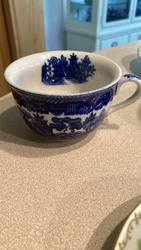
This item is a large, oval-shaped ceramic serving platter, likely made of ironstone or earthenware. The base color is a creamy off-white or light ivory, providing a neutral background for the monochromatic blue transferware decoration. The pattern is highly stylized and intricate, featuring a central field occupied by scrolling vines, paisley elements, and trumpet-shaped flowers, possibly representing morning glories. This central motif is enclosed by a broad border composed of repeating scalloped arches, each containing a single downward-facing trumpet flower. The blue tone is a medium cobalt, characteristic of traditional transferware techniques where an engraved copper plate is used to transfer a design via paper to the ceramic body before glazing. Although the underside is not visible to confirm a maker's mark, the style and execution are consistent with English Victorian or early 20th-century mass-produced dinnerware, commonly found in patterns by companies like Johnson Brothers or Alfred Meakin. The platter exhibits a glossy overglaze with minimal visible crazing or staining. The rim appears to be smooth and intact without significant chips or cracks, though some minor kiln stilt marks or surface wear from use would be expected for an antique piece of this age. The overall craftsmanship suggests a high-quality production piece intended for daily domestic use or formal dinner service.
AI Appraisal Report

·AI can make mistakes·Verify before acting
I have examined the digital images of the oval ceramic transferware platter featuring a blue floral vine pattern. The piece appears to be a classic example of late 19th or early 20th-century English transferware, likely ironstone. The 'flow blue' style, characterized by the slightly blurred quality of the cobalt blue design against the creamy white earthenware body, suggests a manufacturing date between 1890 and 1920. The scrolling vine and trumpet flower motif, possibly 'Morning Glory' or a similar stylized botanical, was popular among prominent Staffordshire potteries like Johnson Brothers, Alfred Meakin, or Ridgways. Visually, the platter appears in Very Good condition; the glaze retains a high gloss, and there are no obvious chips or hairline cracks visible along the rim. However, without physical handling, I cannot confirm the presence of professional restoration or faint crazing which is common in pieces of this age. The market for generic blue and white transferware is currently soft, flooded with mass-produced Victorian dinnerware. While decorative appeal is high, values are modest unless a specific, rare maker's mark or pattern name (e.g., 'Blue Willow' variants or specific historic scenes) can be identified. This piece lacks the deep 'blur' of highly collectible flow blue, placing it more firmly in standard transferware pricing. To refine this valuation, I would need to inspect the underside for a backstamp to identify the specific pottery and date code. A 'Made in England' mark would date it post-1891, while a lack thereof might suggest an earlier origin. Currently, value is driven primarily by its utility and aesthetic appeal rather than significant collector rarity.

Get your items appraised

Instant estimates of your treasures with AI-powered appraisals

Browse More Appraisals