AI Appraisal Estimate

AI-generated estimates · not official valuations

From the user

What was submitted

Photo and notes provided by the user — not generated by AI

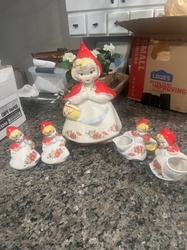
Submitted item photo
Submitted photo · June 6, 2026

User's notes

No additional notes provided.

AI analysis below

AI appraisal

AI analysis & estimate

AI-Generated · Verify before acting

Everything below is generated by AI for informational purposes only. AI can make mistakes — the AI may misidentify items or misattribute them (artist, maker, brand, designer, origin, era). This is not an official valuation and should not be used for insurance, sale, tax, estate, legal, or lending purposes — or any decision requiring a certified appraisal. It is not an authoritative claim about any person, brand, or rights holder — do not share or rely on it as a factual statement about a third party. Always consult qualified professionals before making financial decisions.

Read the full disclaimer

AI Identification

·Not independently authenticated·Verify before acting

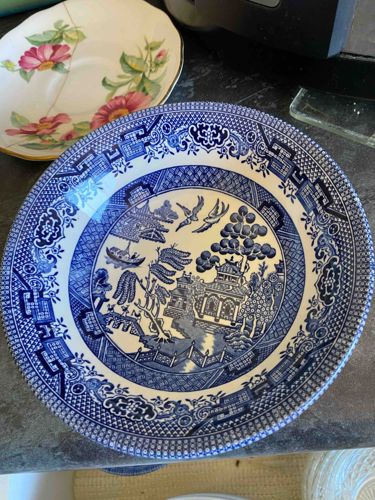
Blue Willow Pattern Transferware Soup Bowl

Vintage Ceramics & Kitchenware

AI Estimated Value

·Not an official valuation·Verify before acting

$10 - $25

As of June 6, 2026

AI Item Analysis

·AI can make mistakes·Verify before acting
This is a classic ceramic soup or pasta bowl featuring the iconic Blue Willow pattern, a Chinoiserie design that gained immense popularity in late 18th-century England and remains a staple of ceramic history. The bowl is constructed from white earthenware or ironstone with a deep cobalt blue underglaze transfer print. The central medallion depicts the traditional narrative elements: a large pagoda to the right, a smaller teahouse to the left, a weeping willow tree, three figures on a bridge, and a boat on the water, all topped by two doves in flight representing lovers. The wide, flared rim is ornately decorated with a complex border featuring geometric fretwork, stylized scrolling, and butterfly motifs. Measuring approximately 8 to 9 inches in diameter, the piece shows a high-gloss glaze typical of mid-to-late 20th-century reproductions or vintage pieces. The condition appears excellent with no visible chips or cracks, though close inspection might reveal light surface scratches or minor firing pinholes common in transferware. While no maker's mark is visible from this angle, the crispness of the transfer suggests a quality manufacturer such as Johnson Brothers, Churchill, or Spode. Its timeless aesthetic makes it a quintessential example of English dinnerware.
AI Appraisal Report

·AI can make mistakes·Verify before acting
Based on my visual examination of this ceramic soup bowl, I identify it as a classic example of the 'Blue Willow' pattern, likely produced in the mid-to-late 20th century. The piece features the standard iconography of the pattern—the pagoda, bridge with three figures, weeping willow, and doves—rendered in a deep cobalt transfer print on white earthenware. The glaze appears consistent with mass-produced English ironstone or earthenware from manufacturers like Churchill, Johnson Brothers, or similar Staffordshire potteries, although the lack of a visible backstamp in the image prevents definitive attribution to a specific maker. The condition appears excellent with no immediately visible chips, cracks, or crazing, and the transfer print is crisp, suggesting it is not a blurred 'seconds' quality piece. From a market perspective, Blue Willow is one of the most widely produced patterns in history. While early 19th-century examples hold significant value, mid-to-late 20th-century pieces like this are abundant. They are primarily valued for their utility and aesthetic rather than investment potential. Current market comparables for individual bowls of this vintage generally fetch between $10 and $25, depending on the specific manufacturer. A maker's mark from a prestigious house like Spode could push the value slightly higher, whereas an unmarked or 'Made in China' piece would sit at the lower end. To provide a definitive valuation, I would need to physically inspect the underside for a maker's mark, check the weight to determine clay composition, and run a fingertip along the rim to detect any flea bites invisible to the camera.

Get your items appraised

Instant estimates of your treasures with AI-powered appraisals

Browse More Appraisals