Paleolithic Biface Chert Hand Axe Scraper
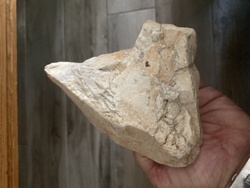
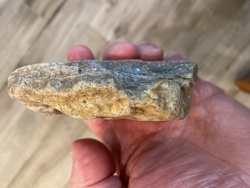
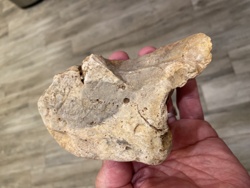
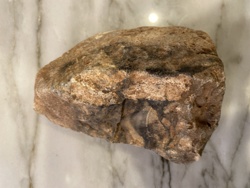
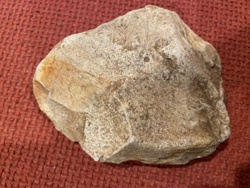
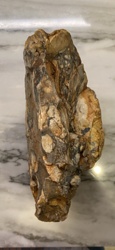
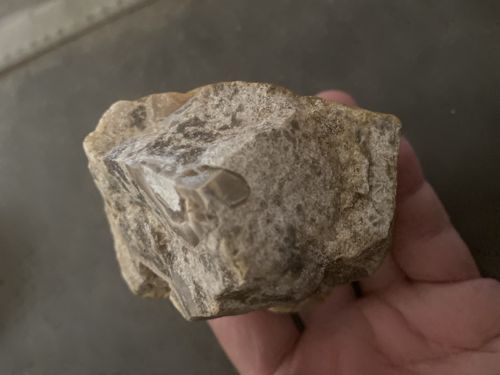
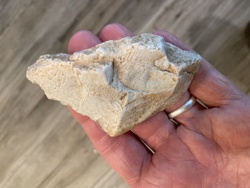
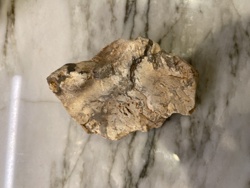
This artifact is a Paleolithic biface tool crafted from high-quality chert, measuring approximately 3.5 inches by 2.5 inches. The physical characteristics reveal a robust, hand-sized stone primarily composed of tan and earthy-brown chert with visible inclusions and a waxy luster characteristic of cryptocrystalline silica. The construction exhibits deliberate percussion flaking on both primary faces (bifacial), creating a tapered, somewhat asymmetrical form consistent with a hand axe or heavy scraper. Notable features include several large flake scars and hinge fractures along the working edges, suggesting repeated use and sharpening. The visible condition shows significant weathering and a well-developed patina, which indicates long-term environmental exposure. There is no evidence of modern machinery marks; instead, the tool displays the rugged, irregular edges synonymous with ancient lithic technology. The item was reportedly recovered in Guthrie, OK, which situates it within the context of North American lithic traditions, likely dating to the Late Pleistocene or Early Holocene periods depending on the specific archaeological site context. The craftsmanship is functional rather than aesthetic, emphasizing a thick, durable cross-section for heavy-duty scraping or hacking tasks.
AI-Generated Appraisal Disclaimer
Estimated Value
$100 - $250
Basic Information
Category
Archaeological Artifacts / Prehistoric Stone Tools
Appraised On
February 19, 2026
Estimated Value
$100 - $250
Additional Details Provided By Owner
User Provided Information
Paleolithic chert bi face hand axe scraper tool found in Guthrie OK measuring 3.5" x 2.5"
Item Description
This artifact is a Paleolithic biface tool crafted from high-quality chert, measuring approximately 3.5 inches by 2.5 inches. The physical characteristics reveal a robust, hand-sized stone primarily composed of tan and earthy-brown chert with visible inclusions and a waxy luster characteristic of cryptocrystalline silica. The construction exhibits deliberate percussion flaking on both primary faces (bifacial), creating a tapered, somewhat asymmetrical form consistent with a hand axe or heavy scraper. Notable features include several large flake scars and hinge fractures along the working edges, suggesting repeated use and sharpening. The visible condition shows significant weathering and a well-developed patina, which indicates long-term environmental exposure. There is no evidence of modern machinery marks; instead, the tool displays the rugged, irregular edges synonymous with ancient lithic technology. The item was reportedly recovered in Guthrie, OK, which situates it within the context of North American lithic traditions, likely dating to the Late Pleistocene or Early Holocene periods depending on the specific archaeological site context. The craftsmanship is functional rather than aesthetic, emphasizing a thick, durable cross-section for heavy-duty scraping or hacking tasks.
Get Your Items Appraised
Instant estimates of your treasures with AI-powered instant appraisals