AI Appraisal Estimate

AI-generated estimates · not official valuations

From the user

What was submitted

Photo and notes provided by the user — not generated by AI

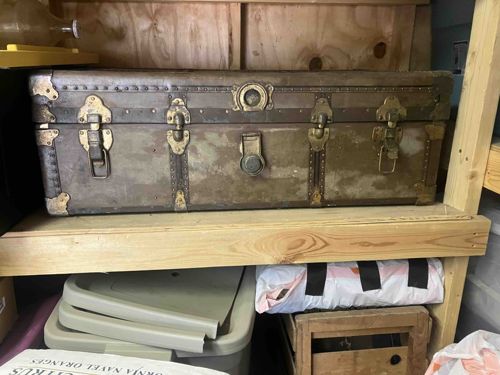
Submitted item photo
Submitted photo · June 16, 2026

User's notes

No additional notes provided.

AI analysis below

AI appraisal

AI analysis & estimate

AI-Generated · Verify before acting

Everything below is generated by AI for informational purposes only. AI can make mistakes — the AI may misidentify items or misattribute them (artist, maker, brand, designer, origin, era). This is not an official valuation and should not be used for insurance, sale, tax, estate, legal, or lending purposes — or any decision requiring a certified appraisal. It is not an authoritative claim about any person, brand, or rights holder — do not share or rely on it as a factual statement about a third party. Always consult qualified professionals before making financial decisions.

Read the full disclaimer

AI Identification

·Not independently authenticated·Verify before acting

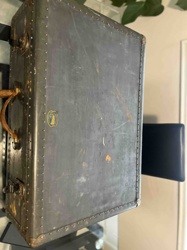
Antique Vulcanized Fiber Steamer Trunk

Antique Luggage and Storage

AI Estimated Value

·Not an official valuation·Verify before acting

$40-80

As of June 16, 2026

AI Item Analysis

·AI can make mistakes·Verify before acting
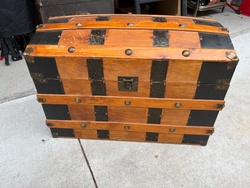
This is a vintage rectangular long-form steamer trunk, likely dating from the early 20th century (circa 1910-1940). The exterior is constructed from vulcanized fiber over a wooden frame, finished in an olive-drab or weathered brown tone. It features robust brass-plated hardware, including four heavy-duty draw-bolt latches and a central locking mechanism, although the key is absent. The edges are reinforced with metal banding and secured with original rivets, while the corners are protected by decorative brass-plated bumpers. Physically, the trunk exhibits significant signs of age and utilitarian use, including heavy surface oxidation, verdigris on the brass elements, and substantial scuffing and discoloration across the fiber panels. A prominent circular metal emblem is mounted at the top center, likely a maker's mark, though the specific branding is obscured by patina. The elongated 'flat-top' silhouette suggests this was designed for stacking in a ship's hold or train car. Despite the external wear, the structure appears intact without major punctures, indicating high-quality early industrial craftsmanship intended for extreme durability during travel.
AI Appraisal Report

·AI can make mistakes·Verify before acting
Based on my visual examination of the images provided, this is a standard early 20th-century vulcanized fiber steamer trunk, often referred to as a footlocker or flat-top trunk, dating from approximately 1915 to 1935. The construction—fiber veneer over a plywood or pine frame with brass-plated steel hardware—was mass-produced and designed for durability rather than luxury, common for military or student transport during this era. The condition is heavily relied upon for valuation in this category, and this example shows significant 'fair' to 'poor' condition. The heavy surface oxidation and extensive verdigris on the brass-plated hardware are detractors, as is the substantial scuffing and discoloration of the fiber panels. While the structural integrity appears intact, the aesthetic damage limits its appeal primarily to restoration projects or rustic prop use. The missing key and obscured maker's mark further reduce collectibility. Market conditions for generic vulcanized fiber trunks are currently soft. Unlike the highly sought-after Louis Vuitton or Goyard trunks, or even high-end slat-wood domestic trunks, these utilitarian pieces flood the market. They are generally not rare. Comparables in this condition frequently sell at estate sales or local auctions for nominal amounts. Higher values are reserved for examples with pristine interiors, complete trays, or specific military provenance. Limitations of this appraisal include the inability to inspect the interior condition (lining, smells, moisture damage) or the underside for rot, which are critical value factors. While authentication creates no issues as these are rarely counterfeited due to low value, physical inspection would be needed to confirm the maker's mark under the patina.

Get your items appraised

Instant estimates of your treasures with AI-powered appraisals

Browse More Appraisals