AI Appraisal Estimate

AI-generated estimates · not official valuations

From the user

What was submitted

Photo and notes provided by the user — not generated by AI

Submitted item photo
Submitted photo · June 13, 2026

User's notes

No additional notes provided.

AI analysis below

AI appraisal

AI analysis & estimate

AI-Generated · Verify before acting

Everything below is generated by AI for informational purposes only. AI can make mistakes — the AI may misidentify items or misattribute them (artist, maker, brand, designer, origin, era). This is not an official valuation and should not be used for insurance, sale, tax, estate, legal, or lending purposes — or any decision requiring a certified appraisal. It is not an authoritative claim about any person, brand, or rights holder — do not share or rely on it as a factual statement about a third party. Always consult qualified professionals before making financial decisions.

Read the full disclaimer

AI Identification

·Not independently authenticated·Verify before acting

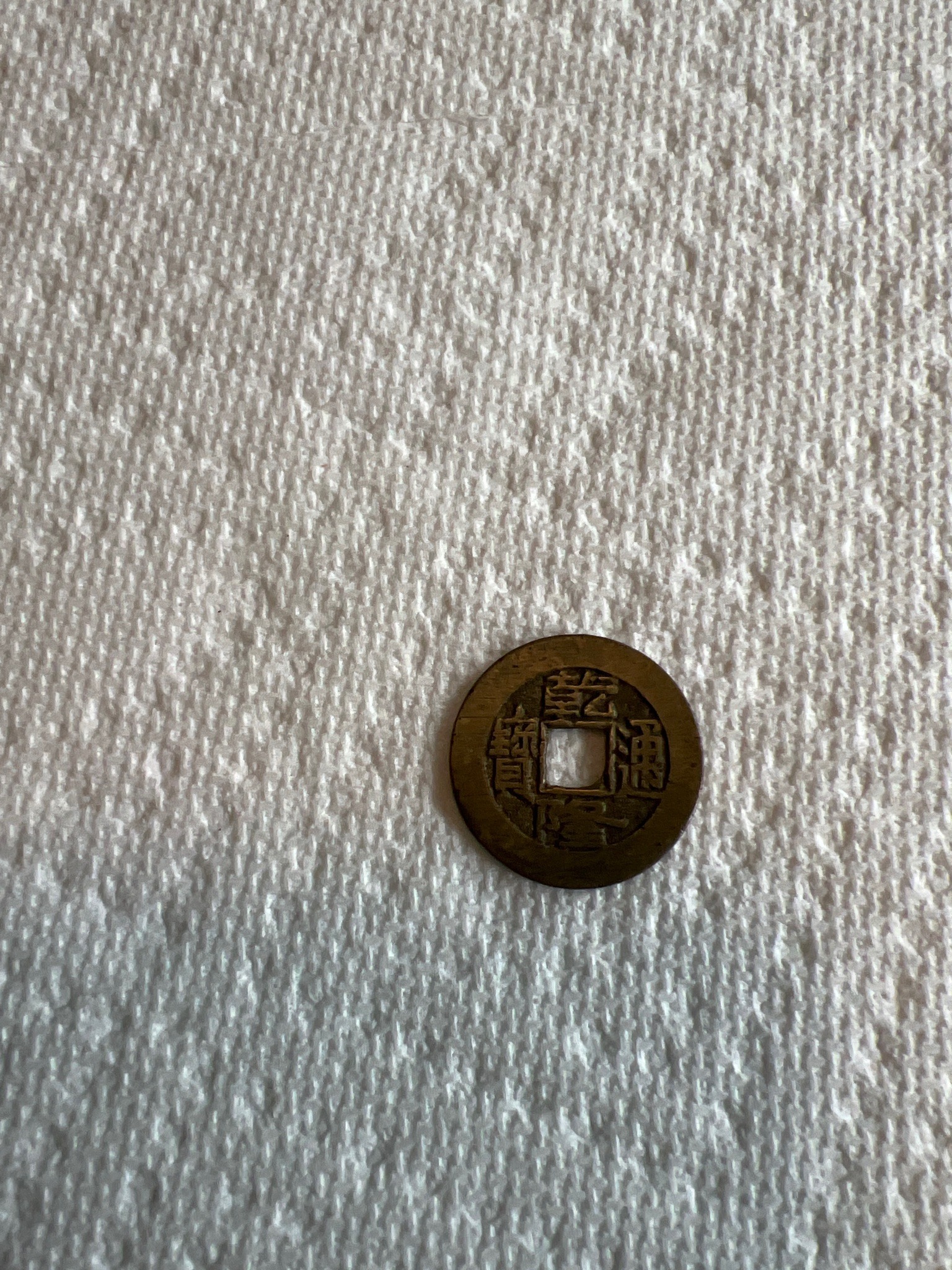
Qianlong Tongbao Chinese Cash Coin (Qing Dynasty)

Numismatics / Asian Antiquities / Currency

AI Estimated Value

·Not an official valuation·Verify before acting

$5.00 - $15.00

As of June 13, 2026

AI Item Analysis

·AI can make mistakes·Verify before acting
This is a circular brass or bronze alloy 'cash' coin from the Qing Dynasty, featuring the characteristic square central hole used for stringing coins together. The obverse (shown) displays four Chinese characters: 'Qian' (top), 'Long' (bottom), 'Tong' (right), and 'Bao' (left), identifying it as currency minted during the reign of the Qianlong Emperor (1735–1796). The item measures approximately 22-25mm in diameter. The metal exhibits a dark, aged patina with a brownish-gold hue and visible oxidation in the recessed areas. The strike of the characters is moderately sharp, though there is a circular indentation or manufacturing mark running across the characters on the left side, which may indicate a specific minting process or later surface wear. The rim is flat and relatively thick compared to modern coins. Regarding condition, there are minor surface scratches, edge nicks, and accumulated dirt or verdigris typical for an object of this age. On the reverse (not visible), one would expect to find Manchu script indicating the specific board of minting, such as the Board of Revenue or the Board of Works. The craftsmanship reflects the standardized casting techniques of the 18th-century Chinese imperial mints.

AI Appraisal Report

·AI can make mistakes·Verify before acting
I have examined the provided image of the Qianlong Tongbao cash coin. The piece shows characteristic calligraphic styles of the mid-18th century Qing Dynasty. The patina appears authentic, though the circular indentation across the 'Bao' character is a notable surface flaw—likely a result of later mechanical damage or a casting defect—which detracts from the aesthetic appeal and numismatic grade. The strike is average, typical of the high-volume output from boards such as the Board of Revenue (Beijing). In the current market, Qianlong coins are among the most common Chinese cash coins due to the length of the emperor’s reign and the massive quantities produced. While there is a global interest in Asian numismatics, value is driven strictly by rarity (mint marks/varieties) and pristine condition. This specimen, being a common 'small cash' type with visible wear and surface marks, possesses more historical interest than high market liquidity. A significant limitation of this appraisal is the lack of a reverse image, which prevents identification of the specific mint; certain provincial mints can command a premium. Furthermore, image-based assessment cannot confirm metal composition or weight, which are critical for detecting the high-quality 20th-century reproductions prevalent in the market. Full authentication would require in-person weighing (typically aiming for 3.5 to 4.2 grams), microscopic examination for casting bubbles indicative of modern fakes, and a review of provenance to ensure the piece has not been chemically aged.

Get your items appraised

Instant estimates of your treasures with AI-powered appraisals

Browse More Appraisals