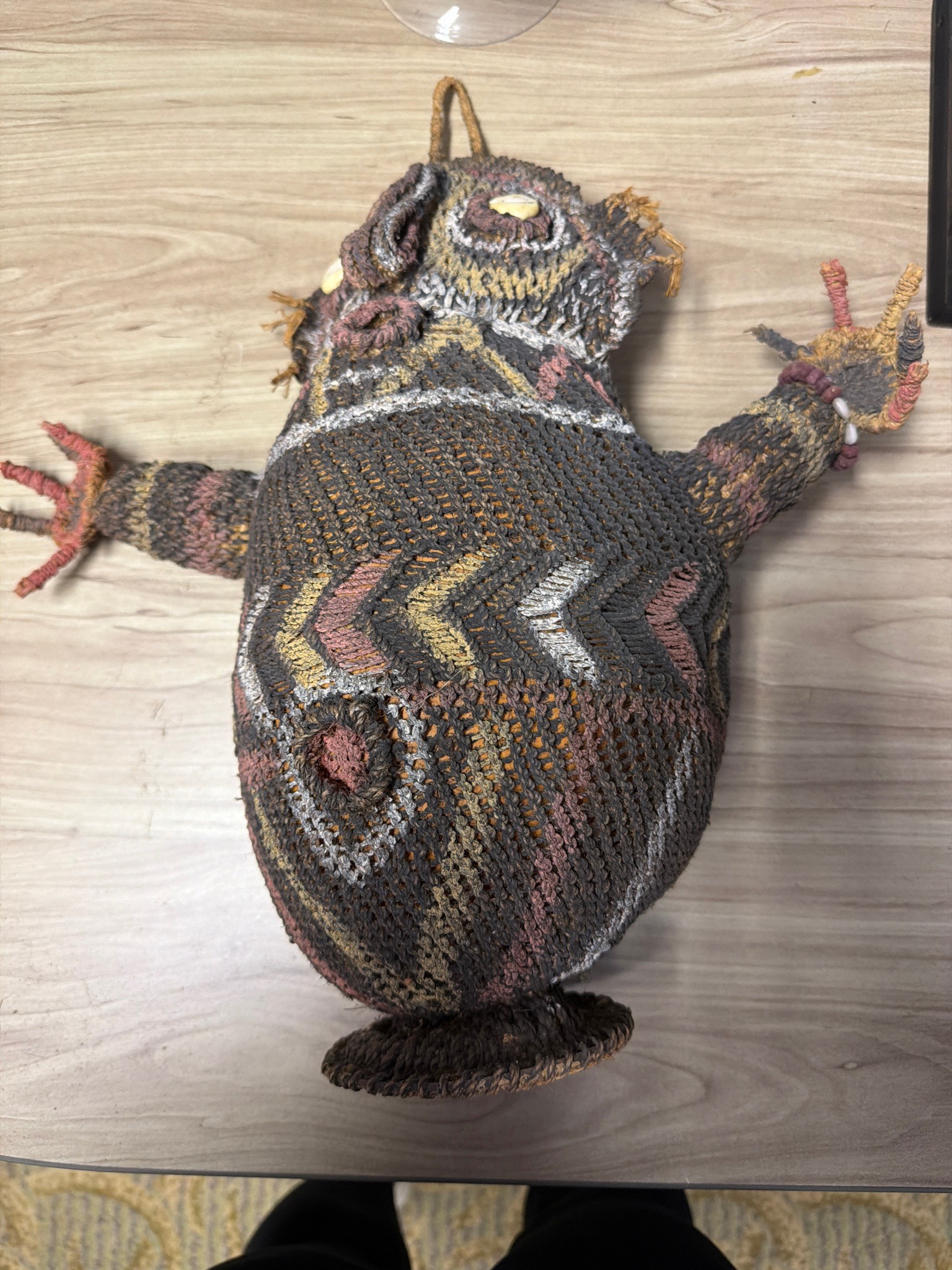
Papua New Guinea Abelam People Bilum Spirit Figure (Baba Masalai)
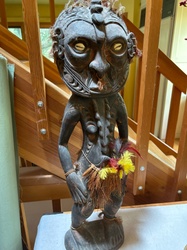
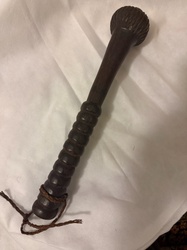
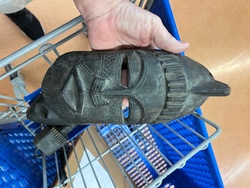
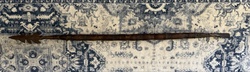
This is a hand-woven spirit figure, known as a 'Baba' or 'Masalai,' originating from the Maprik or East Sepik region of Papua New Guinea, specifically attributed to the Abelam or Boiken peoples. The object is constructed using the traditional 'bilum' looping technique, which utilizes hand-spun natural plant fibers (possibly inner bark or orchid vine) that have been dyed with organic pigments in earth tones of ochre, charcoal black, white lime, and muted rose-terracotta. The figure features a bulbous central body with outstretched arms ending in articulated fingers, a circular navel-like opening, and a distinct head section with cowrie shell eyes. The intricate chevron and geometric patterning across the surface suggests traditional clan motifs. The craftsmanship is exceptional, showing a tight, consistent tension in the looping. Condition-wise, the piece shows significant age-related wear including fading of the vegetable dyes, fraying of the fiber at the extremities, and minor structural softening. It likely dates to the mid-20th century. Such figures were used in ceremonial contexts, often representing bush spirits or ancestors during initiation rites.
AI-Generated Appraisal Disclaimer
Estimated Value
$800 - $1,200
Basic Information
Category
Tribal Art and Ethnographic Textiles
Appraised On
May 8, 2026
Estimated Value
$800 - $1,200
Item Description
This is a hand-woven spirit figure, known as a 'Baba' or 'Masalai,' originating from the Maprik or East Sepik region of Papua New Guinea, specifically attributed to the Abelam or Boiken peoples. The object is constructed using the traditional 'bilum' looping technique, which utilizes hand-spun natural plant fibers (possibly inner bark or orchid vine) that have been dyed with organic pigments in earth tones of ochre, charcoal black, white lime, and muted rose-terracotta. The figure features a bulbous central body with outstretched arms ending in articulated fingers, a circular navel-like opening, and a distinct head section with cowrie shell eyes. The intricate chevron and geometric patterning across the surface suggests traditional clan motifs. The craftsmanship is exceptional, showing a tight, consistent tension in the looping. Condition-wise, the piece shows significant age-related wear including fading of the vegetable dyes, fraying of the fiber at the extremities, and minor structural softening. It likely dates to the mid-20th century. Such figures were used in ceremonial contexts, often representing bush spirits or ancestors during initiation rites.
Get Your Items Appraised
Instant estimates of your treasures with AI-powered instant appraisals