Neoclassical Spelter Figural Sculpture of a River God
Antique Decorative Arts / Sculpture

Neoclassical Spelter Figural Sculpture of a River God

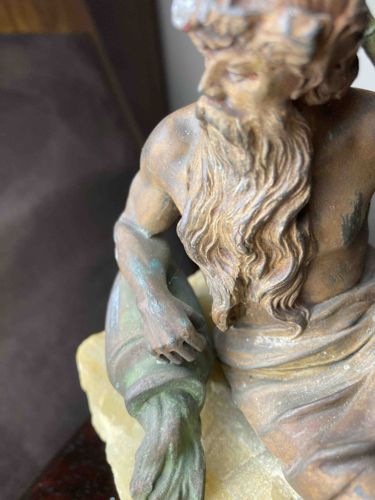
This figural sculpture portrays a bearded male deity, traditionally interpreted as a River God or Allegory of Water, seated upon a rocky base. The figure features a long, flowing beard with deeply incised texture and a muscular, classical physique. He is depicted in a semi-reclined pose, draped in fabric that gathers around his waist, with his right hand resting upon a tilted urn or amphora from which water symbolically flows. The piece is constructed from cast white metal, likely spelter (zinc alloy), which was a popular, more affordable alternative to bronze in the late 19th and early 20th centuries. The surface displays a multi-toned cold-painted or patinated finish, showing various hues of ochre, brown, and verdigris green, particularly in the recesses of the flowing water and drapery. Notable oxidation and wear are present, with significant paint loss on the chest and shoulder exposing the grey base metal underneath. Greenish copper-toned verdigris is visible on the urn and arm, suggesting a finish intended to mimic weathered bronze. The base appears to be carved from a light-colored stone or cast resin designed to look like yellow marble or alabaster. The craftsmanship exhibits typical mass-production quality of the Victorian or Belle Époque period, with realistic anatomical detailing but visible casting seams and surface degradation consistent with age and environmental exposure.

Estimated Value

$450 - $650

Basic Information

Category

Antique Decorative Arts / Sculpture

Appraised On

January 21, 2026

Estimated Value

$450 - $650

Item Description

This figural sculpture portrays a bearded male deity, traditionally interpreted as a River God or Allegory of Water, seated upon a rocky base. The figure features a long, flowing beard with deeply incised texture and a muscular, classical physique. He is depicted in a semi-reclined pose, draped in fabric that gathers around his waist, with his right hand resting upon a tilted urn or amphora from which water symbolically flows. The piece is constructed from cast white metal, likely spelter (zinc alloy), which was a popular, more affordable alternative to bronze in the late 19th and early 20th centuries. The surface displays a multi-toned cold-painted or patinated finish, showing various hues of ochre, brown, and verdigris green, particularly in the recesses of the flowing water and drapery. Notable oxidation and wear are present, with significant paint loss on the chest and shoulder exposing the grey base metal underneath. Greenish copper-toned verdigris is visible on the urn and arm, suggesting a finish intended to mimic weathered bronze. The base appears to be carved from a light-colored stone or cast resin designed to look like yellow marble or alabaster. The craftsmanship exhibits typical mass-production quality of the Victorian or Belle Époque period, with realistic anatomical detailing but visible casting seams and surface degradation consistent with age and environmental exposure.

Get Your Items Appraised

Instant estimates of your treasures with AI-powered instant appraisals

Browse More Appraisals