AI Appraisal Estimate

AI-generated estimates · not official valuations

From the user

What was submitted

Photo and notes provided by the user — not generated by AI

Submitted item photo
Submitted photo · June 28, 2026

User's notes

No additional notes provided.

AI analysis below

AI appraisal

AI analysis & estimate

AI-Generated · Verify before acting

Everything below is generated by AI for informational purposes only. AI can make mistakes — the AI may misidentify items or misattribute them (artist, maker, brand, designer, origin, era). This is not an official valuation and should not be used for insurance, sale, tax, estate, legal, or lending purposes — or any decision requiring a certified appraisal. It is not an authoritative claim about any person, brand, or rights holder — do not share or rely on it as a factual statement about a third party. Always consult qualified professionals before making financial decisions.

Read the full disclaimer

AI Identification

·Not independently authenticated·Verify before acting

Late 19th Century Embossed Metal Camel-Back Trunk

Antique Furniture and Luggage

AI Estimated Value

·Not an official valuation·Verify before acting

$250 - $450

As of June 28, 2026

AI Item Analysis

·AI can make mistakes·Verify before acting
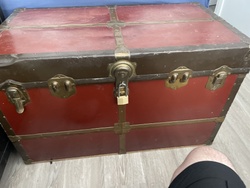
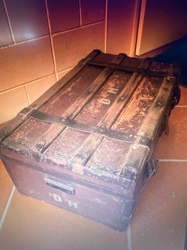
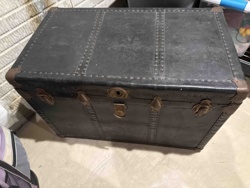
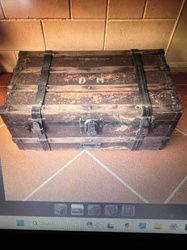
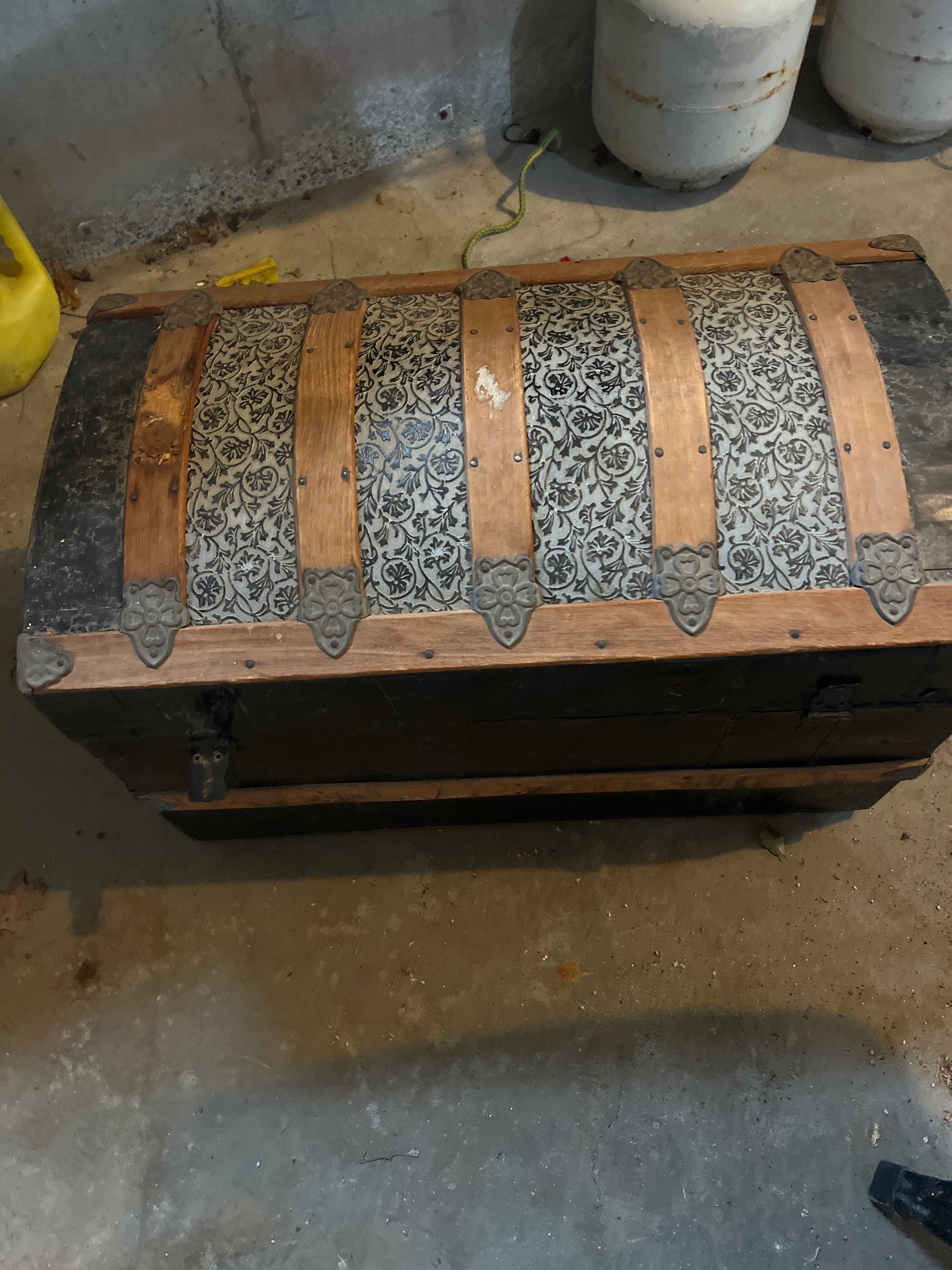
This is an antique camel-back or dome-top steamer trunk, likely dating from the late 19th century (circa 1880-1895). The trunk features a distinctive barrel-stave construction with curved wooden slats reinforcing a body covered in patterned embossed tin or zinc. The metal panels exhibit a highly decorative floral and vine repoussé motif, common in Victorian-era luggage. It is reinforced with heavy-duty metal hardware, including floral-patterned cast iron or pressed steel corner bumpers and slat clamps. The main body is framed with hardwood slats, possibly oak or ash, secured with prominent metal rivets. Condition-wise, the trunk shows significant age-related wear including surface oxidation, rust on metal components, and localized damage to the wooden slats, particularly seen on the far left where a slat appears splintered and partially missing. There is visible staining and loss to the embossed metal skin in the center. The lower portion appears to be painted black or finished in a dark lacquer. Such trunks were designed for durability during steamship or train travel and represent high-quality manufacture from the industrial expansion period in America or Europe. While it lacks visible maker's marks from this angle, its ornate embossing suggests a higher-end model for the period.
AI Appraisal Report

·AI can make mistakes·Verify before acting
I have completed a visual examination of this late 19th-century dome-top 'camel-back' trunk. Authenticity appears consistent with late Victorian industrial manufacturing (1880–1895). The elaborate repoussé patterned metal skin and barrel-stave construction indicate this was originally a higher-end model compared to plain canvas or flat-topped 'steamer' trunks. However, value is significantly hampered by condition. I observe notable oxidation (rust) on the center panels and decorative hardware, alongside a critical structural failure on the far-left slat, which is splintered. The loss of the original leather straps and the likely absence of the interior 'tray' further diminish its marketability to collectors of pristine antique luggage. Current market conditions for Victorian trunks are stable but selective; buyers prioritize pieces with original interior chromolithographs or those fully restored into functional furniture. While the ornate metalwork makes it a desirable decor piece for a rustic or industrial aesthetic, the restoration costs required to stabilize the wood and metal would likely exceed the immediate resale value. Please note that this appraisal is based on photographic evidence only. A physical inspection is necessary to verify the integrity of the base, check for active woodworm, and search for manufacturer marks (such as Taylor or Star Trunk Co.) often hidden under the handle caps or interior lining. Authenticity is assumed based on standard construction techniques visible, but scientific testing of wood fibers or provenance documentation would be required for absolute certainty.

Get your items appraised

Instant estimates of your treasures with AI-powered appraisals

Browse More Appraisals