AI Appraisal Estimate

AI-generated estimates · not official valuations

From the user

What was submitted

Photo and notes provided by the user — not generated by AI

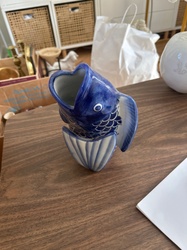
Submitted item photo
Submitted photo · June 10, 2026

User's notes

No additional notes provided.

AI analysis below

AI appraisal

AI analysis & estimate

AI-Generated · Verify before acting

Everything below is generated by AI for informational purposes only. AI can make mistakes — the AI may misidentify items or misattribute them (artist, maker, brand, designer, origin, era). This is not an official valuation and should not be used for insurance, sale, tax, estate, legal, or lending purposes — or any decision requiring a certified appraisal. It is not an authoritative claim about any person, brand, or rights holder — do not share or rely on it as a factual statement about a third party. Always consult qualified professionals before making financial decisions.

Read the full disclaimer

AI Identification

·Not independently authenticated·Verify before acting

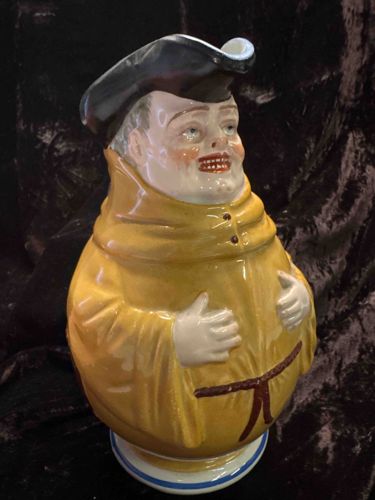
Toby Jug depicting a Tavern Character or Monk

Ceramics and Decorative Arts

AI Estimated Value

·Not an official valuation·Verify before acting

$150-$250

As of June 10, 2026

AI Item Analysis

·AI can make mistakes·Verify before acting
This item is a polychrome glazed ceramic Toby Jug, a type of figurative earthenware vessel fashioned as a seated or standing jovial person. The figure is depicted with a highly characterful, almost grotesque facial expression, featuring wide-set blue eyes, rosy cheeks, and an open-mouthed grin revealing individual teeth. He wears a black tricorn-style hat which serves as the pouring spout of the jug. The body of the figure constitutes the main reservoir, clothed in a mustard-yellow or ochre robe with voluminous sleeves and a dark brown corded belt tied at the waist. His pale hands are positioned on his protruding belly. The piece is mounted on a circular pedestal base highlighted with thin blue concentric rings. Looking at the glossy finish and the style of the mold, this piece likely dates from the late 19th to early 20th century, possibly of English or Continental European origin. The craftsmanship shows attention to detail in the folds of the fabric and the anatomical modeling of the face. Condition appears generally good with a lustrous glaze, though close inspection for fine crazing or a small chip on the rear of the hat's rim is recommended. Such jugs were popularized in the 18th century as novelty drinking vessels used primarily for ale in taverns.
AI Appraisal Report

·AI can make mistakes·Verify before acting
Based on my visual examination of this polychrome glazed Toby Jug, the piece represents a classic character study typical of the late 19th-century Victorian revival of 18th-century forms. The mold detail is sharp, particularly in the expressive facial features and the corded texture of the belt. The vivid mustard-yellow glaze and the specific luster suggest it may originate from a British pottery such as Staffordshire or a high-quality Continental firm like Royal Bonn. The condition appears stable; the mentioned chip on the hat rim and the likely presence of age-related crazing are standard for earthenware of this era and marginally detract from the value. In the current market, Toby Jugs face a saturated landscape due to the sheer volume produced during the late 1800s. While character jugs by prominent makers like Doulton command higher premiums, 'Old Man' or 'Monk' variations of this size and stylistic period generally trade within a moderate range. This specific example is desirable for its vibrant palette and humorous expression, which appeals to decorative collectors rather than strictly historical purists. Authenticity as a Victorian-era piece seems likely given the glaze depth, though I must note that images alone cannot confirm the absence of professional restoration or structural cracks hidden under the glaze. A definitive valuation would require an in-person physical inspection to examine the 'ring' of the ceramic, verify the presence of maker's marks on the underside of the pedestal, and use UV light to detect overpainting. Provenance documentation regarding its chain of ownership would further solidify its historical standing.

Get your items appraised

Instant estimates of your treasures with AI-powered appraisals

Browse More Appraisals