AI Appraisal Estimate

AI-generated estimates · not official valuations

From the user

What was submitted

Photo and notes provided by the user — not generated by AI

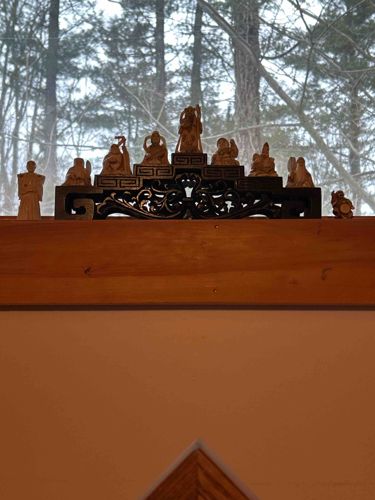
Submitted item photo
Submitted photo · May 27, 2026

User's notes

No additional notes provided.

AI analysis below

AI appraisal

AI analysis & estimate

AI-Generated · Verify before acting

Everything below is generated by AI for informational purposes only. AI can make mistakes — the AI may misidentify items or misattribute them (artist, maker, brand, designer, origin, era). This is not an official valuation and should not be used for insurance, sale, tax, estate, legal, or lending purposes — or any decision requiring a certified appraisal. It is not an authoritative claim about any person, brand, or rights holder — do not share or rely on it as a factual statement about a third party. Always consult qualified professionals before making financial decisions.

Read the full disclaimer

AI Identification

·Not independently authenticated·Verify before acting

Seven Lucky Gods (Shichifukujin) Carved Figurine Set on Wood Stand

Collectibles / Asian Art

AI Estimated Value

·Not an official valuation·Verify before acting

$150 - $250

As of May 27, 2026

AI Item Analysis

·AI can make mistakes·Verify before acting
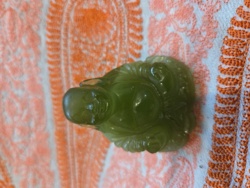
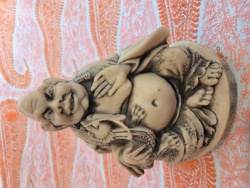
This is a set of small figurines, likely representing the Seven Lucky Gods (Shichifukujin) from Japanese mythology, accompanied by two additional figures. The figures appear to be carved from a material mimicking ivory or bone, such as cinnabar-stained resin or cellulous, though bovine bone is a possibility depending on the presence of Schreger lines not visible at this distance. Each figure features traditional iconography, including deities like Hotei, Daikokuten, and Ebisu, characterized by flowing robes and symbolic attributes. They are displayed on a tiered, dark-finished wooden display stand (likely teak or rosewood) featuring elaborate openwork carving with 'ruyi' cloud scrolls and geometric fretwork. The craftsmanship shows moderate detail, with molded or hand-finished textures on the robes and faces. Condition-wise, the pieces appear dusty but intact, with some natural-looking patina or staining to the figurines to simulate age. This style is consistent with mid-to-late 20th-century decorative export ware, likely originating from East Asia (Japan or China). The collection presents as a complete ensemble, which is favorable for display value. Potential age-related wear is visible on the wood finish, but the set lacks obvious fractures or missing appendages in this view.
AI Appraisal Report

·AI can make mistakes·Verify before acting
I have completed a visual examination of this Shichifukujin (Seven Lucky Gods) set. The ensemble includes nine figures—the traditional seven deities plus two additional attendants—resting on a multi-tiered carved wooden pedestal. My analysis suggests these are likely mid-to-late 20th-century decorative export pieces, probably crafted from a molded resin or composite material designed to imitate aged ivory or bone. The uniform 'tea-staining' used to simulate patina and the lack of visible Schreger lines suggest a mass-market decorative origin rather than antiquity. The wooden stand, featuring ruyi-style scrollwork, appears to be stained soft wood rather than rare rosewood, displaying minor surface dust and localized finish wear consistent with household display. The market for mid-century Asian export décor is stable but saturated; similar sets are frequently found in estate sales and online auctions. While the iconography is classic and the set remains complete—a significant factor for collectors—the lack of artisan signatures or high-end material limits the ceiling for its valuation. Because this assessment is based on images, I cannot definitively rule out bovine bone or identify micro-cracks in the composite. A physical inspection to check the weight, feel (temperature), and any molding seams or grain patterns would be required to confirm the material composition. Additionally, provenance documentation regarding the date of acquisition would assist in confirming its era. For insurance or resale purposes, this set is valued as a decorative collectible rather than a fine investment-grade antique.

Get your items appraised

Instant estimates of your treasures with AI-powered appraisals

Browse More Appraisals