AI Appraisal Estimate

AI-generated estimates · not official valuations

From the user

What was submitted

Photo and notes provided by the user — not generated by AI

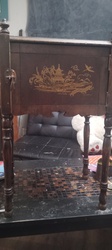
Submitted item photo
Submitted photo · May 24, 2026

User's notes

No additional notes provided.

AI analysis below

AI appraisal

AI analysis & estimate

AI-Generated · Verify before acting

Everything below is generated by AI for informational purposes only. AI can make mistakes — the AI may misidentify items or misattribute them (artist, maker, brand, designer, origin, era). This is not an official valuation and should not be used for insurance, sale, tax, estate, legal, or lending purposes — or any decision requiring a certified appraisal. It is not an authoritative claim about any person, brand, or rights holder — do not share or rely on it as a factual statement about a third party. Always consult qualified professionals before making financial decisions.

Read the full disclaimer

AI Identification

·Not independently authenticated·Verify before acting

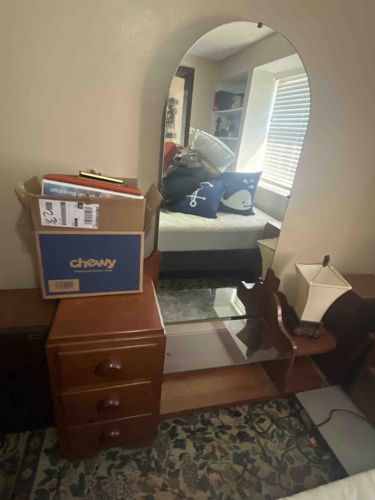
Art Deco Waterfall Vanity with Tall Arched Mirror

Antique Furniture

AI Estimated Value

·Not an official valuation·Verify before acting

$450 - $650

As of May 24, 2026

AI Item Analysis

·AI can make mistakes·Verify before acting
This is a mid-20th-century Art Deco style waterfall vanity, a popular domestic furniture design typically dating from the 1930s to the 1940s. The piece is constructed with wood or wood veneers, featuring a warm medium-brown finish. It is characterized by its asymmetrical design, consisting of a three-drawer chest on the left side and a lower, open shelving unit on the right. The 'waterfall' styling is evident in the rounded, curving edges of the top surfaces, a signature aesthetic of the mass-produced Art Deco era. The drawers are fitted with large, matching circular wooden knobs. Dominating the piece is a tall, frameless arched mirror with a slight bevel, mounted to the back of the vanity. The lower section includes a glass-shelf insert supported by decorative, stepped wooden brackets. Regarding condition, the piece shows visible surface wear, including minor scuffs and scratches consistent with its age. There is some clutter on top, which may have caused slight surface impressions, but the structural integrity appears sound. No distinct maker's marks are visible in the photograph, though this style was widely produced by companies like Cavalier or Lane during the depression-era furniture boom. The craftsmanship is standard for the factory-production methods of the period, utilizing rounded veneer treatments over solid wood frames.
AI Appraisal Report

·AI can make mistakes·Verify before acting
I have conducted a visual appraisal of this Art Deco 'Waterfall' vanity. This piece is a quintessential example of American mass-produced furniture from the late 1930s to early 1940s. The 'waterfall' edge, achieved by steaming and bending veneers over rounded frames, is in good aesthetic condition, which is critical as these veneers are prone to cracking or lifting over time. The asymmetrical configuration and oversized disc pulls are highly characteristic of the era and remain popular for modern interior staging. Technically, the piece appears authentic to the Depression era. The hardware is consistent with 1940s production, and the beveled mirror shows the appropriate scale for domestic sets of that period. However, market value is tempered by the high volume of these pieces produced by manufacturers like Cavalier. While the structural integrity seems sound, visible surface scuffs and the lack of a matching bench or stool slightly reduce the potential retail price. Current market demand for 'Waterfall' furniture is stable but favors pieces that have been professionally refinished or those with unique bakelite hardware. Limitations: My assessment is based solely on the provided imagery. A full authentication would require an in-person inspection of the drawer joinery (to check for machine-cut dovetails) and the backing materials to confirm the type of secondary woods used. I would also need to examine the silvering on the back of the mirror for age-appropriate oxidation and search for a manufacturer’s brand or stencil—often found on the back panel or inside the top drawer—to verify the maker and provenance. Scientific testing is generally not required for this class of furniture.

Get your items appraised

Instant estimates of your treasures with AI-powered appraisals

Browse More Appraisals