Delft Holland Hand-Painted Ceramic Tripod Bowl
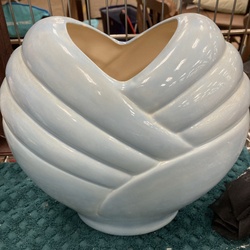
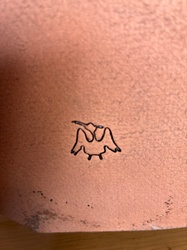
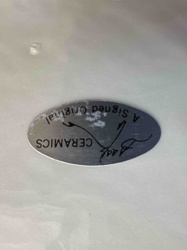
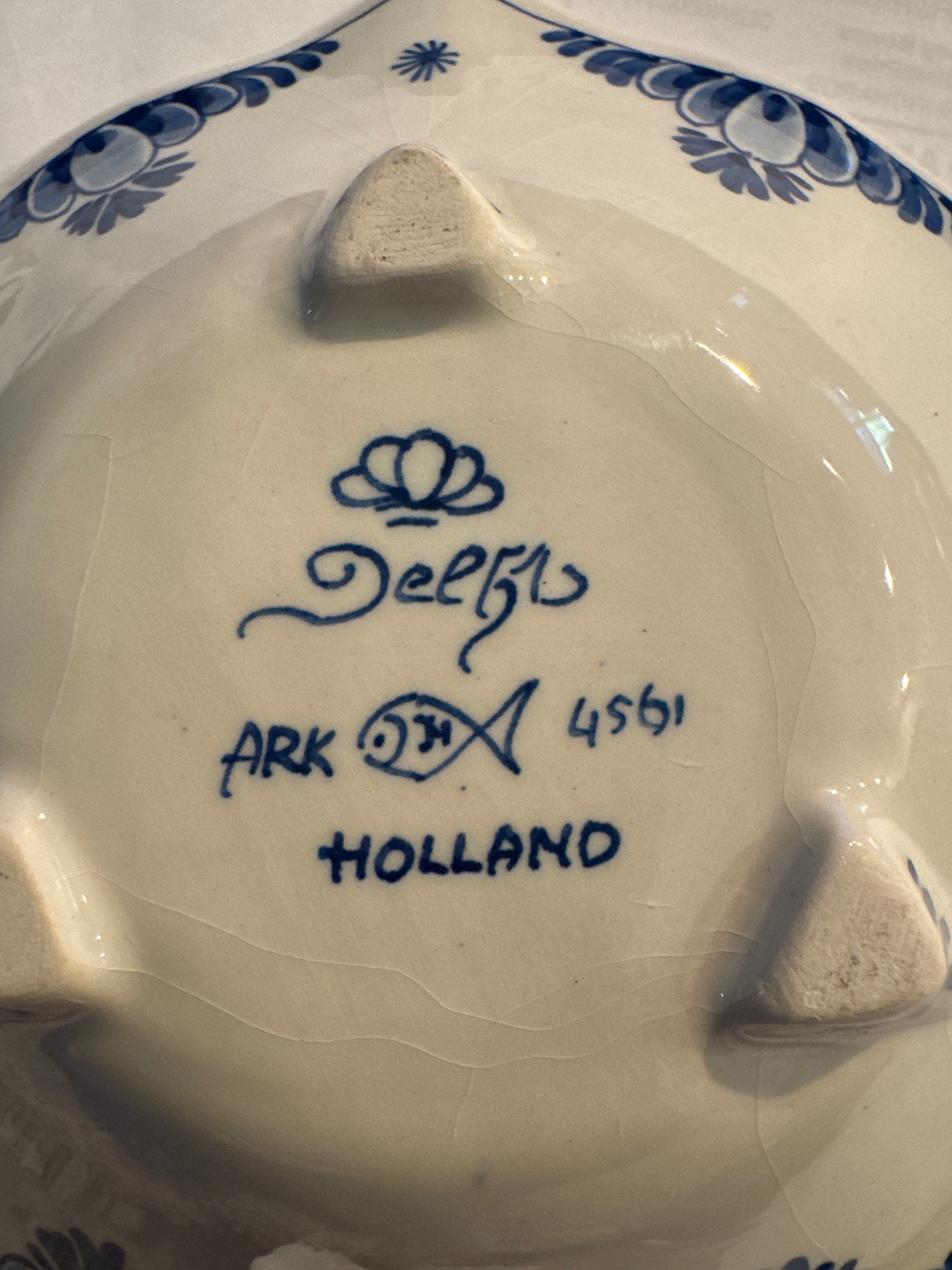
This item is a hand-painted ceramic bowl or dish, typically of Dutch origin, featuring the iconic 'Delft' blue and white color scheme. The piece is constructed from a white glazed earthenware and is supported by three small, unglazed triangular feet. The exterior rim is decorated with a series of blue floral or foliate motifs, often referred to as 'Delfts Blauw' style. The underside contains extensive hand-painted markings in blue to identify its provenance. It includes a stylized crown above the word 'Delft' in a cursive script, followed by the initials 'ARK', a distinct fish symbol containing the letters 'CH', the numerical code '4561', and the word 'HOLLAND' in block capitals. These markings suggest it was produced by the Arke factory, which operated in the mid-20th century. Condition-wise, the item shows significant visible crazing (fine spiderweb-like cracks) throughout the clear glaze, which is a common age-related characteristic of earthenware but impacts the physical integrity of the finish. The unglazed feet show some light staining from surface contact, but the overall painted design remains sharp and vibrant. The craftsmanship displays a typical mid-century European decorative ceramic quality, intended for both utility and display.
AI-Generated Appraisal Disclaimer
Estimated Value
$45.00 - $65.00
Basic Information
Category
Decorative Ceramics & Art Pottery
Appraised On
May 13, 2026
Estimated Value
$45.00 - $65.00
Item Description
This item is a hand-painted ceramic bowl or dish, typically of Dutch origin, featuring the iconic 'Delft' blue and white color scheme. The piece is constructed from a white glazed earthenware and is supported by three small, unglazed triangular feet. The exterior rim is decorated with a series of blue floral or foliate motifs, often referred to as 'Delfts Blauw' style. The underside contains extensive hand-painted markings in blue to identify its provenance. It includes a stylized crown above the word 'Delft' in a cursive script, followed by the initials 'ARK', a distinct fish symbol containing the letters 'CH', the numerical code '4561', and the word 'HOLLAND' in block capitals. These markings suggest it was produced by the Arke factory, which operated in the mid-20th century. Condition-wise, the item shows significant visible crazing (fine spiderweb-like cracks) throughout the clear glaze, which is a common age-related characteristic of earthenware but impacts the physical integrity of the finish. The unglazed feet show some light staining from surface contact, but the overall painted design remains sharp and vibrant. The craftsmanship displays a typical mid-century European decorative ceramic quality, intended for both utility and display.
Related Tags
Get Your Items Appraised
Instant estimates of your treasures with AI-powered instant appraisals