Antique Hand-Chased Indo-Persian Tinned Copper Teapot
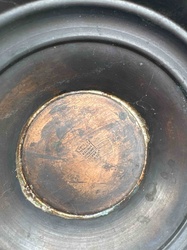
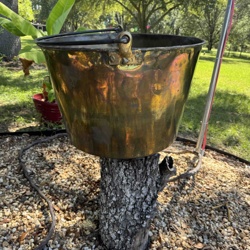
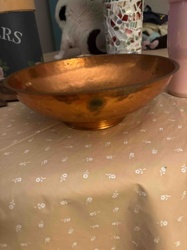
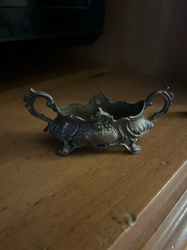
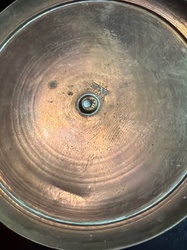
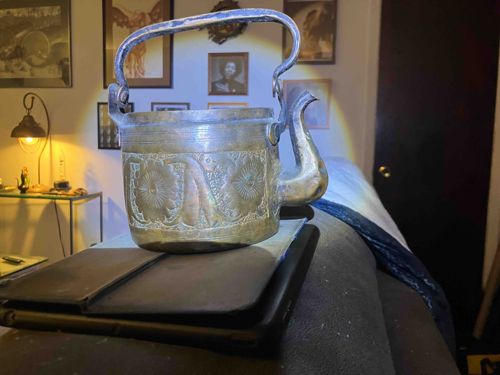
This is a hand-crafted tea vessel, likely of Indo-Persian origin, constructed from copper with a residual tinned finish. The body is cylindrical with a slight taper toward the base, featuring a prominent, curved spout and a thick, arched overhead handle attached via primitive rivets. The external surface is heavily decorated with hand-chased repoussé work, depicting a continuous frieze of stylized floral motifs and scrolling foliate patterns. The material shows a significant aged patina, with much of the original silvery tinning worn away to reveal the warm copper tones beneath. There are visible signs of historical use including small dents, surface abrasions, and oxidation consistent with an 18th or 19th-century origin. The construction is robust and utilitarian, indicating a piece intended for daily use rather than purely decorative display. The craftsmanship is evidenced by the deep, rhythmic punch-work used to create texture in the background of the floral engravings. The lid is currently missing, and the spout shows manual forging marks. No visible maker's marks are apparent, which is common for regional metalwork of this period produced in local bazaars or workshops.
AI-Generated Appraisal Disclaimer
Estimated Value
$100 - $200
Basic Information
Category
Antique Metalware / Kitchenalia
Appraised On
March 27, 2026
Estimated Value
$100 - $200
Additional Details Provided By Owner
User Provided Information
Unknown artist, untitled, copper teapot
Item Description
This is a hand-crafted tea vessel, likely of Indo-Persian origin, constructed from copper with a residual tinned finish. The body is cylindrical with a slight taper toward the base, featuring a prominent, curved spout and a thick, arched overhead handle attached via primitive rivets. The external surface is heavily decorated with hand-chased repoussé work, depicting a continuous frieze of stylized floral motifs and scrolling foliate patterns. The material shows a significant aged patina, with much of the original silvery tinning worn away to reveal the warm copper tones beneath. There are visible signs of historical use including small dents, surface abrasions, and oxidation consistent with an 18th or 19th-century origin. The construction is robust and utilitarian, indicating a piece intended for daily use rather than purely decorative display. The craftsmanship is evidenced by the deep, rhythmic punch-work used to create texture in the background of the floral engravings. The lid is currently missing, and the spout shows manual forging marks. No visible maker's marks are apparent, which is common for regional metalwork of this period produced in local bazaars or workshops.
Related Tags
Get Your Items Appraised
Instant estimates of your treasures with AI-powered instant appraisals