Japanese Kutani Porcelain Plate Fragment or Backmark
Fine Art Ceramics and Porcelain

Japanese Kutani Porcelain Plate Fragment or Backmark

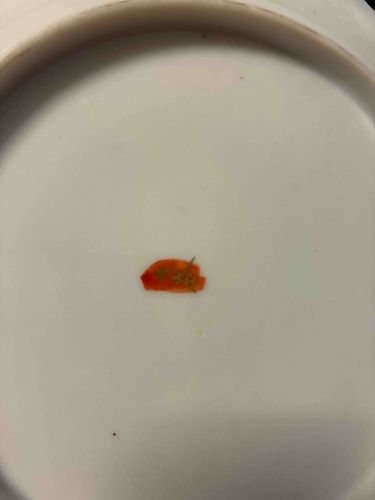
This image features the underside of a porcelain plate, specifically highlighting a central red and gold manufacturer's mark indicating a Japanese Kutani origin. The ceramic material is a bright, high-fired white porcelain with an even, translucent glaze. Centered on the back is a distinctive ruddled orange-red (iron red) rectangular seal, hand-painted with two or three stylized gold kanji characters. The characters are likely 'Kutani' or a specific maker's name from the Ishikawa prefecture. The base shows a raised circular foot rim that appears slightly unglazed and reveals a smooth, fine-grained white clay body. There is a visible faint yellowish staining or discoloration surrounding the central mark, likely caused by mineral deposits or moisture over time. A small black production speck (pitting or iron spot) is visible near the bottom edge. Based on the style of the hand-painted overglaze mark, this piece likely dates to the Late Meiji or Taisho periods (circa 1890–1920), a time when Kutani ware was heavily exported. The craftsmanship is of high quality, as evidenced by the thinness of the porcelain and the precision of the calligraphic mark.

Estimated Value

$45-85

Basic Information

Category

Fine Art Ceramics and Porcelain

Appraised On

January 22, 2026

Estimated Value

$45-85

Item Description

This image features the underside of a porcelain plate, specifically highlighting a central red and gold manufacturer's mark indicating a Japanese Kutani origin. The ceramic material is a bright, high-fired white porcelain with an even, translucent glaze. Centered on the back is a distinctive ruddled orange-red (iron red) rectangular seal, hand-painted with two or three stylized gold kanji characters. The characters are likely 'Kutani' or a specific maker's name from the Ishikawa prefecture. The base shows a raised circular foot rim that appears slightly unglazed and reveals a smooth, fine-grained white clay body. There is a visible faint yellowish staining or discoloration surrounding the central mark, likely caused by mineral deposits or moisture over time. A small black production speck (pitting or iron spot) is visible near the bottom edge. Based on the style of the hand-painted overglaze mark, this piece likely dates to the Late Meiji or Taisho periods (circa 1890–1920), a time when Kutani ware was heavily exported. The craftsmanship is of high quality, as evidenced by the thinness of the porcelain and the precision of the calligraphic mark.
Get Your Items Appraised

Instant estimates of your treasures with AI-powered instant appraisals

Browse More Appraisals