Art Nouveau Iridescent Glass Clutha Pitcher
Antique Art Glass / Art Nouveau Decorative Arts

Art Nouveau Iridescent Glass Clutha Pitcher

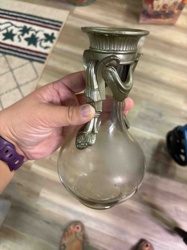
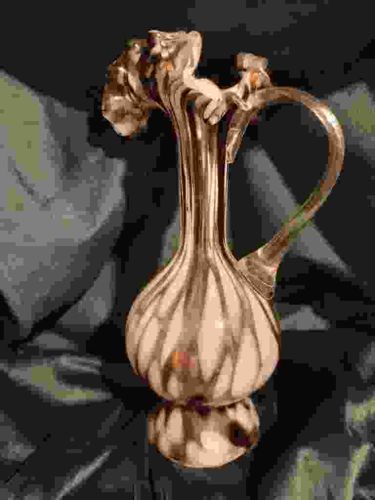
This is an exquisite example of Art Nouveau studio glass, likely a 'Clutha' pitcher or ewer, famously associated with designer Christopher Dresser or James Couper & Sons. The vessel features a teardrop-shaped body rising into a slender neck with a heavily trefoil-folded, ruffled rim. It exhibits a beautiful iridescent gold and green luster, commonly referred to as 'Favrile' or 'Clutha' style, characterized by its bubbly ('seeded') translucent appearance and swirling cream and amber glass patterns. A delicate, translucent glass handle is applied, extending from the mid-neck to the shoulder. The piece rests on a slightly flared, integrated pedestal base. In terms of condition, the glass appears well-preserved with a strong metallic sheen, though some age-related surface wear and potential minor mineral deposits are visible. The craftsmanship is high-quality, showcasing the organic, fluid lines typical of the late 19th-century Aesthetic Movement. No visible maker's marks are discernible in the image, but the form and material suggest a date of manufacture circa 1890-1905, reflecting the period's fascination with Roman and glass-blowing techniques.

Estimated Value

$2,500 - $3,500

Basic Information

Category

Antique Art Glass / Art Nouveau Decorative Arts

Appraised On

March 22, 2026

Estimated Value

$2,500 - $3,500

Item Description

This is an exquisite example of Art Nouveau studio glass, likely a 'Clutha' pitcher or ewer, famously associated with designer Christopher Dresser or James Couper & Sons. The vessel features a teardrop-shaped body rising into a slender neck with a heavily trefoil-folded, ruffled rim. It exhibits a beautiful iridescent gold and green luster, commonly referred to as 'Favrile' or 'Clutha' style, characterized by its bubbly ('seeded') translucent appearance and swirling cream and amber glass patterns. A delicate, translucent glass handle is applied, extending from the mid-neck to the shoulder. The piece rests on a slightly flared, integrated pedestal base. In terms of condition, the glass appears well-preserved with a strong metallic sheen, though some age-related surface wear and potential minor mineral deposits are visible. The craftsmanship is high-quality, showcasing the organic, fluid lines typical of the late 19th-century Aesthetic Movement. No visible maker's marks are discernible in the image, but the form and material suggest a date of manufacture circa 1890-1905, reflecting the period's fascination with Roman and glass-blowing techniques.
Get Your Items Appraised

Instant estimates of your treasures with AI-powered instant appraisals

Browse More Appraisals