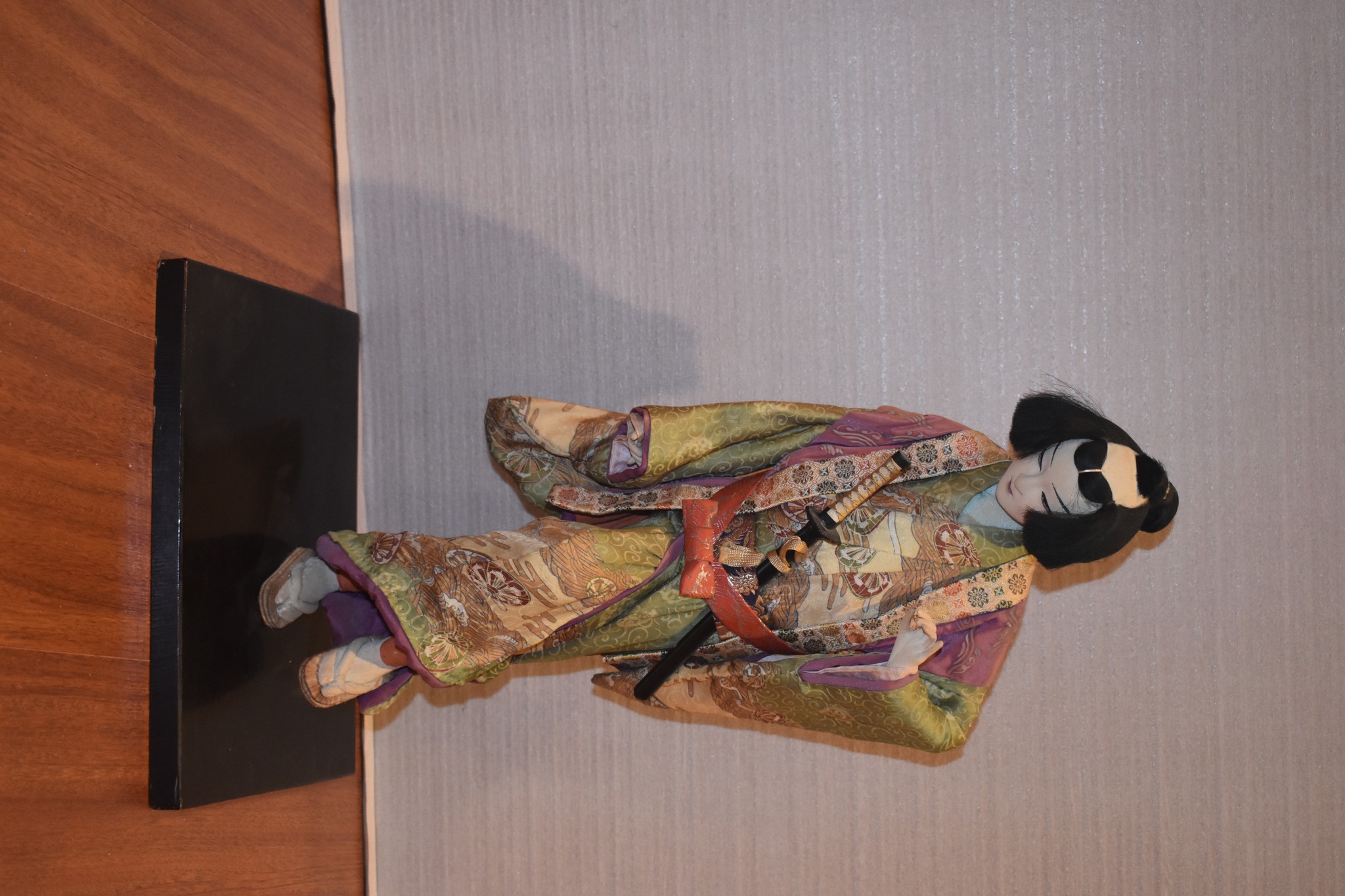
Japanese Musha Ningyo (Warrior Doll) of a Kabuki Actor
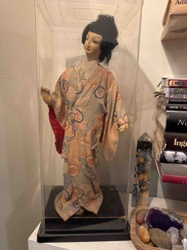
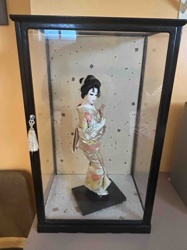
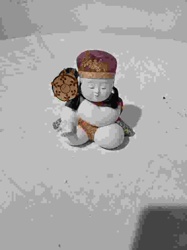
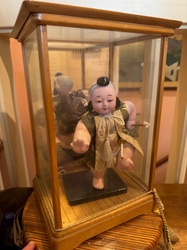
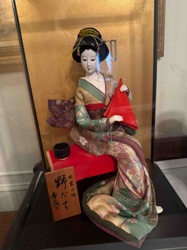
A high-quality Japanese musha ningyo dating to the early Showa period (circa 1940). The doll represents a male figure, likely a Kabuki actor in a warrior role, characterized by a white-pigmented 'gofun' face with meticulously painted features and a formal 'chonmage' hairstyle. He is dressed in an elaborate multi-layered silk brocade kimono featuring shades of moss green, lavender, and gold, adorned with traditional floral and geometric patterns. A red silk sash (obi) is tied around the waist, securing a miniature sheathed 'katana' sword with detailed hilt wrapping. The figure wears traditional white 'tabi' socks and straw 'waraji' sandals, posed in a dynamic standing position on a rectangular black lacquered wooden base. The craftsmanship reflects superior skill, particularly in the delicate hand-painted eyes and the intricate weave of the textiles. In terms of condition, the doll appears well-preserved despite the loss of its original glass case; there is slight fraying visible on the silk edges and minor dust accumulation, but no significant cracking to the gofun surface or major structural damage is present. The style is typical of dolls produced for the Boys' Day festival (Tango no Sekku) during the 1930s and 1940s, intended as luxury commemorative items rather than toys.
AI-Generated Appraisal Disclaimer
Estimated Value
$450 - $650
Basic Information
Category
Antique Japanese Dolls / Ningyo
Appraised On
May 12, 2026
Estimated Value
$450 - $650
Additional Details Provided By Owner
User Provided Information
Doll purchased ca 1940 in Japan. Glass case destroyed in shipping.
Item Description
A high-quality Japanese musha ningyo dating to the early Showa period (circa 1940). The doll represents a male figure, likely a Kabuki actor in a warrior role, characterized by a white-pigmented 'gofun' face with meticulously painted features and a formal 'chonmage' hairstyle. He is dressed in an elaborate multi-layered silk brocade kimono featuring shades of moss green, lavender, and gold, adorned with traditional floral and geometric patterns. A red silk sash (obi) is tied around the waist, securing a miniature sheathed 'katana' sword with detailed hilt wrapping. The figure wears traditional white 'tabi' socks and straw 'waraji' sandals, posed in a dynamic standing position on a rectangular black lacquered wooden base. The craftsmanship reflects superior skill, particularly in the delicate hand-painted eyes and the intricate weave of the textiles. In terms of condition, the doll appears well-preserved despite the loss of its original glass case; there is slight fraying visible on the silk edges and minor dust accumulation, but no significant cracking to the gofun surface or major structural damage is present. The style is typical of dolls produced for the Boys' Day festival (Tango no Sekku) during the 1930s and 1940s, intended as luxury commemorative items rather than toys.
Get Your Items Appraised
Instant estimates of your treasures with AI-powered instant appraisals