AI Appraisal Estimate

AI-generated estimates · not official valuations

From the user

What was submitted

Photo and notes provided by the user — not generated by AI

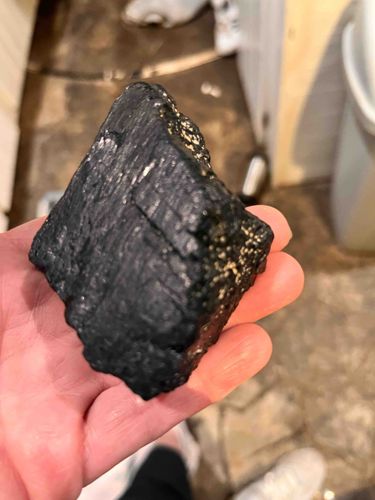
Submitted item photo
Submitted photo · May 25, 2026

User's notes

No additional notes provided.

AI analysis below

AI appraisal

AI analysis & estimate

AI-Generated · Verify before acting

Everything below is generated by AI for informational purposes only. AI can make mistakes — the AI may misidentify items or misattribute them (artist, maker, brand, designer, origin, era). This is not an official valuation and should not be used for insurance, sale, tax, estate, legal, or lending purposes — or any decision requiring a certified appraisal. It is not an authoritative claim about any person, brand, or rights holder — do not share or rely on it as a factual statement about a third party. Always consult qualified professionals before making financial decisions.

Read the full disclaimer

AI Identification

·Not independently authenticated·Verify before acting

Raw Black Tourmaline Crystal with Gold-Tone Inclusions

Minerals & Specimens

AI Estimated Value

·Not an official valuation·Verify before acting

$45.00 - $75.00

As of May 25, 2026

AI Item Analysis

·AI can make mistakes·Verify before acting
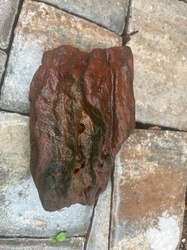
This specimen is a raw, unpolished piece of black tourmaline, also known as Schorl, which appears to be approximately 3 to 4 inches in length based on its scale in the palm of a hand. The crystal exhibits a deep, opaque jet-black color with the characteristic vitreous to sub-metallic luster. The physical construction is defined by a dense, trigonal crystal system featuring prominent vertical striations throughout its surface, which is a key diagnostic feature of the tourmaline species. Notably, one side of the specimen contains clusters of small, metallic gold-colored inclusions, most likely Pyrite (Fool's Gold) or Chalcopyrite, which add a significant internal contrast to the dark matrix. The condition is in its natural, rough state, showing various jagged edges, terminal fractures, and minor crumbling typical of raw mineral specimens. There are no man-made markings, signatures, or stamps, as this is a natural geological formation. The quality of the piece is highlighted by the sharpness of its striations and the density of the metallic inclusions, making it a desirable example for mineral collectors or those interested in metaphysical stones. Its age is geological, likely dating back millions of years.

AI Appraisal Report

·AI can make mistakes·Verify before acting
Based on my visual examination of this raw black tourmaline (Schorl) specimen, I have assessed its value based on mineralogical quality and market demand. The specimen, measuring approximately 3 to 4 inches, displays the characteristic trigonal crystal system and sharp vertical striations expected of high-quality Schorl. The presence of metallic inclusions, most likely Pyrite or Chalcopyrite, provides a desirable aesthetic contrast that elevates it above standard industrial-grade specimens. The luster appears vitreous, and the opaque jet-black saturation is consistent with authentic Schorl. The current market for raw mineral specimens is robust, driven by both traditional mineral collectors and the metaphysical community. Comparables for Schorl of this size with metallic inclusions typically retail in the $40 to $80 range, depending on the luster and the integrity of the crystal terminations. While the rough edges and minor crumbling are characteristic of the species' brittle nature, significant damage to the terminal ends can slightly suppress value. Limitations of this appraisal include the inability to perform hardness tests (Schorl is 7-7.5 on the Mohs scale) or specific gravity measurements to definitively distinguish the matrix from other black minerals like Ilmenite. Furthermore, the gold-tone inclusions require magnification and acid-testing to confirm as Pyrite versus Chalcopyrite or other sulfides. A physical inspection would also confirm if the inclusions are naturally occurring or if any adhesives were used to enhance the specimen. For a full authentication, I would recommend checking for trace amounts of iron via chemical analysis and verifying provenance to see if the specimen originates from a known locality such as the Erongo Region of Namibia or the Minas Gerais mines in Brazil.

Get your items appraised

Instant estimates of your treasures with AI-powered appraisals

Browse More Appraisals