Prehistoric Lithic Scraper or Unifacial Knife
Archaeological Artifacts / Native American Lithics

Prehistoric Lithic Scraper or Unifacial Knife

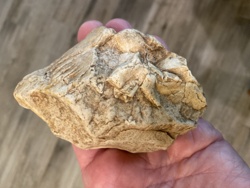
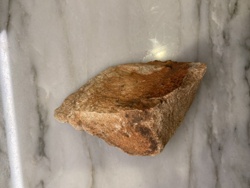
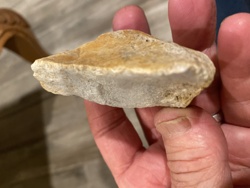
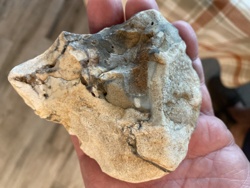
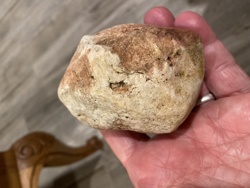
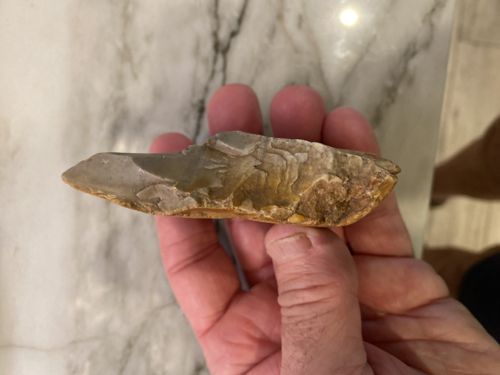
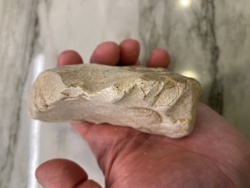
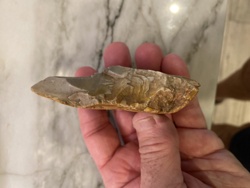
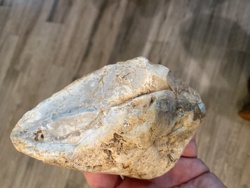
This artifact is a prehistoric stone tool, likely serving as a scraper or a unifacial knife. It measures approximately 3 to 4 inches in length based on scale relative to the hand. The material appears to be a high-quality cryptocrystalline silicate, possibly a variety of Oklahoma chert or flint, characterized by a waxy luster and variegated earth tones ranging from translucent grey to a yellowish-ochre patina. The construction exhibits clear evidence of conchoidal fracturing through percussion flaking. One side (the dorsal face) shows significant flake scarring where material was removed to create a steep, working edge, while the opposite side appears relatively flat. The longitudinal edge shows fine retouching, which suggests it was a specialized tool for skinning or woodworking. Condition-wise, the artifact shows substantial weathering and a distinct mineral patina, consistent with long-term exposure to Guthrie, OK soil conditions. There are minor step fractures along the working edge, likely from use-wear rather than modern damage. Its asymmetric, ergonomic shape suggests it was held directly in the hand rather than hafted. This piece represents a high level of craftsmanship in opportunistic tool-making from the Archaic or Woodland periods of North American history.
Estimated Value

$45.00 - $75.00

Basic Information

Category

Archaeological Artifacts / Native American Lithics

Appraised On

February 18, 2026

Estimated Value

$45.00 - $75.00

Additional Details Provided By Owner

User Provided Information

Prehistoric stone scraper/ knife found in Guthrie, OK

Item Description

This artifact is a prehistoric stone tool, likely serving as a scraper or a unifacial knife. It measures approximately 3 to 4 inches in length based on scale relative to the hand. The material appears to be a high-quality cryptocrystalline silicate, possibly a variety of Oklahoma chert or flint, characterized by a waxy luster and variegated earth tones ranging from translucent grey to a yellowish-ochre patina. The construction exhibits clear evidence of conchoidal fracturing through percussion flaking. One side (the dorsal face) shows significant flake scarring where material was removed to create a steep, working edge, while the opposite side appears relatively flat. The longitudinal edge shows fine retouching, which suggests it was a specialized tool for skinning or woodworking. Condition-wise, the artifact shows substantial weathering and a distinct mineral patina, consistent with long-term exposure to Guthrie, OK soil conditions. There are minor step fractures along the working edge, likely from use-wear rather than modern damage. Its asymmetric, ergonomic shape suggests it was held directly in the hand rather than hafted. This piece represents a high level of craftsmanship in opportunistic tool-making from the Archaic or Woodland periods of North American history.
Get Your Items Appraised

Instant estimates of your treasures with AI-powered instant appraisals

Browse More Appraisals