AI Appraisal Estimate

AI-generated estimates · not official valuations

From the user

What was submitted

Photo and notes provided by the user — not generated by AI

Submitted item photo
Submitted photo · May 27, 2026

User's notes

No additional notes provided.

AI analysis below

AI appraisal

AI analysis & estimate

AI-Generated · Verify before acting

Everything below is generated by AI for informational purposes only. AI can make mistakes — the AI may misidentify items or misattribute them (artist, maker, brand, designer, origin, era). This is not an official valuation and should not be used for insurance, sale, tax, estate, legal, or lending purposes — or any decision requiring a certified appraisal. It is not an authoritative claim about any person, brand, or rights holder — do not share or rely on it as a factual statement about a third party. Always consult qualified professionals before making financial decisions.

Read the full disclaimer

AI Identification

·Not independently authenticated·Verify before acting

Japanese Meiji Period Shibayama Style Lacquer Screen Panel

Asian Antiques and Furniture

AI Estimated Value

·Not an official valuation·Verify before acting

$800 - $1,200

As of May 27, 2026

AI Item Analysis

·AI can make mistakes·Verify before acting
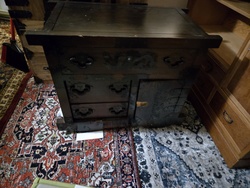
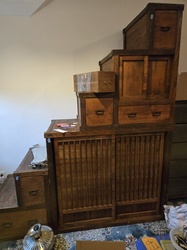
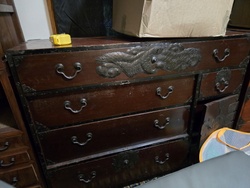
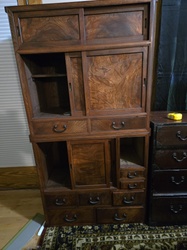
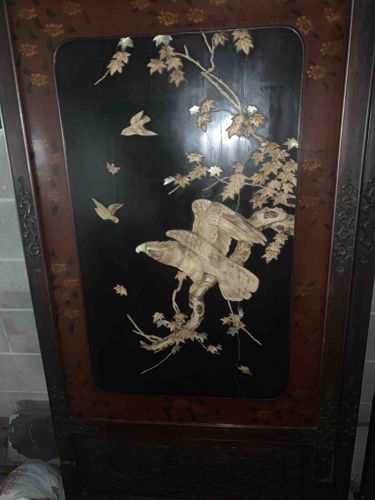
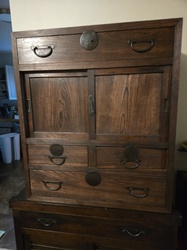
This is a large, vertical decorative panel, likely once part of a multi-fold floor screen or a standalone framed wall hanging. The central focus is a black lacquer panel featuring high-relief 'Shibayama' style inlays, likely composed of carved bone, ivory, or mother-of-pearl, depicting a large hawk perched on a gnarled flowering branch with smaller birds in flight. The central black panel is surrounded by a secondary frame of reddish-brown lacquer decorated with delicate overglaze gold maki-e floral patterns. The outer framework consists of dark, heavy wood, possibly rosewood or zitan, showcasing intricate openwork scrolling carvings on the stiles and rails. The craftsmanship indicates late 19th-century Japanese Meiji period production (1868-1912), specifically designed for the export market. Regarding condition, there is visible cracking to the black lacquer ground consistent with age and environmental fluctuation. Several small inlay pieces for the leaves appear to be missing or loose. There is significant dust accumulation and some scuffing on the bottom rail. The high quality of the carving on the hawk's feathers and the branch demonstrates a high level of artisanal skill, though the lack of a visible signature suggests it came from a known commercial workshop of the era rather than a single master artist.
AI Appraisal Report

·AI can make mistakes·Verify before acting
Based on my visual examination of the provided images, this piece presents as an authentic late 19th-century Japanese Meiji Period panel, executed in the Shibayama style. The craftsmanship is characteristic of export wares from this era, combining a black lacquer ground with high-relief inlays—likely mother-of-pearl and bone—depicting a hawk amidst flora. The secondary frame featuring gold maki-e floral patterns and the outer carved hardwood framework add significant decorative appeal. However, condition is the primary limiting factor for value here. I observed noticeable vertical cracking in the lacquer ground, which is common but detracts from the aesthetic integrity. Furthermore, the loss of inlay pieces in the foliage and the general surface wear on the lower rail suggest the need for professional restoration, which can be costly. While the carving of the hawk is competent, the absence of a signature points to a commercial workshop rather than a celebrated master, keeping this out of the premium collector tier. The market for Meiji export furniture remains steady but selective; buyers prioritize pristine condition and intricate detail. Comparable single panels in this condition typically hammer at auction between $800 and $1,200. Were this part of a complete, intact screen, the value would be exponentially higher. To fully verify the materials (specifically to distinguish between ivory, bone, and synthetic substitutes) and confirm the date of the wood frame, physical inspection and potentially close-up microscopy would be required. Absent provenance, this evaluation assumes standard materials for the period.

Get your items appraised

Instant estimates of your treasures with AI-powered appraisals

Browse More Appraisals