Paleolithic Chert Hand Axe Scraper Tool
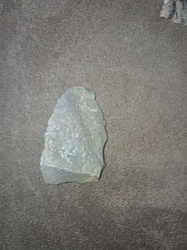
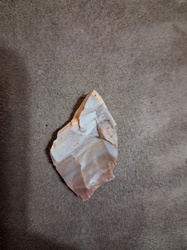
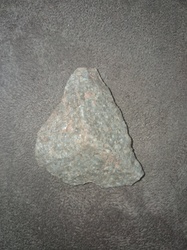
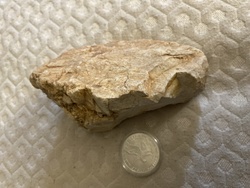
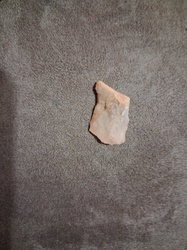
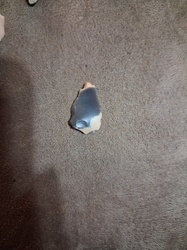
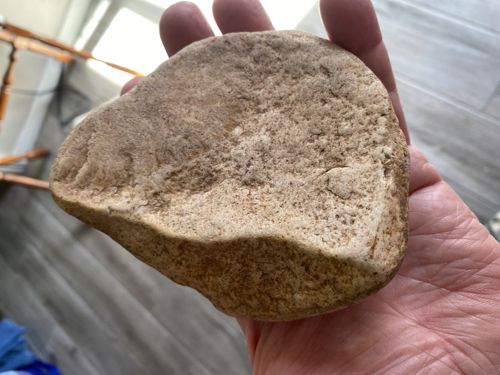
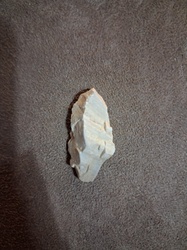
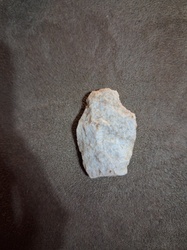
This artifact is a prehistoric lithic tool, measuring approximately 5 inches by 4 inches, discovered in Guthrie, Oklahoma. Formed from a dense, crypto-crystalline chert variety, the item displays a teardrop or 'ovate' morphology traditional to hand-held multipurpose tools. The coloration is predominately tan and light brown, featuring an earthy, matte patina consistent with long-term environmental exposure in varied soil conditions. Surface analysis reveals evidence of percussion flaking along the primary working edge to create a sharp, durable margin suitable for scraping or chopping. The reverse face and grip area show signs of intentional cortical reduction to facilitate a comfortable ergonomic fit in the palm. Notably, the texture across the tool varies from relatively smooth worked surfaces to pitted, unrefined areas. There are no modern maker's marks, as the piece's construction relies on ancient manual lithic reduction techniques. While many edges appear worn and softened by time and use, the structural integrity remains robust. The tool is likely a product of an early North American cultural period, such as the Paleo-Indian stage, though exact dating requires stratigraphic context.
AI-Generated Appraisal Disclaimer
Estimated Value
$150 - $350
Basic Information
Category
Archaeological Artifacts
Appraised On
February 19, 2026
Estimated Value
$150 - $350
Additional Details Provided By Owner
User Provided Information
Paleolithic chert hand axe scraper tool found in Guthrie, OK 5" x 4"
Item Description
This artifact is a prehistoric lithic tool, measuring approximately 5 inches by 4 inches, discovered in Guthrie, Oklahoma. Formed from a dense, crypto-crystalline chert variety, the item displays a teardrop or 'ovate' morphology traditional to hand-held multipurpose tools. The coloration is predominately tan and light brown, featuring an earthy, matte patina consistent with long-term environmental exposure in varied soil conditions. Surface analysis reveals evidence of percussion flaking along the primary working edge to create a sharp, durable margin suitable for scraping or chopping. The reverse face and grip area show signs of intentional cortical reduction to facilitate a comfortable ergonomic fit in the palm. Notably, the texture across the tool varies from relatively smooth worked surfaces to pitted, unrefined areas. There are no modern maker's marks, as the piece's construction relies on ancient manual lithic reduction techniques. While many edges appear worn and softened by time and use, the structural integrity remains robust. The tool is likely a product of an early North American cultural period, such as the Paleo-Indian stage, though exact dating requires stratigraphic context.
Get Your Items Appraised
Instant estimates of your treasures with AI-powered instant appraisals