Japanese Sumi-e Ink Wash Landscape on Washi Paper
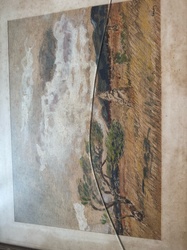
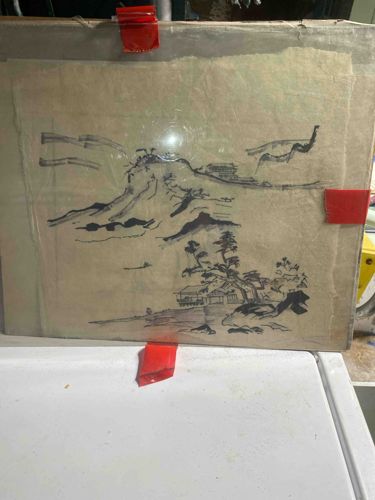
This item is a traditional East Asian ink wash painting, likely Japanese in origin (Sumi-e), executed on a textured, handmade washi paper. The landscape composition features a shoreline with a rustic pavilion or cluster of huts nestled under wind-swept pine trees. In the background, rolling mountains are rendered with expressive, calligraphic brushstrokes and varying ink tones to create a sense of depth and atmospheric perspective. The piece appears to be an unframed work protected currently by a makeshift sleeve or plastic sheet secured with red adhesive tape. The paper itself shows significant signs of age-related wear, including noticeable yellowing, horizontal creasing, and irregular edges characteristic of handmade fiber paper. There are visible undulating ripples in the paper's surface, suggesting it may have been exposed to humidity or was never properly mounted. The ink quality shows a range from deep charcoal blacks for the foreground details to lighter, diluted grays for the distant mountains and clouds. No immediate artist's seals (hankos) or signatures are visible in this specific view, which is common for study pieces or certain minimalist styles. Based on the paper texture and technique, it likely dates to the mid-20th century or earlier, though further examination of the fiber and ink absorption would be needed to determine an exact age. The craftsmanship displays a confident hand and mastery of traditional 'broken ink' techniques.
AI-Generated Appraisal Disclaimer
Estimated Value
$150 - $300
Basic Information
Category
Fine Art - Asian Paintings and Works on Paper
Appraised On
March 25, 2026
Estimated Value
$150 - $300
Item Description
This item is a traditional East Asian ink wash painting, likely Japanese in origin (Sumi-e), executed on a textured, handmade washi paper. The landscape composition features a shoreline with a rustic pavilion or cluster of huts nestled under wind-swept pine trees. In the background, rolling mountains are rendered with expressive, calligraphic brushstrokes and varying ink tones to create a sense of depth and atmospheric perspective. The piece appears to be an unframed work protected currently by a makeshift sleeve or plastic sheet secured with red adhesive tape. The paper itself shows significant signs of age-related wear, including noticeable yellowing, horizontal creasing, and irregular edges characteristic of handmade fiber paper. There are visible undulating ripples in the paper's surface, suggesting it may have been exposed to humidity or was never properly mounted. The ink quality shows a range from deep charcoal blacks for the foreground details to lighter, diluted grays for the distant mountains and clouds. No immediate artist's seals (hankos) or signatures are visible in this specific view, which is common for study pieces or certain minimalist styles. Based on the paper texture and technique, it likely dates to the mid-20th century or earlier, though further examination of the fiber and ink absorption would be needed to determine an exact age. The craftsmanship displays a confident hand and mastery of traditional 'broken ink' techniques.
Get Your Items Appraised
Instant estimates of your treasures with AI-powered instant appraisals