Inuit Soapstone Seal Carving
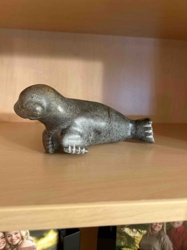
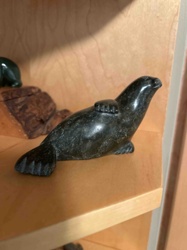
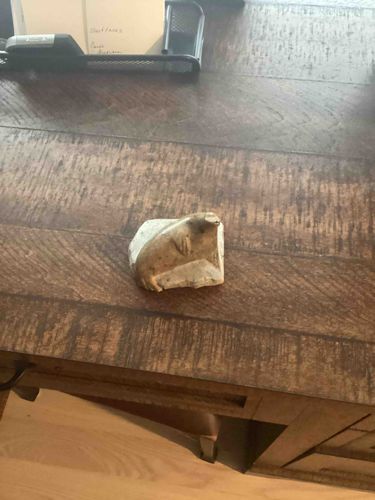
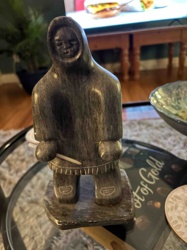
This is a small, hand-carved soapstone sculpture depicting a seal resting on an ice floe. The item appears to be made from a dual-toned variety of steatite (soapstone) or serpentine, featuring a darker, brownish-grey polished body for the seal and a lighter, off-white unpolished base representing its icy habitat. The seal is rendered in a minimalist, organic style characteristic of 20th-century Inuit art, with smooth lines defining its rounded body and small incised details for its flippers and facial features. The construction is solid, likely carved from a single piece of stone. Notable features include the contrast in texture between the high-sheen body and the matte, rough-hewn base. Regarding condition, there are visible surface scratches and minor abrasions consistent with age and handling, particularly around the head and the tail area. No clear maker's marks or Disc Numbers are visible in the photograph, though such carvings typically date from the mid-to-late 20th century. The craftsmanship indicates a folk-art aesthetic, prioritizing the fluid form of the marine mammal over anatomical precision. The quality of the stone suggests a natural mineral source, and the patina shows a slight dulling of the original wax finish.
AI-Generated Appraisal Disclaimer
Estimated Value
$150 - $250
Basic Information
Category
Art / Indigenous Sculpture
Appraised On
March 13, 2026
Estimated Value
$150 - $250
Item Description
This is a small, hand-carved soapstone sculpture depicting a seal resting on an ice floe. The item appears to be made from a dual-toned variety of steatite (soapstone) or serpentine, featuring a darker, brownish-grey polished body for the seal and a lighter, off-white unpolished base representing its icy habitat. The seal is rendered in a minimalist, organic style characteristic of 20th-century Inuit art, with smooth lines defining its rounded body and small incised details for its flippers and facial features. The construction is solid, likely carved from a single piece of stone. Notable features include the contrast in texture between the high-sheen body and the matte, rough-hewn base. Regarding condition, there are visible surface scratches and minor abrasions consistent with age and handling, particularly around the head and the tail area. No clear maker's marks or Disc Numbers are visible in the photograph, though such carvings typically date from the mid-to-late 20th century. The craftsmanship indicates a folk-art aesthetic, prioritizing the fluid form of the marine mammal over anatomical precision. The quality of the stone suggests a natural mineral source, and the patina shows a slight dulling of the original wax finish.
Related Tags
Get Your Items Appraised
Instant estimates of your treasures with AI-powered instant appraisals