Val St. Lambert Clear Crystal Owl Figurine
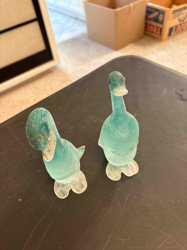
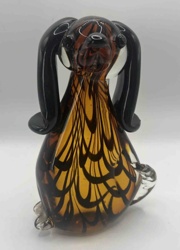
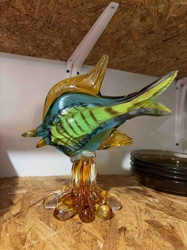
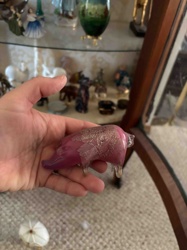
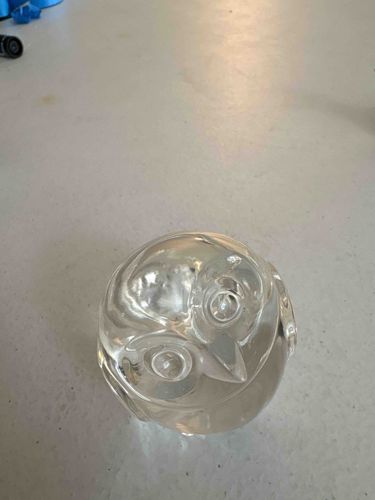
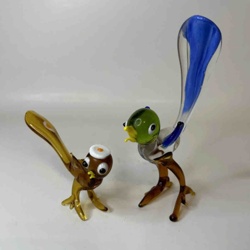
This is a minimalist, stylized owl figurine crafted from heavy, high-clarity lead crystal, reminiscent of the mid-century modern aesthetic typically produced by Val St. Lambert or Steuben. The object is spherical or egg-shaped (ovoid) in its primary form, standing approximately 3 to 4 inches in height. It features recessed, concentric circular engravings representing large eyes and a prominent, sharp, triangular beak that is molded into the facial structure. The crystal is colorless and transparent, demonstrating high brilliance and light refraction characteristic of fine lead-based glass. The design utilizes a 'less is more' approach, omitting detailed feathers in favor of smooth, polished surfaces and soft curves. No visible chips, cracks, or deep scratches are present in the provided angle, though minor shelf wear on the base would be expected for a vintage piece. Its manufacture likely dates between 1960 and 1980, reflecting the popularity of wildlife themes in glass art during that era. The weight suggests a solid, hand-finished construction rather than thin, mass-produced pressed glass.
AI-Generated Appraisal Disclaimer
Estimated Value
$40 - $80
Basic Information
Category
Art Glass / Collectible Figurines
Appraised On
December 19, 2025
Estimated Value
$40 - $80
Item Description
This is a minimalist, stylized owl figurine crafted from heavy, high-clarity lead crystal, reminiscent of the mid-century modern aesthetic typically produced by Val St. Lambert or Steuben. The object is spherical or egg-shaped (ovoid) in its primary form, standing approximately 3 to 4 inches in height. It features recessed, concentric circular engravings representing large eyes and a prominent, sharp, triangular beak that is molded into the facial structure. The crystal is colorless and transparent, demonstrating high brilliance and light refraction characteristic of fine lead-based glass. The design utilizes a 'less is more' approach, omitting detailed feathers in favor of smooth, polished surfaces and soft curves. No visible chips, cracks, or deep scratches are present in the provided angle, though minor shelf wear on the base would be expected for a vintage piece. Its manufacture likely dates between 1960 and 1980, reflecting the popularity of wildlife themes in glass art during that era. The weight suggests a solid, hand-finished construction rather than thin, mass-produced pressed glass.
Get Your Items Appraised
Instant estimates of your treasures with AI-powered instant appraisals