Vintage G.L.S. & Co. Stickpin
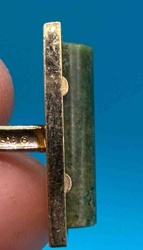
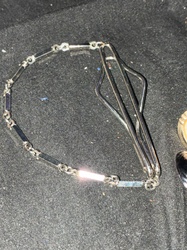
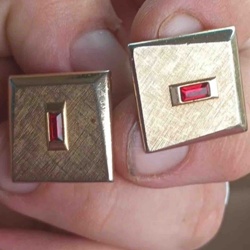
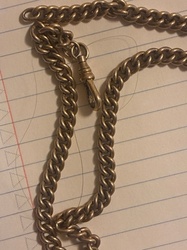
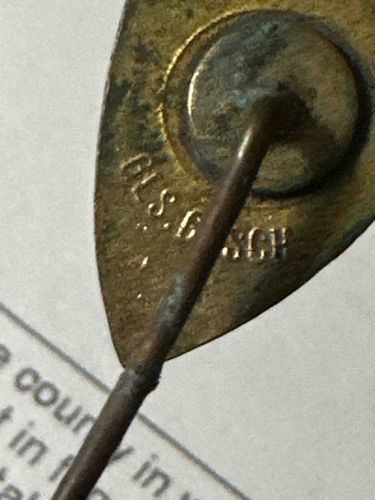
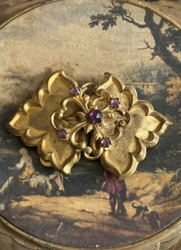
This item is a vintage stickpin, traditionally used as a lapel accessory or cravat pin. The specimen is constructed from a base metal, likely brass or bronze given the yellowish-gold hue visible beneath the surface. It features a teardrop-shaped badge mounted on a long, thin, hand-soldered pin stem. A significant attribute is the embossed manufacturer's mark 'G.L.S. & CO' on the reverse side of the badge, which may point to George L. Sanders & Co. or a similar mid-20th-century jewelry manufacturer. The physical condition reflects its age, with a heavy, multi-toned patina consisting of dark oxidation and verdigris spotting (green corrosion) around the solder joint. The pin stem shows slight bending and surface pitting, indicating frequent historical use. The construction style is typical of early-to-mid 20th-century costume jewelry, characterized by a die-stamped head and a simple fused pin mechanism. The presence of the maker's mark suggests a level of commercial manufacturing quality intended for durability, though it has weathered significantly over time. No visible gemstones or enamel remain on this side, suggesting the primary decorative face is on the reverse.
AI-Generated Appraisal Disclaimer
Estimated Value
$25.00 - $45.00
Basic Information
Category
Vintage Jewelry & Accessories
Appraised On
January 24, 2026
Estimated Value
$25.00 - $45.00
Item Description
This item is a vintage stickpin, traditionally used as a lapel accessory or cravat pin. The specimen is constructed from a base metal, likely brass or bronze given the yellowish-gold hue visible beneath the surface. It features a teardrop-shaped badge mounted on a long, thin, hand-soldered pin stem. A significant attribute is the embossed manufacturer's mark 'G.L.S. & CO' on the reverse side of the badge, which may point to George L. Sanders & Co. or a similar mid-20th-century jewelry manufacturer. The physical condition reflects its age, with a heavy, multi-toned patina consisting of dark oxidation and verdigris spotting (green corrosion) around the solder joint. The pin stem shows slight bending and surface pitting, indicating frequent historical use. The construction style is typical of early-to-mid 20th-century costume jewelry, characterized by a die-stamped head and a simple fused pin mechanism. The presence of the maker's mark suggests a level of commercial manufacturing quality intended for durability, though it has weathered significantly over time. No visible gemstones or enamel remain on this side, suggesting the primary decorative face is on the reverse.
Related Tags
Get Your Items Appraised
Instant estimates of your treasures with AI-powered instant appraisals