Antique Flow Blue Ironstone Plate in 'Shamrock' or Similar Pattern
Antique Ceramics and Pottery

Antique Flow Blue Ironstone Plate in 'Shamrock' or Similar Pattern

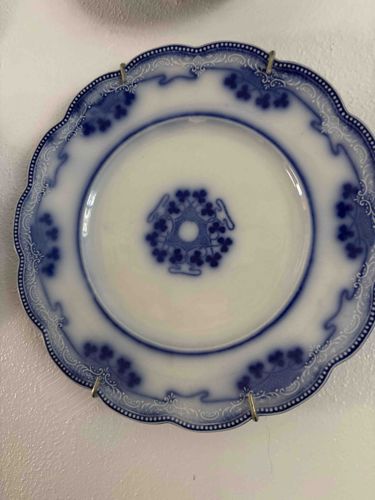
This is a fine example of late 19th-century flow blue ironstone or semi-porcelain. The plate features a characteristically soft, blurred cobalt blue transfer-ware design on a crisp white ground. The central well displays a geometric grouping of shamrocks or trefoils arranged in a circular motif. The broad brim is decorated with a feathered or scalloped border consisting of repeating shamrock clusters and fine lace-like scrollwork. The edge of the plate is elegantly scalloped with a raised, beaded rim, which shows high-quality molding common in Victorian-era tableware. The 'flow' effect is prominent, where the blue pigment has bled slightly into the surrounding glaze during the firing process, a highly collected aesthetic. The plate is currently displayed in a four-pronged metal wire wall hanger, which suggests it has been kept as a decorative cabinet piece. Based on the style and glaze, it likely dates between 1880 and 1900, originating from an English Staffordshire pottery maker such as W.H. Grindley or Johnson Brothers. The surface appears to have a high-gloss glaze with minimal visible crazing from this distance, though natural age-related wear to the foot ring or minor utensil marks in the center may be present upon closer inspection.
Estimated Value

$45.00 - $75.00

Basic Information

Category

Antique Ceramics and Pottery

Appraised On

February 1, 2026

Estimated Value

$45.00 - $75.00

Item Description

This is a fine example of late 19th-century flow blue ironstone or semi-porcelain. The plate features a characteristically soft, blurred cobalt blue transfer-ware design on a crisp white ground. The central well displays a geometric grouping of shamrocks or trefoils arranged in a circular motif. The broad brim is decorated with a feathered or scalloped border consisting of repeating shamrock clusters and fine lace-like scrollwork. The edge of the plate is elegantly scalloped with a raised, beaded rim, which shows high-quality molding common in Victorian-era tableware. The 'flow' effect is prominent, where the blue pigment has bled slightly into the surrounding glaze during the firing process, a highly collected aesthetic. The plate is currently displayed in a four-pronged metal wire wall hanger, which suggests it has been kept as a decorative cabinet piece. Based on the style and glaze, it likely dates between 1880 and 1900, originating from an English Staffordshire pottery maker such as W.H. Grindley or Johnson Brothers. The surface appears to have a high-gloss glaze with minimal visible crazing from this distance, though natural age-related wear to the foot ring or minor utensil marks in the center may be present upon closer inspection.
Get Your Items Appraised

Instant estimates of your treasures with AI-powered instant appraisals

Browse More Appraisals