White Milk Glass Plate with Lattice Openwork Border
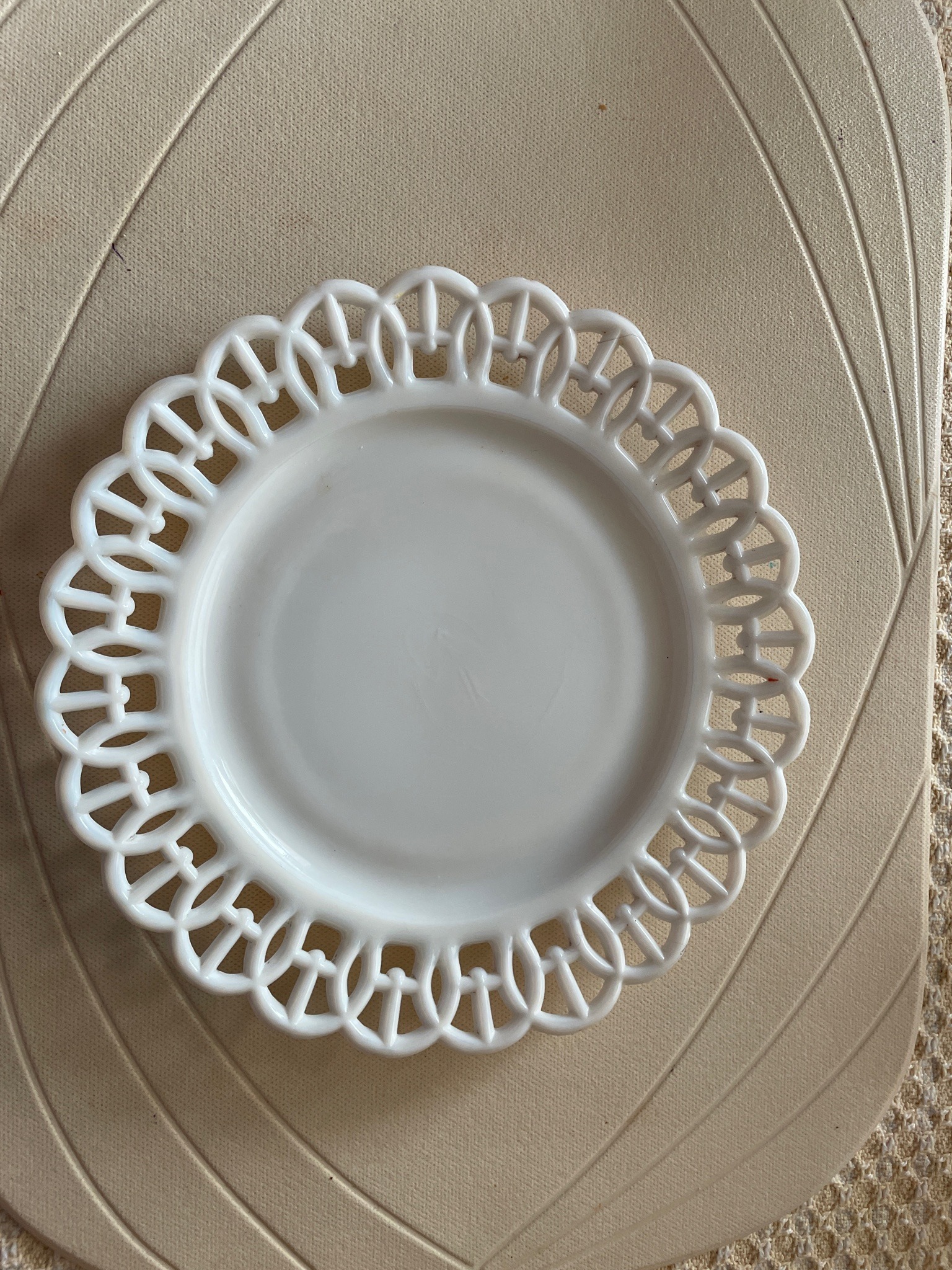
This item is a decorative plate crafted from opaque white milk glass, characterized by its smooth, milky finish and substantial weight. The central well of the plate is plain and circular, transitioning smoothly into a highly ornamental border. The border features a complex openwork lattice or reticulated pattern often referred to as a 'lattice' or 'crocheted' edge, consisting of interlocking arched loops that create a delicate, lace-like appearance. This specific style of openwork was popular among American glass manufacturers such as Westmoreland, Atterbury, and Fenton during the mid-to-late 20th century, though it mimics Victorian-era designs. The plate appears to be in good vintage condition, showing consistent opacity and a glossy surface luster. There are no immediate signs of chips or cracks in the delicate openwork border, which is often the first area to sustain damage. Detailed inspection is required to identify any potential straw marks or mold seam lines characteristic of pressed glass manufacturing. The craftsmanship reflects industrial techniques meant to emulate fine hand-cut ceramics, resulting in a piece that functions both as a serving dish and a decorative collectible.
AI-Generated Appraisal Disclaimer
Estimated Value
$25.00 - $45.00
Basic Information
Category
Vintage Glassware
Appraised On
May 12, 2026
Estimated Value
$25.00 - $45.00
Item Description
This item is a decorative plate crafted from opaque white milk glass, characterized by its smooth, milky finish and substantial weight. The central well of the plate is plain and circular, transitioning smoothly into a highly ornamental border. The border features a complex openwork lattice or reticulated pattern often referred to as a 'lattice' or 'crocheted' edge, consisting of interlocking arched loops that create a delicate, lace-like appearance. This specific style of openwork was popular among American glass manufacturers such as Westmoreland, Atterbury, and Fenton during the mid-to-late 20th century, though it mimics Victorian-era designs. The plate appears to be in good vintage condition, showing consistent opacity and a glossy surface luster. There are no immediate signs of chips or cracks in the delicate openwork border, which is often the first area to sustain damage. Detailed inspection is required to identify any potential straw marks or mold seam lines characteristic of pressed glass manufacturing. The craftsmanship reflects industrial techniques meant to emulate fine hand-cut ceramics, resulting in a piece that functions both as a serving dish and a decorative collectible.
Get Your Items Appraised
Instant estimates of your treasures with AI-powered instant appraisals