Carnelian and Nephrite Jade Carved Stone Pear Figurine
Decorative Arts / Lapidary Art

Carnelian and Nephrite Jade Carved Stone Pear Figurine

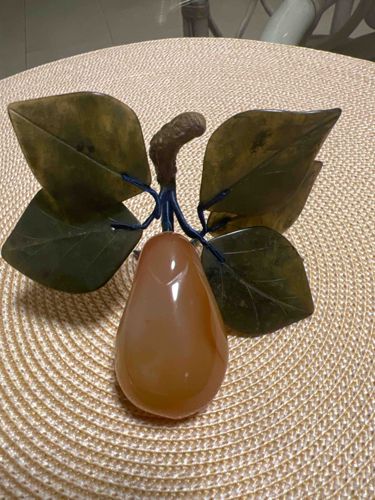
This decorative figurine depicts a pear composed of semi-precious stone elements. The primary fruit body is carved from a translucent carnelian or carnelian-agate, exhibiting a warm orangey-brown hue with a high-gloss polished finish and smooth, rounded contours typical of mid-20th-century lapidary work. It is crowned with a cluster of four carved nephrite jade leaves, which display a characteristic dark spinach-green to forest-green color with natural mottled inclusions and visible veining detail carved into the surface. The leaves are attached to a central arboreal-style stem made of wire wrapped in dark thread or silk, a common construction technique for Chinese export 'jade trees' and stone fruit arrangements dating from the 1950s to the 1970s. The assembly appears stable, though there is minor fraying visible on the thread-wrapped wire near the junctions. The jade leaves show some minor edge-wear and dusty surface accumulation in the carved grooves, which is consistent with age. There are no major fractures visible in the stones, indicating well-preserved lapidary craftsmanship. This piece exemplifies the mid-century trend for Asian-inspired botanical stone carvings intended for tabletop display.
Estimated Value

$65–$125

Basic Information

Category

Decorative Arts / Lapidary Art

Appraised On

February 7, 2026

Estimated Value

$65–$125

Item Description

This decorative figurine depicts a pear composed of semi-precious stone elements. The primary fruit body is carved from a translucent carnelian or carnelian-agate, exhibiting a warm orangey-brown hue with a high-gloss polished finish and smooth, rounded contours typical of mid-20th-century lapidary work. It is crowned with a cluster of four carved nephrite jade leaves, which display a characteristic dark spinach-green to forest-green color with natural mottled inclusions and visible veining detail carved into the surface. The leaves are attached to a central arboreal-style stem made of wire wrapped in dark thread or silk, a common construction technique for Chinese export 'jade trees' and stone fruit arrangements dating from the 1950s to the 1970s. The assembly appears stable, though there is minor fraying visible on the thread-wrapped wire near the junctions. The jade leaves show some minor edge-wear and dusty surface accumulation in the carved grooves, which is consistent with age. There are no major fractures visible in the stones, indicating well-preserved lapidary craftsmanship. This piece exemplifies the mid-century trend for Asian-inspired botanical stone carvings intended for tabletop display.
Get Your Items Appraised

Instant estimates of your treasures with AI-powered instant appraisals

Browse More Appraisals